How to Pick the Right Fire Extinguisher for Every Room
The Kidde FA110 suits most homes with a 1-A:10-B:C rating covering wood, liquid and electrical fires. Kitchens with deep fryers need the Amerex B260, since dry chemical models can let hot grease reignite. Boat owners should choose the USCG-approved Kidde Mariner 110 over any standard home unit.
Most households get complete coverage from the Kidde FA110, whose 1-A:10-B:C rating spans wood, paper, liquid and electrical fires. It cannot handle a grease fire the way a Class K unit does, so kitchens with deep fryers need a second extinguisher. Boat owners should skip standard home units entirely and choose the USCG-approved Kidde Mariner 110.
Matching fire class to the room matters more than raw cylinder size, since a bigger canister filled with the wrong agent still fails on grease or marine fires. We compared UL ratings, agent chemistry and cylinder weight across current Amazon listings, then checked owner reports on recharge frequency and bracket durability.
The best picks, ranked

Kidde FA110
A 1-A:10-B:C rating lets the FA110 handle wood, paper, flammable liquid and live electrical fires from one canister. Monoammonium phosphate powder discharges through a metal valve activated by a pull-pin trigger. Most kitchen, hallway and living room mounts accept the 5-pound cylinder without crowding cabinet space.
Pros
- Four fire classes covered by a single canister
- Metal valve holds pressure longer than plastic alternatives
- Slim enough for hallway or under-sink mounting
Cons
- Dry chemical residue can damage electronics after discharge
- Not rated for Class K kitchen grease fires
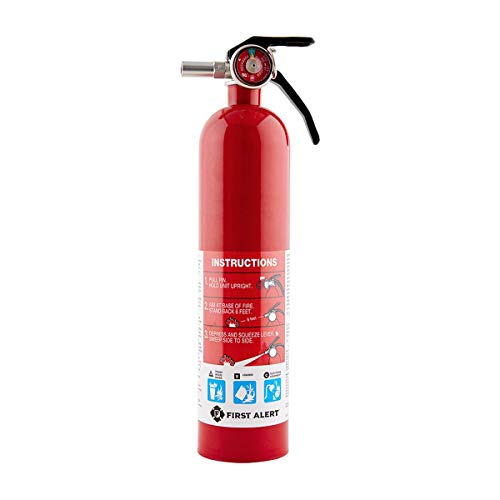
First Alert HOME1
Matching the FA110’s 1-A:10-B:C rating, the HOME1 uses a lighter 4-pound cylinder that smaller household members can lift and aim more easily. The same monoammonium phosphate dry chemical agent handles wood, liquid and electrical fires. A built-in gauge on top shows charge status without removing it from the bracket.
Pros
- Lighter cylinder than most 1-A:10-B:C competitors
- Pressure gauge simplifies monthly checks
- Rechargeable through licensed fire equipment dealers
Cons
- Smaller charge means a shorter discharge window
- Bracket hardware feels thinner than commercial-grade mounts

Amerex B402
Built to commercial standards, the B402 carries a 2-A:10-B:C rating that beats typical home units on Class A capacity. An all-metal valve on the 5-pound steel cylinder withstands repeated recharge and inspection cycles. Workshops and garages benefit from the higher chemical charge when solvents or wood scraps are nearby.
Pros
- Higher 2-A rating covers larger wood or paper fires
- All-metal valve holds up to repeated recharge cycles
- Bracket keeps the cylinder steady on a workshop wall
Cons
- Heavier cylinder is harder to mount at eye level for some users
- Dry chemical residue corrodes tools if not cleaned promptly

Amerex B260
Grease fires need a wet chemical agent rather than dry powder, and the B260 delivers one under a Class K rating. Potassium-based chemical saponifies hot cooking oil, cooling it while forming a vapor barrier. Home cooks who deep fry regularly rely on this class when standard extinguishers cannot stop reignition.
Pros
- Wet chemical stops grease fires that BC extinguishers can reignite
- Fine mist nozzle reduces splash-back from hot oil
- Matches the commercial standard used in restaurant kitchen hoods
Cons
- No A, B or C rating, so it is not a general-purpose backup
- Larger cylinder needs more wall clearance than a home unit
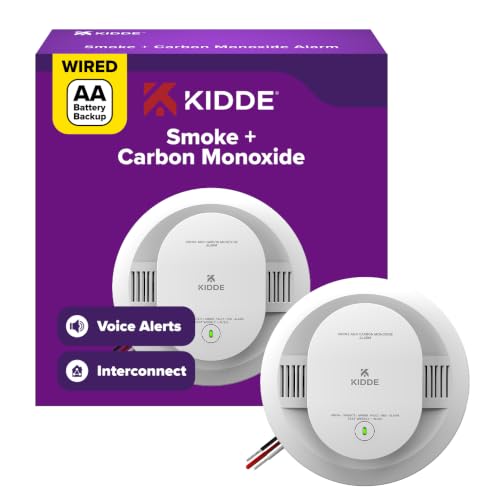
Kidde FX340SCM
A white decorative finish lets the FX340SCM blend into kitchen cabinetry instead of standing out like a red cylinder. Underneath, it still carries a 1-A:10-B:C rating using monoammonium phosphate powder. Apartments, RV galleys and condo kitchens with limited wall space suit its compact 3-pound size.
Pros
- Decorative finish avoids the industrial look of a red cylinder
- Compact size fits tight RV or apartment kitchen walls
- Same dry chemical coverage as larger home models
Cons
- Smaller charge covers less area than the FA110
- Decorative coating shows scratches more than powder-coated cylinders

First Alert REC5
Skipping a Class A rating entirely, the REC5 focuses on a 5-B:C rating built for flammable liquid and electrical fires. Sodium bicarbonate powder discharges from a compact 2-pound cylinder that straps into a vehicle mount. Engine bays and fuel fires are its target, not upholstery or paper.
Pros
- Compact size fits car trunks and boat lockers easily
- Vehicle strap bracket resists vibration on rough roads
- Sodium bicarbonate agent handles fuel and electrical fires
Cons
- No Class A rating, so it cannot handle upholstery or paper fires
- Smaller charge empties faster than a 5-pound home unit

Kidde Mariner 110
A USCG-approved marine specification sets the Mariner 110 apart, with a 1-A:10-B:C rating for onboard galley and engine fires. Corrosion-resistant bracket hardware keeps the cylinder secure in wet, salty conditions. Recreational boat owners use it to meet Coast Guard carriage requirements.
Pros
- USCG-approved bracket meets recreational boat carriage rules
- Corrosion-resistant hardware outlasts home brackets in salt spray
- 1-A:10-B:C rating covers galley, engine and electrical fires onboard
Cons
- Marine-specific bracket costs more to replace than a standard wall clip
- Not a substitute for a home fire extinguisher
How to pick the right one
What Fire Extinguisher Ratings Mean A rating such as 1-A:10-B:C carries two pieces of information. The number measures extinguishing power, and the letter marks fire class: A for wood and paper, B for flammable liquids, C for live electrical equipment. Bigger numbers mean more extinguishing capacity, not a larger cylinder. Every home needs at least one 1-A:10-B:C multi-purpose unit near the kitchen and another near the garage.
Best Fire Extinguisher for Grease Fires Dry chemical extinguishers can knock down a small grease fire, but the oil often reignites once the powder settles. Class K units such as the Amerex B260 use a wet chemical agent that saponifies hot oil into a cooling foam layer. Kitchens with a deep fryer or heavy wok cooking benefit most from keeping one within reach. A decorative model like the FX340SCM works well as a secondary backup for smaller flare-ups.
Garage, Workshop and Vehicle Coverage Solvents, fuel and electrical tools crowd most garages, so a higher-capacity 2-A:10-B:C unit like the Amerex B402 covers more ground than a basic home model. Vehicles call for something smaller, rated for fuel and electrical fires rather than upholstery. The First Alert REC5 fills that role with its 5-B:C rating and compact vehicle bracket. Mount either unit within quick reach but away from direct engine heat.
How Many Extinguishers Does a Home or Boat Need One extinguisher rarely covers every room, so many households place a unit in the kitchen and a second near the bedrooms or garage. Boats fall under separate rules, requiring USCG-approved units like the Kidde Mariner 110 for legal carriage. RV owners often add a compact model such as the FX340SCM for the galley alongside a larger unit near the door. Local fire code sets the minimum count required for larger or multi-story homes.
Compared at a glance
| # | Model | UL Rating | Best for | Score | Price |
|---|---|---|---|---|---|
| 1 | Kidde FA110 | 1-A:10-B:C | Best Overall | 9.4 | Check price |
| 2 | First Alert HOME1 | 1-A:10-B:C | Best Value | 9.1 | Check price |
| 3 | Amerex B402 | 2-A:10-B:C | Best for Garage and Workshop | 8.9 | Check price |
| 4 | Amerex B260 | Class K | Best for Kitchen Grease Fires | 8.6 | Check price |
| 5 | Kidde FX340SCM | 1-A:10-B:C | Best for Small Kitchens and Apartments | 8.4 | Check price |
| 6 | First Alert REC5 | 5-B:C | Best for Cars and Recreational Vehicles | 8.2 | Check price |
| 7 | Kidde Mariner 110 | 1-A:10-B:C, USCG approved | Best for Boats and Marine Use | 8.0 | Check price |
Frequently asked questions
What size fire extinguisher works best in a kitchen?
Most kitchens need at least a 1-A:10-B:C multi-purpose unit, plus a Class K extinguisher for households that deep fry often. A 5-pound cylinder like the Kidde FA110 covers a typical kitchen without crowding cabinet space.
Can a regular fire extinguisher put out a grease fire?
A standard dry chemical extinguisher can suppress a small grease fire, but the oil can reignite once the powder settles. Class K wet chemical units, such as the Amerex B260, cool the oil and form a vapor barrier that blocks flashback.
How often should a fire extinguisher be replaced?
Disposable dry chemical extinguishers typically last 5 to 15 years, and the gauge needle should stay in the green range the whole time. Rechargeable models need professional service after any use, or roughly every 6 years based on the manufacturer’s listing.
What is the difference between a 1-A:10-B:C and 2-A:10-B:C rating?
The number before each letter measures extinguishing capacity, not physical size. A 2-A:10-B:C unit like the Amerex B402 handles roughly twice the Class A fire load of a 1-A:10-B:C model with the same B and C rating.
Do boats need a Coast Guard approved fire extinguisher?
Recreational vessels with enclosed engine compartments or fuel tanks generally require a USCG-approved extinguisher onboard. The Kidde Mariner 110 meets that marine specification with a corrosion-resistant mounting bracket.
Is a rechargeable fire extinguisher worth it?
Rechargeable models cost more upfront but can be serviced and refilled after use instead of thrown away. Households that expect to test or use an extinguisher occasionally get more long-term value from a rechargeable unit like the First Alert HOME1.
Where should a fire extinguisher be mounted in a garage?
Mount it near the exit door rather than next to a workbench or heat source, so it stays reachable during a fire. A wall bracket rated for a 5-pound cylinder, like the one included with the Amerex B402, keeps it steady in a workshop setting.
Which fire extinguisher class works for a car fire?
Vehicle fires usually involve fuel or electrical systems, so a 5-B:C rated unit without a Class A requirement works best. The First Alert REC5 is sized for a trunk or under-seat mount and targets exactly those fire types.
Kitchen fire extinguisher vs whole-home fire extinguisher: what is the difference?
A dedicated kitchen unit like the compact FX340SCM or a Class K model targets grease and small kitchen flare-ups. A whole-home extinguisher such as the Kidde FA110 covers wood, paper, liquid and electrical fires in hallways, bedrooms and living areas.
Our take
The Kidde FA110 stays the strongest all-around pick for most homes, since its 1-A:10-B:C rating covers wood, liquid and electrical fires from one wall-mounted canister. Anyone cooking with a deep fryer should add the Amerex B260 alongside it, because dry chemical alone lets hot grease reignite. Boat owners should skip home models entirely and choose the USCG-approved Kidde Mariner 110 to meet carriage requirements.


