Framing Nailer Buying Guide: Cordless vs Pneumatic Power
The Paslode 501000 wins overall since it skips the hose entirely on a fuel cell and battery. Crews already running a compressor get steadier drive force from the Metabo HPT NR90AES1. Freeman’s PFR2190 covers occasional framing jobs at a lower cost.
Three power types split the framing nailer market, and the wrong pick slows an entire crew down. Going hoseless, the Paslode 501000 runs on a fuel cell and battery, so it works on a roof or ladder without a compressor nearby. Production crews already tied to air get more consistent drive force from the Metabo HPT NR90AES1. Occasional framing jobs cost less with the Freeman PFR2190.
Magazine angle, nail capacity and depth adjustment change how a nailer handles studs versus sheathing. We compared power source, rated nail length, magazine type and weight across each listing, since a nailer held overhead all day changes the pace of the job.
What we recommend
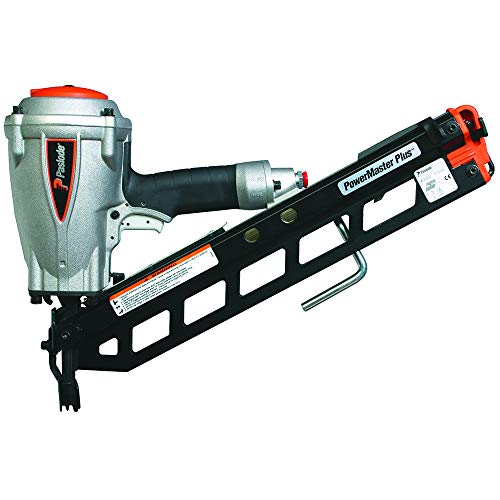
Paslode 501000 Cordless Framing Nailer
A fuel cell and rechargeable battery replace the air hose, so this nailer climbs ladders and crosses roofs without a compressor trailing behind. Owners report reliable cold weather starts once the fuel cell warms up. Doubled studs take full length framing nails without hesitation.
Pros
- No hose or compressor needed on site
- Cold weather starts reliably once warmed
- Drives full length nails through doubled framing
Cons
- Fuel cells and batteries add ongoing cost
- Heavier than most pneumatic equivalents

Metabo HPT NR90AES1 Framing Nailer
Framing crews have relied on this pneumatic nailer for years, valuing its consistent drive depth across softwood and engineered lumber. A tool free depth dial saves time switching between sheathing and stud work. Recoil runs lower than older models in the same line, according to owner reports.
Pros
- Consistent depth across lumber types
- Tool free depth adjustment dial
- Lower recoil than older comparable models
Cons
- Requires a compressor and hose on site
- Plastic collation leaves more debris than paper

DEWALT DWF83PL Pneumatic Framing Nailer
Dial in depth adjustment sets nail heads flush without a test board, speeding up the switch between rough framing and trim backing. A rafter hook rotates out of the way when it is not needed. Maintenance stays minimal beyond regular oiling, based on owner feedback.
Pros
- Tool free depth dial speeds up setup changes
- Rotating rafter hook stays out of the way
- Lightweight for a pneumatic framing nailer
Cons
- Needs a compressor sized for continuous framing
- Plastic collated strips cost more than paper

BOSTITCH F21PL Framing Nailer
Under seven and a half pounds, this ranks among the lighter pneumatic framing nailers, which matters through a full shift in hand. A selectable trigger switches between bump fire and sequential fire modes. Overhead work feels less tiring, according to owners who use it daily.
Pros
- Lighter than most pneumatic framing nailers
- Selectable trigger for bump or sequential fire
- Reduces fatigue during overhead work
Cons
- Still needs a compressor and hose
- Lighter body feels less rugged when dropped

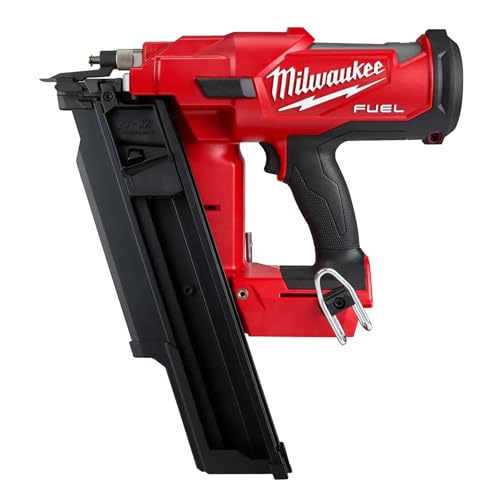
Milwaukee M18 FUEL 2745-20 Cordless Framing Nailer
No combustion cell to store or replace here, since this nailer drives nails using an M18 battery alone. It shares batteries with other M18 tools already common on many job sites. Owners like skipping fuel cell charging and inventory altogether.
Pros
- No fuel cells to buy or store
- Shares batteries across the M18 tool lineup
- No hose or compressor required
Cons
- Heavier than fuel cell or pneumatic options
- Battery runtime drops in cold weather

Freeman PFR2190 Framing Nailer
This pneumatic nailer covers standard framing nail lengths without extra features tacked onto the price. A tool free jam release keeps downtime short. Deck and shed builds get full stud driving power for a fraction of what pro grade models cost.
Pros
- Lower cost than pro grade pneumatic nailers
- Tool free jam release
- Drives standard framing nails without issue
Cons
- Less consistent finish on hardwood over long use
- Heavier than premium lightweight models

SENCO FramePro 601XP Framing Nailer
Crews driving thousands of nails a week need low recoil across long shifts, which this pneumatic nailer delivers. Rear exhaust routes air away from the operator’s face. Contractors note fewer jams even when lumber moisture varies across a site.
Pros
- Low recoil supports long production shifts
- Rear exhaust keeps air off the operator
- Handles mixed lumber moisture with fewer jams
Cons
- Heavier than lightweight competitors
- Overbuilt for occasional DIY use
How they compare
| # | Model | Power source | Best for | Score | Price |
|---|---|---|---|---|---|
| 1 | Paslode 501000 Cordless Framing Nailer | Fuel cell and rechargeable battery | Best overall | 9.4 | Check price |
| 2 | Metabo HPT NR90AES1 Framing Nailer | Pneumatic, requires compressor | Best value | 9.1 | Check price |
| 3 | DEWALT DWF83PL Pneumatic Framing Nailer | Pneumatic, requires compressor | Best for precision depth control | 8.8 | Check price |
| 4 | BOSTITCH F21PL Framing Nailer | Pneumatic, requires compressor | Best for all day lightweight use | 8.5 | Check price |
| 5 | Milwaukee M18 FUEL 2745-20 Cordless Framing Nailer | M18 battery, no fuel cell | Best cordless power without fuel cells | 8.3 | Check price |
| 6 | Freeman PFR2190 Framing Nailer | Pneumatic, requires compressor | Best budget | 8.1 | Check price |
| 7 | SENCO FramePro 601XP Framing Nailer | Pneumatic, requires compressor | Best for high volume production framing | 8.0 | Check price |
How to pick the right one
What should you look for in a framing nailer? Power source is the first decision, since pneumatic, fuel cell and battery only designs trade off cost, weight and freedom of movement differently. Nail length range sets what lumber thickness joins in one shot. Depth adjustment speeds up switching between rough framing and exposed trim backing. Weight matters most overhead, where a heavy nailer tires a shoulder before the job wraps.
Cordless vs pneumatic framing nailers: which wins? Pneumatic models like the Metabo HPT NR90AES1 need a compressor and hose but typically cost less and drive with very consistent force. Cordless splits further into fuel cell hybrids, such as the Paslode 501000, and battery only designs, such as the Milwaukee M18 FUEL 2745-20. Fuel cell tools run longer between charges, while battery only designs skip ongoing fuel cell costs.
Best framing nailer for solo builders vs crews A solo DIY builder framing a shed or deck rarely needs a production grade tool and does fine with a lighter model like the Freeman PFR2190. Crews driving thousands of nails a week benefit from low recoil, high volume tools like the SENCO FramePro 601XP. Match the tool to the pace of the work, not only the budget.
What is the difference between 21 and 30 degree nail angles? 21 degree nailers use plastic collated strips, widely stocked and generally the cheapest option. 30 to 34 degree nailers use paper collated strips, leaving less debris and fitting into tighter stud bays. Neither angle wins outright, but switching means buying new nail strips, so check what local suppliers carry first.
Common questions
Is a cordless framing nailer as powerful as a pneumatic one?
Modern fuel cell and battery models drive nails with force comparable to pneumatic tools for most framing lumber. Extremely dense or engineered lumber can still favor a well tuned pneumatic nailer running at high pressure. For standard dimensional lumber, the practical gap stays small.
What nail size do framing nailers use?
Most models accept nails from 2 inches up to 3 and a half inches, covering everything from toe nailing to face nailing through doubled studs. Check each model’s rated range before buying strips, since not every nailer covers the full span.
Can you use a framing nailer for roofing?
Framing nailers can drive nails through roof sheathing, but dedicated coil roofing nailers hold far more nails and suit the repetitive shingle pattern better. Use a framing nailer for rafters and sheathing, then switch tools for shingle work.
How much air pressure does a pneumatic framing nailer need?
Most pneumatic framing nailers run between 100 and 120 PSI, and the compressor needs enough tank capacity and recovery speed for rapid firing. Check the manufacturer’s rated pressure range before connecting an undersized compressor.
Which framing nailer is best for a beginner?
A straightforward pneumatic model like the Freeman PFR2190 is easier to learn on, since it skips extra settings while staying affordable during technique building. Once framing becomes regular work, a cordless or production grade nailer earns its cost.
Do framing nailers need a compressor?
Only pneumatic models do. Fuel cell hybrids like the Paslode 501000 and battery only designs like the Milwaukee M18 FUEL 2745-20 skip the hose entirely, trading that freedom for ongoing battery and fuel cell costs.
How long does a Paslode fuel cell last?
A single fuel cell typically drives a few thousand nails before needing replacement, though exact counts vary with nail length and firing frequency. Keep a spare fuel cell and charged battery on hand for full day jobs to avoid downtime.
What is the best framing nailer for high volume production crews?
The SENCO FramePro 601XP targets production framing specifically, with low recoil and a rear exhaust built for thousands of nails a week. Lighter DIY oriented nailers wear out faster under that kind of continuous use.
Final word
Power source shapes daily comfort more than any other spec on a framing nailer. Choose the Paslode 501000 for freedom from hoses, or stick with the proven Metabo HPT NR90AES1 where a compressor already runs the job site. The Freeman PFR2190 gets occasional builders through framing work without a pro grade price tag.