7 Garden Spades Compared by Blade, Handle, and Grip
Fiskars’ Steel D-handle Digging Spade offers the best balance of weight and edge retention for general digging. Radius Garden’s Root Slayer Shovel uses a serrated blade to cut through roots and clay other spades cannot. Truper’s Tru Pro Border Spade fits raised beds and tight garden corners a full-length spade would crush.
Fiskars’ Steel D-handle Digging Spade suits most gardeners first, since its forged steel blade holds an edge through clay and rocky soil. Its square profile struggles with fine root work, though. Root-heavy yards do better with the serrated Radius Garden Root Slayer Shovel instead. Raised beds and narrow borders call for the shorter Truper Tru Pro Border Spade, since neither larger spade fits between existing plants.
Blade steel, handle material, and shaft length each change how a spade performs in different soil. A stainless blade sheds clay cleanly but costs more than carbon steel. Fiberglass handles resist snapping, while wood flexes and absorbs shock instead. We compared blade gauge, handle construction, weight, and grip style across seven digging spades, then checked owner reports of rust, handle breakage, and edge retention.
How to pick the right one
Spade versus shovel: how the blade shape tells you A spade carries a flat, sharp edge built for cutting straight into soil. It slices cleanly through turf and roots instead of scooping around them. A shovel curves into a scoop shaped for lifting loose material like mulch or gravel. Reach for a spade when edging beds or cutting sod. Reach for a shovel when moving snow or gravel instead.
Blade steel: carbon versus stainless Carbon steel takes a sharper edge and costs less than stainless. Left uncleaned, though, it rusts within a season in humid climates. Stainless steel resists corrosion and releases sticky clay more easily. Epoxy or powder coatings on budget carbon steel slow rust without the stainless price tag. Match the coating to how often the tool gets rinsed and dried after use.
Digging through roots, clay, and compacted soil Serrated edges, like those on the Radius Garden Root Slayer, saw through roots instead of glancing off them. Thick-gauge steel resists bending when you lever out rocks or stumps in compacted ground. Standard flat blades handle loose or amended soil fine but struggle in unbroken clay. Match blade thickness and edge type to the toughest soil condition on the property, not the average one.
Handle length, grip style, and who each fits A full-length shaft near four feet suits taller gardeners and deep digging, transferring less strain to the back. Shorter border spades trade reach for control in raised beds and tight spaces between plants. D-grips let both hands push down together; T-grips favor one-handed twisting motions instead. Wood shafts flex and absorb shock but need oiling. Fiberglass and poly composite handles skip maintenance entirely.
Our top picks
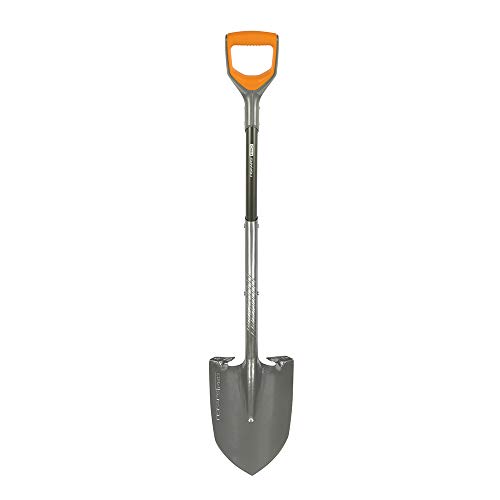
Fiskars Steel D-handle Digging Spade
A forged steel blade keeps its edge through rocky and compacted soil without chipping. The FiberComp composite shaft resists snapping under prying pressure that would crack solid fiberglass. Its D-handle lets both hands push down together, easing strain during long digging sessions.
Pros
- Forged steel blade holds an edge longer
- Composite shaft resists snapping under leverage
- D-handle grip eases repetitive digging
Cons
- Costs more than basic carbon steel spades
- Square blade struggles with fine root work

Radius Garden Root Slayer Shovel
Serrated stainless steel edges saw through roots that stop a flat blade cold. A patented handle rotates at its base, cutting wrist and knee strain during long digging sessions. Wide foot pegs let you drive the blade deeper without pain through thin shoe soles.
Pros
- Serrated edge cuts through roots cleanly
- Rotating handle reduces wrist and knee strain
- Wide foot pegs protect feet during use
Cons
- Narrower blade moves less soil per scoop
- Priced above most standard digging spades

Bully Tools 14-Gauge Digging Spade
A 14-gauge steel blade, made in the USA, resists bending when prying out rocks or stumps. Fiberglass construction shrugs off impacts that crack wooden handles over repeated seasons. Landscapers rely on this build for trenching and daily commercial jobs.
Pros
- Thick 14-gauge steel resists bending under load
- Fiberglass handle survives repeated daily impacts
- Rated for commercial trenching and landscaping work
Cons
- Heavier than most home garden spades
- D-grip feels bulky for smaller hands

Truper Tru Pro Border Spade
An 8-inch blade and shortened shaft fit between plants where a full-length spade would trample roots. Fiberglass construction keeps the tool light enough for one-handed control in raised beds. Border spades like this trade digging depth for precision around existing plantings.
Pros
- Compact size fits tight garden corners
- Light enough for one-handed control
- Short shaft suits shallow raised bed soil
Cons
- Not built for deep or wide digging
- Blade dulls faster than heavier gauge steel

Corona ComfortGEL Transplanting Spade
A narrow, tapered blade slides between roots when moving perennials without shredding the root ball. Gel grip padding eases pressure on palms during repeated planting sessions. This spade moves less soil per pass than a full-width blade, by design.
Pros
- Narrow blade protects root balls when moving plants
- Gel grip reduces hand fatigue over long sessions
- Light weight suits extended transplanting work
Cons
- Too narrow for general digging tasks
- Moves less soil per scoop than wider spades

Spear & Jackson Neverbend Stainless Digging Spade
Polished stainless steel resists rust and sheds sticky clay better than painted carbon steel. An ash wood shaft flexes slightly under load, absorbing shock that stiffer fiberglass passes to the hands. Spear & Jackson has built garden tools in England since 1760.
Pros
- Stainless blade sheds clay cleanly
- Ash shaft absorbs digging shock
- Rust resistance suits damp, humid climates
Cons
- Wood shaft needs occasional oiling
- Priced above most steel competitors

Ames Poly D-handle Digging Spade
An epoxy-coated steel blade resists rust for casual, seasonal use at a lower price. Poly composite handles skip the maintenance wood shafts demand. It will not match forged steel for edge retention, but it covers general planting and edging chores reliably.
Pros
- Affordable for occasional garden use
- Poly handle needs no maintenance
- Rust-resistant coating protects the blade
Cons
- Edge dulls faster than forged steel
- Not rated for heavy commercial use
How they compare
| # | Model | Blade material | Best for | Score | Price |
|---|---|---|---|---|---|
| 1 | Fiskars Steel D-handle Digging Spade | Forged steel, square point | Best overall | 9.4 | Check price |
| 2 | Radius Garden Root Slayer Shovel | Serrated stainless steel | Best for roots and clay | 9.2 | Check price |
| 3 | Bully Tools 14-Gauge Digging Spade | 14-gauge steel | Best for heavy-duty use | 9.0 | Check price |
| 4 | Truper Tru Pro Border Spade | 8 inches | Best for small spaces | 8.7 | Check price |
| 5 | Corona ComfortGEL Transplanting Spade | Narrow tapered steel | Best for transplanting | 8.4 | Check price |
| 6 | Spear & Jackson Neverbend Stainless Digging Spade | Polished stainless steel | Best premium | 8.2 | Check price |
| 7 | Ames Poly D-handle Digging Spade | Epoxy-coated steel | Best budget | 8.0 | Check price |
Questions worth asking
What is the difference between a spade and a shovel?
A spade has a flat blade with a sharp straight edge, built for cutting into soil and slicing roots or turf. A shovel has a curved, scooped blade meant for lifting and carrying loose material like mulch or gravel. Most gardeners keep both, since neither tool replaces the other well.
Which garden spade cuts through roots best?
The Radius Garden Root Slayer Shovel uses serrated stainless edges to saw through roots that stop a flat blade. Its narrower profile trades some digging width for that cutting ability, which suits established beds with old root systems.
Are stainless steel spades worth the extra cost?
Stainless resists rust and sheds sticky clay more cleanly than painted or coated carbon steel. That matters most in wet or humid climates. In dry regions with sandy soil, a well-maintained carbon steel blade performs nearly as well for less money.
What size spade works best in raised beds?
Border spades with an 8 to 9 inch blade and a shortened shaft, like the Truper Tru Pro, maneuver between plants without crushing nearby roots. A full-length digging spade is usually too long to control precisely in a small bed.
Can a garden spade double as a lawn edger?
Yes, a sharp flat-edged spade cuts a clean line along beds and walkways better than most dedicated edging tools. Square point blades, like the Fiskars Steel D-handle, give the straightest cut along a string line.
Is a fiberglass or wood handle better on a digging spade?
Fiberglass and poly composite handles resist snapping and need no upkeep, which suits anyone who stores tools outdoors. Wood shafts flex more under load and absorb shock better, but they need occasional oiling to prevent cracking.
How do you stop soil from sticking to a spade blade?
Wipe the blade clean after each use and apply a light coat of oil before storage. That slows rust and keeps clay from bonding to pitted steel. Stainless steel blades resist sticking better from the start, since the smoother surface gives clay less to grip.
Which spade suits transplanting or container work?
The Corona ComfortGEL Transplanting Spade uses a narrow tapered blade that slides between roots without tearing the root ball. That precision comes at the cost of moving less soil per scoop, so it works best as a second tool rather than a primary digger.
What blade gauge should I look for in a heavy-duty spade?
Look for 12 to 14-gauge steel if you regularly pry out rocks, roots, or stumps in compacted ground. The Bully Tools 14-Gauge Digging Spade uses that thicker steel specifically to resist bending under leverage that would warp a lighter blade.
Our pick
Most gardeners get the best all-around value from the Fiskars Steel D-handle Digging Spade, since its forged blade and composite shaft balance strength and weight for general digging and edging. Anyone battling roots or unbroken clay should switch to the Radius Garden Root Slayer Shovel instead, since its serrated edges do a job flat blades cannot. Gardeners working raised beds or tight borders will get more control from the compact Truper Tru Pro Border Spade than either larger spade offers.


