Gear Oil Picks for Differentials, Towing and Daily Miles
Red Line 75W90 GL-5 is our overall pick for its shear stability under load, Mobil 1 75W-90 Synthetic Gear Lube LS is the best value synthetic with limited slip additive included, and Valvoline High Performance 80W-90 covers conventional applications on a budget.
Red Line 75W90 GL-5 is the gear oil to reach for when a differential sees heat and load, since it holds its film strength where cheaper oils thin out. Mobil 1 75W-90 Synthetic Gear Lube LS is the better value choice for a limited slip differential, and Valvoline High Performance 80W-90 remains a solid conventional option.
Choosing gear oil goes wrong when people match the brand instead of the specification, because viscosity grade, GL rating and limited slip additive requirements are all set by the vehicle manufacturer. We compared published specifications, additive packages and what owners report about noise and heat, then ranked seven widely available options.
The best picks, ranked

Red Line 75W90 GL-5 Gear Oil
A polyol ester based synthetic with a strong extreme pressure additive package, aimed at differentials that see towing, track use or sustained heat. It maintains viscosity where conventional oils shear down. Owners frequently report lower differential temperatures after switching from a conventional fluid.
Pros
- Excellent film strength under heat
- Strong extreme pressure protection
- Widely trusted for towing and performance use
Cons
- Limited slip additive needed separately for some diffs
- Premium cost per quart

Mobil 1 75W-90 Synthetic Gear Lube LS
A full synthetic GL-5 gear lube with the limited slip friction modifier already blended in, which removes a step and a guessing game for clutch type differentials. It flows well cold and holds up in normal towing conditions. A sensible everyday upgrade over conventional oil.
Pros
- No separate friction modifier needed
- Good cold flow properties
- Broad availability
Cons
- Not intended for GL-4 only gearboxes
- Some very high load users prefer thicker grades
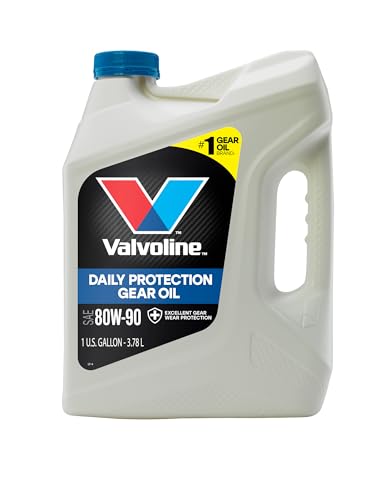
Valvoline High Performance SAE 80W-90 Gear Oil
A conventional GL-5 gear oil for standard differentials in vehicles that do not tow heavily or see extreme temperatures. It meets the common specification most older axles call for at a modest cost. Perfectly adequate when you change fluid on schedule.
Pros
- Meets the common specification affordably
- Easy to find in most sizes
- Fine for normal driving duty
Cons
- Thicker cold flow than synthetics
- Shears down faster under sustained heat
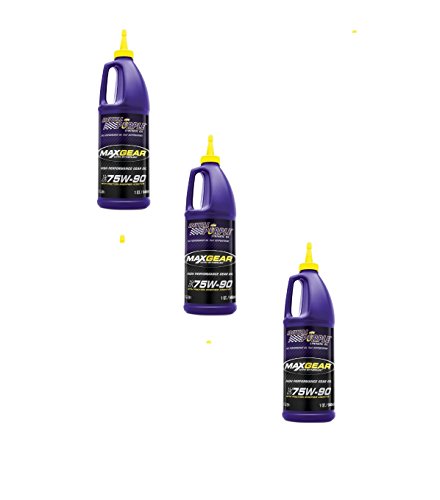
Royal Purple Max Gear 75W-90 Gear Oil
A synthetic gear oil with a proprietary additive package aimed at reducing wear and heat in hard working differentials. Owners who tow regularly report quieter operation and cooler running compared with conventional fluids. It suits trucks that spend long periods at high load.
Pros
- Holds up well under sustained heat
- Reported reduction in gear noise
- Good wear protection
Cons
- Costs more than mainstream synthetics
- Limited slip additive may still be required
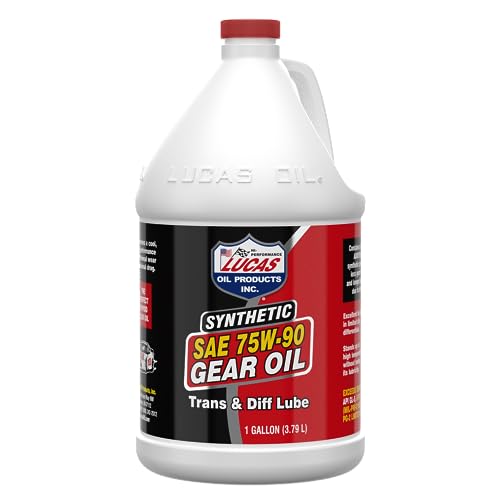
Lucas Oil SAE 75W-90 Synthetic Gear Oil
A synthetic gear oil with a tackier additive package that owners often use in older axles where gear whine has developed. It clings well to gear faces during cold starts. Not a repair for mechanical wear, but frequently reported to reduce noise levels.
Pros
- Often reduces gear whine in older axles
- Clings well during cold starts
- Widely available
Cons
- Thicker feel in very cold climates
- Does not address mechanical wear

Motul Gear 300 75W-90 Synthetic Gear Oil
An ester based synthetic developed for competition and spirited road use, with a focus on shift feel in manual gearboxes as well as differential protection. It is popular in enthusiast circles for exactly that reason. Check whether your gearbox requires GL-4 rather than GL-5 before use.
Pros
- Good shift feel in manual boxes
- Strong protection at high temperature
- Trusted in motorsport use
Cons
- Expensive per litre
- Must select the correct GL rating version

AMSOIL Severe Gear 75W-140 Synthetic Gear Lube
A heavier 75W-140 grade for applications where the manufacturer specifies it, typically heavy tow vehicles and high load rear axles. The thicker grade builds a stronger film at high temperature. Only use it where the vehicle specification actually calls for 140 weight.
Pros
- Strong film strength at high temperature
- Suited to heavy tow specifications
- Long service intervals in severe use
Cons
- Wrong choice if 90 weight is specified
- Higher drag when cold
Before you buy
Follow the manufacturer specification, not the brand Your owner manual or service data lists a viscosity grade and an API GL rating for each unit, and those are the two numbers that must match. A superb oil in the wrong grade is worse than an ordinary oil in the right one, particularly in transfer cases and manual gearboxes.
GL-4 and GL-5 are not interchangeable GL-5 carries a stronger extreme pressure additive package designed for hypoid differentials. In some manual gearboxes with yellow metal synchronisers, those additives can attack the brass over time. If your gearbox specifies GL-4, use GL-4 even though GL-5 sounds like an upgrade.
Limited slip differentials need a friction modifier Clutch type limited slip units chatter on tight turns without the correct friction modifier. Some oils include it, indicated by LS in the name, and others require a separate bottle added during filling. Check which you have before you finish the job rather than after.
Synthetic pays off with heat and cold In moderate driving, a conventional oil changed on schedule protects perfectly well. Synthetics justify themselves in two situations, sustained high load where conventional oil shears down, and very cold climates where thick cold flow delays lubrication at start up. Match the choice to your actual conditions.
Side by side
| # | Model | Viscosity | Best for | Score | Price |
|---|---|---|---|---|---|
| 1 | Red Line 75W90 GL-5 Gear Oil | 75W-90 | Best overall | 9.4 | Check price |
| 2 | Mobil 1 75W-90 Synthetic Gear Lube LS | 75W-90 | Best value synthetic | 9.2 | Check price |
| 3 | Valvoline High Performance SAE 80W-90 Gear Oil | 80W-90 | Best budget conventional | 9.0 | Check price |
| 4 | Royal Purple Max Gear 75W-90 Gear Oil | 75W-90 | Best for towing heat | 8.8 | Check price |
| 5 | Lucas Oil SAE 75W-90 Synthetic Gear Oil | 75W-90 | Best for worn or noisy gears | 8.6 | Check price |
| 6 | Motul Gear 300 75W-90 Synthetic Gear Oil | 75W-90 | Best for performance driving | 8.3 | Check price |
| 7 | AMSOIL Severe Gear 75W-140 Synthetic Gear Lube | 75W-140 | Best for heavy duty | 8.0 | Check price |
Common questions
What does 75W-90 actually mean?
The first number with the W describes cold flow behaviour and the second describes viscosity at operating temperature. A 75W-90 flows more easily when cold than an 80W-90 while behaving similarly once warm, which is why synthetics often carry the lower first number.
Can I use GL-5 where GL-4 is specified?
It is generally discouraged. GL-5 additive packages are more aggressive toward the yellow metals used in some synchroniser rings. If the manual specifies GL-4, use a GL-4 rated oil or a product explicitly approved for both.
How often should gear oil be changed?
Service intervals vary widely by vehicle and duty, so the manual is the reference. Towing, off road use and water crossings shorten the interval considerably. Many owners of tow vehicles change differential fluid far more often than the normal service schedule suggests.
Do I need a limited slip additive?
Only if your differential is a clutch type limited slip unit. The classic symptom of missing modifier is chatter or shudder during slow tight turns. Some gear oils include it already, marked LS, so adding more is unnecessary in that case.
Is thicker gear oil better for a noisy differential?
A heavier grade can mask noise, but it also increases drag and may fall outside the manufacturer specification. Gear whine usually indicates wear or an incorrect pinion setup, and changing viscosity treats the symptom rather than the cause.
Can I mix different gear oil brands?
Mixing oils of the same viscosity and GL rating is not dangerous in an emergency top up, but the additive packages are not designed to work together. For a proper service, drain and refill with a single product rather than blending.
What is the difference between gear oil and engine oil?
Gear oil viscosity numbers use a different scale than engine oil, so an 80W-90 gear oil is not far thicker than a 20W-50 engine oil despite the numbers. The additive packages are also completely different, and the two are not interchangeable.
How do I know if my differential needs fluid?
Most axles have a fill plug set at the correct level, and the fluid should sit at or just below that opening. Dark, burnt smelling fluid or metallic glitter on the magnetic drain plug both indicate the unit needs attention beyond a fluid change.
Final word
Red Line 75W90 GL-5 is the gear oil to choose when the differential works hard, since its film strength under heat is what separates it from conventional fluids. Mobil 1 75W-90 Synthetic Gear Lube LS is the easier everyday choice for limited slip axles because the friction modifier is already blended in, and Valvoline 80W-90 remains fine for ordinary driving on a schedule.


