How to Pick a Gear Puller That Won’t Slip Under Load
The OTC 1184 2/3 Jaw Cone Type Puller ranks best overall for its cone-lock jaw design that resists slipping. The Powerbuilt 648648 Combo Gear Puller Set delivers the strongest value at 5 tons, and the Orion Motor Tech 3-Jaw Gear Puller Set covers occasional garage use at the lowest cost.
A gear puller applies even, controlled pressure to walk a gear, pulley, or balancer off a shaft without hammer damage. Jaw versatility separates the OTC 1184 from the field, tonnage per dollar favors the Powerbuilt 648648, and low-cost size coverage puts the Orion Motor Tech set ahead for budget shoppers.
Picking the wrong puller means stripped threads, bent jaws, or a part that slips loose under load. Jaw configuration, spread range, tonnage rating, and material were compared across current Amazon listings from OTC, Lisle, Powerbuilt, ABN, Neiko, and Orion Motor Tech to sort real differences from marketing copy.
The best picks, ranked
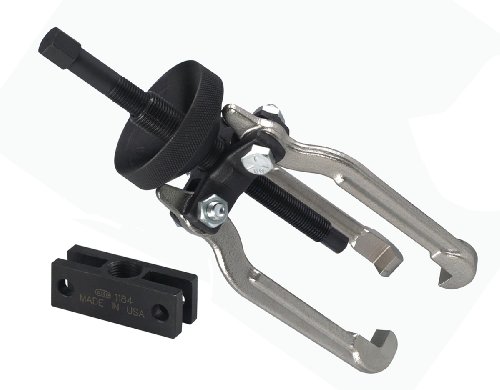
OTC 1184 2/3 Jaw Cone Type Puller with Reversible Jaws
The OTC 1184 switches between 2-way and 3-way jaw configurations using a cone-lock design that keeps jaws seated under load. Reversible jaws pull from inside or outside the part, which suits gears, pulleys, and small bearings on the same shaft. Forged steel construction holds up to repeated automotive use.
Pros
- Cone lock keeps jaws from slipping under tension
- Switches between 2-way and 3-way pull without extra parts
- Reversible jaws pull from inside or outside the bore
Cons
- 4 inch spread limits larger pulley jobs
- No case included for storage
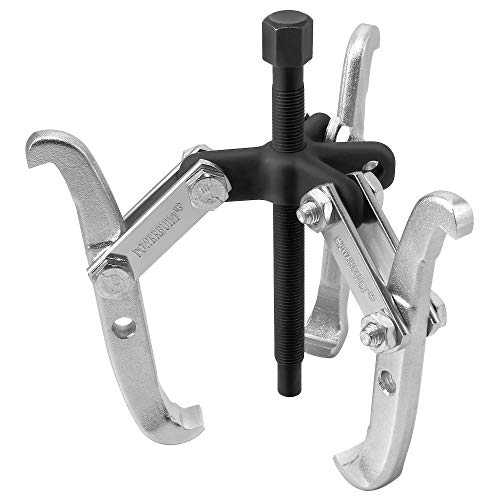
Powerbuilt 648648 Combo 2/3 Jaw Reversible Gear Puller Set, 6-Inch
Powerbuilt’s 648648 covers gears, pulleys, and flywheels with 6 inch reversible jaws rated to 5 tons. Chrome vanadium in the yoke and jaws switches from 2-jaw to 3-jaw without swapping tools. A forcing screw applies steady pressure instead of shock loading the part.
Pros
- 5 ton rating covers most automotive pulleys
- One tool replaces separate 2-jaw and 3-jaw pullers
- Chrome vanadium resists bending under load
Cons
- Yoke is bulkier than compact 3 inch sets
- Forcing screw needs occasional lubrication

Orion Motor Tech 3-Jaw Gear Puller Set, 3in 4in 6in
This Orion Motor Tech set bundles three separate 3-jaw pullers sized 3, 4, and 6 inches for different gear and pulley diameters. Reversible jaws pull from inside or outside bores. Drop forged carbon steel jaws carry a corrosion resistant coating for garage storage.
Pros
- Three sizes cover small engine parts through larger pulleys
- Reversible jaws work inside or outside bores
- Coating resists rust in unheated garages
Cons
- Smallest puller has limited reach for deep gears
- No blow molded case included with this bundle

ABN Bolt Grip Set, Gear, Steering Wheel, Pulley, Harmonic Balancer, Crank Puller, 43-Piece
ABN’s 43 piece bolt grip set uses threaded bolts instead of jaws to pull gears, pulleys, steering wheels, and harmonic balancers. SAE and metric bolts adapt to tapped holes on different makes. Bolt grip design spreads force evenly and avoids scarring the part.
Pros
- 43 pieces cover gears, balancers, and steering wheels
- Even bolt pressure avoids damaging tapped holes
- SAE and metric bolts fit imported and domestic parts
Cons
- Requires tapped holes rather than gripping a bare edge
- Larger piece count means more parts to track

Lisle 31330 2 or 3 Jaw Reversible and Adjustable 5 Ton Puller
The Lisle 31330 switches between 2-jaw and 3-jaw configurations for a 5 ton rated pull. A 5.5 inch reach and 7 inch max spread handle larger flywheels and industrial pulleys. Forged steel arms resist bending compared to stamped alternatives.
Pros
- 7 inch spread reaches larger industrial pulleys
- 5 ton rating suits heavy flywheels
- Adjustable arms lock at multiple spread positions
Cons
- Heavier than compact 3 or 4 inch pullers
- Arms take longer to reposition between jobs

Neiko 02237A 2 or 3 Jaw Gear Puller
Neiko’s 02237A covers a 3 to 7 inch capacity range in one compact 2 ton puller. Drop forged chrome vanadium steel jaws switch between 2-jaw and 3-jaw pulls. Its smaller footprint fits in a roadside kit or small engine toolbox.
Pros
- Compact size fits in a roadside or mobile kit
- 3 to 7 inch range covers small engine pulleys
- Chrome vanadium jaws resist wear over repeated use
Cons
- 2 ton rating is light for heavy automotive gears
- No storage case included

Lisle 51700 Harmonic Balancer Puller Set
Lisle’s 51700 pairs a traditional ducks foot 2/3 bolt puller with a separate 3-jaw puller for balancers that resist a single design. Ducks foot arms hook behind the balancer hub for a straight pull. The 3-jaw puller backs it up on balancers with exposed edges.
Pros
- Two puller styles cover different balancer designs
- Ducks foot arms hook behind hubs other pullers miss
- Backed by a long-running automotive tool lineup
Cons
- Built specifically for balancers, not general gear work
- Costs more than a single-style puller
How they compare
| # | Model | Puller type | Best for | Score | Price |
|---|---|---|---|---|---|
| 1 | OTC 1184 2/3 Jaw Cone Type Puller with Reversible Jaws | 2-jaw/3-jaw cone type, reversible | Best overall | 9.4 | Check price |
| 2 | Powerbuilt 648648 Combo 2/3 Jaw Reversible Gear Puller Set, 6-Inch | 2-jaw/3-jaw reversible | Best value | 9.1 | Check price |
| 3 | Orion Motor Tech 3-Jaw Gear Puller Set, 3in 4in 6in | 3-jaw reversible, 3-piece set | Best budget | 8.8 | Check price |
| 4 | ABN Bolt Grip Set, Gear, Steering Wheel, Pulley, Harmonic Balancer, Crank Puller, 43-Piece | Bolt-grip, non-jaw design | Best for automotive gears and pulleys | 8.6 | Check price |
| 5 | Lisle 31330 2 or 3 Jaw Reversible and Adjustable 5 Ton Puller | 2-jaw/3-jaw reversible and adjustable | Best 3-jaw heavy-duty | 8.4 | Check price |
| 6 | Neiko 02237A 2 or 3 Jaw Gear Puller | 2-jaw/3-jaw reversible | Best compact/portable kit | 8.2 | Check price |
| 7 | Lisle 51700 Harmonic Balancer Puller Set | Ducks foot 2/3 bolt puller plus 3-jaw puller | Best for harmonic balancers | 8.0 | Check price |
Before you buy
How a Gear Puller Removes Stuck Parts A gear puller grips behind a gear, pulley, or hub while a center screw pushes against the shaft end. Turning the screw walks the part off evenly instead of shocking it with a hammer. Two-jaw pullers grip on opposite sides, while three-jaw pullers add a third contact point for round or symmetrical parts. Reversible jaw sets let one tool switch between the two layouts.
Gear Puller Tonnage and Spread Ratings Explained Tonnage rates how much force the screw and yoke can apply before the tool risks bending. Spread is the maximum distance between jaw tips, which determines the largest pulley or flywheel diameter the puller can reach. A 2 ton, 4 inch puller suits small engine pulleys, while a 5 ton, 7 inch puller handles automotive flywheels and larger balancers. Matching both numbers to the job matters more than picking the highest rating available.
Material and Case Quality Compared Forged steel jaws resist bending better than stamped steel under repeated high-tension pulls. Chrome vanadium adds further resistance to wear and corrosion in sets used outdoors or in humid shops. A blow molded case keeps jaws, screws, and adapters organized and protects threads from rust between jobs. Coated finishes on budget sets add some rust protection but do not match forged construction for durability.
Which Gear Puller Fits Which Job Automotive work on pulleys, gears, and axle bearings generally calls for a 2 to 5 ton reversible jaw puller with a 4 to 7 inch spread. Small engine and lawn equipment gears need less tonnage and a compact 3 to 4 inch tool. Harmonic balancers often need a dedicated bolt puller or ducks foot design since jaw pullers can slip on a balancer’s smooth outer edge. Industrial pulleys and heavier flywheels call for the higher end of the tonnage range with adjustable arm positions.
Frequently asked questions
What is a gear puller used for?
A gear puller removes gears, pulleys, bearings, and balancers that are pressed or keyed onto a shaft without damaging the shaft or the surrounding housing.
What is the difference between a 2-jaw and a 3-jaw gear puller?
A 2-jaw puller grips on two opposite sides and suits parts with flat or uneven edges. A 3-jaw puller adds a third contact point for even pressure on round, symmetrical parts like pulleys.
How much tonnage do I need for automotive pulleys?
Most automotive pulleys and gears come off with 2 to 5 tons of pulling force. Larger flywheels and stuck harmonic balancers may need a 5 ton or higher rated puller.
Can a gear puller remove a harmonic balancer?
A standard jaw puller can slip on a balancer’s smooth edge. A dedicated bolt-style or ducks foot puller threads into the balancer’s tapped holes for a more secure pull.
Gear puller vs bearing puller, what is the difference?
Gear pullers are built for larger, often threaded or keyed parts like gears and pulleys. Bearing pullers use thinner jaws designed to grip behind a bearing’s inner or outer race.
Is a bolt-grip puller better than a jaw puller?
Bolt-grip pullers work only on parts with tapped holes, such as many harmonic balancers and steering wheels. Jaw pullers work on parts without tapped holes but rely on gripping an outer edge.
Does jaw spread matter more than tonnage?
Both matter for different reasons. Spread determines whether the jaws physically reach around the part, while tonnage determines whether the tool has enough force to break it free.
How do I keep gear puller jaws from slipping?
Center the puller squarely on the shaft, tighten jaws evenly before applying force, and use a cone-lock or reversible jaw design that seats against the part instead of a loose hook style.
What size gear puller do I need for a small engine?
Small engine pulleys and flywheels usually need only a 2 to 3 ton puller with a 3 to 4 inch spread, smaller than what automotive flywheel work requires.
Final word
The OTC 1184 earns the top spot for its cone-lock jaw design and inside-or-outside pulling range. The Powerbuilt 648648 delivers the best balance of tonnage and price for general automotive work. Buyers working mainly on harmonic balancers should look to the Lisle 51700 instead of a general jaw puller.