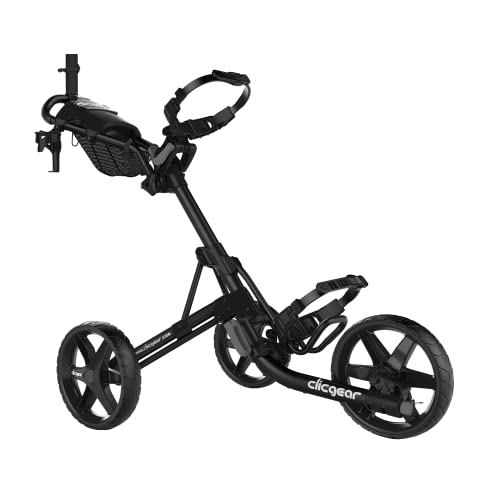
Golf Rangefinders That Lock On in Bright Sunlight
The Bushnell Tour V6 Shift is the most reliable rangefinder in bright outdoor conditions thanks to its stabilisation and clear flag lock feedback. The Precision Pro NX10 offers similar locking confidence for less, and the Nikon Coolshot 20 GII is the pick when small and light matters most.
The Bushnell Tour V6 Shift is the outdoor rangefinder most golfers should buy, with the Precision Pro NX10 as the value alternative and the Nikon Coolshot 20 GII for players who want minimum bulk.
Rangefinders are difficult to compare because the specification sheets look nearly identical while real world performance varies enormously in glare, wind and drizzle. We compared magnification, display type, stabilisation, weather sealing ratings and slope switching mechanisms, then weighed those specifications against what owners report about locking onto a flag with shaky hands on a bright afternoon.
The best picks, ranked

Bushnell Tour V6 Shift
Bushnell pairs image stabilisation with its JOLT vibration feedback, so you both see a steady picture and feel confirmation the reading is on the flag rather than the trees behind it. The Shift lever turns slope compensation on and off, keeping the unit tournament legal when the lever is disengaged. Owners report it is the model that reads first time in conditions where cheaper units hunt.
Pros
- Stabilisation makes locking on far easier
- Vibration confirmation removes doubt
- Slope switch keeps it competition legal
Cons
- Premium price bracket for the category
- Larger than the compact models here

Precision Pro NX10
The NX10 delivers stabilisation, slope switching and pulse vibration at a noticeably lower price than the category leaders. Its magnetic cart mount is the kind of small convenience that gets used every hole. Based on specifications it gives up very little to more expensive units for outdoor play.
Pros
- Stabilisation at a mid range price
- Magnet holds securely to a cart frame
- Clear pulse feedback on lock
Cons
- Optics are a step behind the top models
- Magnet adds weight in a pocket
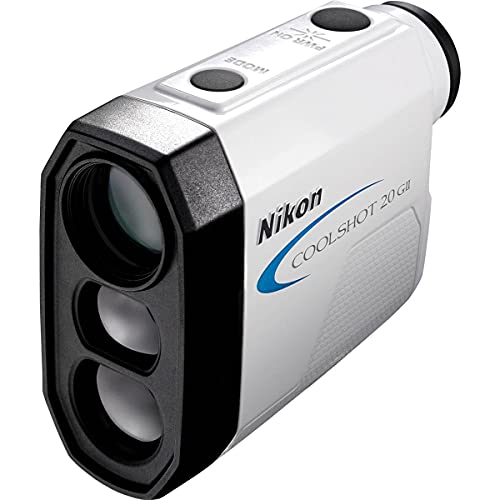
Nikon Coolshot 20 GII
Nikon keeps this one small, light and simple, which is exactly what walking golfers who dislike carrying gear want. The optics are excellent for the size and the display stays readable against bright grass. It has no slope function and no stabilisation, so it is a straightforward distance tool rather than a full featured device.
Pros
- Very small and light to carry
- Excellent Nikon optics for the class
- Simple operation with no menus
Cons
- No slope compensation
- Harder to hold steady without stabilisation

Callaway 300 Pro Laser Rangefinder
The 300 Pro uses a bright optical display and a pin acquisition mode with pulse confirmation, making it easy to trust readings in changing light. Slope compensation can be switched off for competition. Owners report the through the lens view is one of the clearest at this price.
Pros
- Very clear view through the eyepiece
- Reliable pin acquisition confirmation
- Slope disables for tournament play
Cons
- No image stabilisation
- Case attachment is basic

Blue Tees Golf Series 3 Max
Blue Tees packs slope, flag lock vibration, a magnetic strip and an adjustable display into a unit aimed at players who like options. The display can be switched between colours to suit background conditions, which genuinely helps against bright sky or dark trees. It is a lot of feature for the money with optics that are good rather than exceptional.
Pros
- Switchable display colour for varied light
- Strong magnet for cart mounting
- Slope indicator visible from outside
Cons
- Optical quality trails the premium units
- Button layout takes getting used to
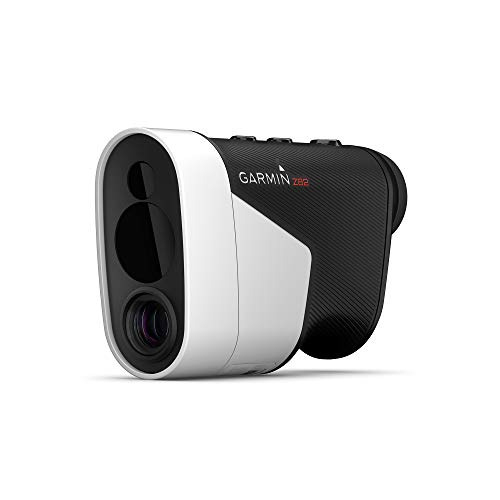
Garmin Approach Z82
The Z82 overlays GPS course mapping onto the laser view, so you see hazard distances and green shape as well as the raw number to the pin. That combination suits players who plan a shot rather than just aim at a flag. It is the most complex device here and needs charging and course updates like any GPS unit.
Pros
- Laser and GPS data in one view
- Shows hazards and green shape
- Stabilised image for steady locking
Cons
- Needs charging and course updates
- Most expensive approach in this group

TecTecTec VPRO500 Golf Rangefinder
The VPRO500 is the model that made laser rangefinders affordable and it still covers the basics competently. It gives pin sensor readings out to 540 yards in a compact rain resistant body. Owners report it takes a little more patience to lock in bright glare than the stabilised units above, which is the main compromise at this level.
Pros
- Lowest cost way into laser ranging
- Compact and light for walking
- Tournament legal with no slope
Cons
- Slower to lock on in bright glare
- Basic display in low contrast conditions
Side by side
| # | Model | Magnification | Best for | Score | Price |
|---|---|---|---|---|---|
| 1 | Bushnell Tour V6 Shift | 6x | Best overall | 9.4 | Check price |
| 2 | Precision Pro NX10 | 6x | Best value | 9.2 | Check price |
| 3 | Nikon Coolshot 20 GII | 6x | Best compact option | 9.0 | Check price |
| 4 | Callaway 300 Pro Laser Rangefinder | 6x | Best display clarity | 8.8 | Check price |
| 5 | Blue Tees Golf Series 3 Max | 6x | Best for feature count | 8.6 | Check price |
| 6 | Garmin Approach Z82 | 6x | Best for course data | 8.3 | Check price |
| 7 | TecTecTec VPRO500 Golf Rangefinder | 6x | Best budget | 8.0 | Check price |
How to pick the right one
Stabilisation is the biggest outdoor upgrade The hardest part of using a rangefinder outdoors is holding a 6x magnified view steady enough for the laser to hit a thin flagstick at 180 yards. Image stabilisation compensates for hand shake and turns a multi press hunt into a single confident reading, which matters far more than an extra 200 yards of maximum range you will never use. If your budget stretches to one premium feature, this is the one to buy.
Display type depends on the light you play in Black LCD displays are easy to read against bright grass and sky but disappear against dark trees. Red or switchable colour displays stand out in shade and overcast conditions but can wash out in direct sun. Units with adjustable brightness or switchable colour handle changing conditions best, which is why several models here offer it.
Slope must be switchable for competition Slope compensation adjusts the yardage for elevation change and is genuinely useful for club selection. It is also not permitted in most competition formats, so any rangefinder used in tournaments needs a way to disable it that is visible from outside the unit. A physical lever or an external indicator light satisfies most committees, while a buried menu setting may not.
Weather sealing and battery care Most rangefinders are rain resistant rather than waterproof, so wipe the lens rather than letting droplets sit and dry, and keep the unit in its case between shots in heavy rain. Cold weather shortens battery life noticeably on units running a coin cell, so carry a spare in the bag through winter. For rechargeable models, top up the night before a round rather than trusting a half charge.
Frequently asked questions
Are golf rangefinders allowed in competition?
Distance measuring devices are permitted under the standard rules provided any slope or elevation compensation is switched off. Local committees can still prohibit them, so check the terms of competition. Models with a visible external slope indicator make the check straightforward for officials.
What does flag lock or pin seeker actually do?
It filters out background objects so the unit reports the distance to the nearest small target rather than the treeline behind it. Most units confirm the lock with a vibration or a visual marker, which is what stops you playing a yardage to something 30 yards past the green.
How accurate are laser rangefinders?
Most quote accuracy within about one yard under good conditions. Accuracy falls off in rain, heat haze and at long range against low reflectivity targets, which is why the practical usable range is well short of the headline number on the box.
Do I need slope compensation?
It is genuinely useful for practice rounds and casual play on hilly courses, where a 15 yard elevation change can mean two clubs. On flat courses the benefit is small. If you play competitions, make sure the function can be disabled clearly.
Rangefinder or GPS watch?
A laser gives a precise number to whatever you point at, including hazards and trees, while a GPS gives front, middle and back distances without needing a clear line of sight. Many players carry both, and the GPS overlay units here try to combine the two approaches.
Why does my rangefinder struggle in bright sun?
Glare reduces the contrast of the display and the returned laser signal is competing with a lot of ambient light. Steadying the unit against your body or a cart post, and using a display colour that contrasts with the background, both help. Stabilised units cope noticeably better.
Can rangefinders be used in the rain?
Most are rain resistant and will survive a shower, but few are rated for immersion. Keep the lens dry, since water on the objective scatters the beam and causes failed readings more often than the electronics fail.
What magnification is best for golf?
Six times is the standard and suits most players. Higher magnification narrows the field of view and amplifies hand shake, making the flag harder to find without stabilisation, so more is not automatically better on a golf course.
The verdict
The Bushnell Tour V6 Shift is the rangefinder to choose for confident outdoor readings, combining stabilisation, clear lock feedback and legal slope switching. The Precision Pro NX10 delivers most of that experience for less, and the Nikon Coolshot 20 GII is the one to pick if you want the smallest device that still reads accurately.