How to Get Grill Grates Clean Without Hours of Scrubbing
Grill Rescue’s steam brush cleans hardest without a single loose bristle to worry about. Grillart’s brush and scraper combo handles stainless and cast iron for less money, and the Weber three sided brush covers routine touch ups cheaply. Each suits a different grate material and cleaning habit.
Grill Rescue’s steam cleaning head is the safest strong cleaner in this group, since it carries zero wire bristles. Grillart’s brush and scraper pairing is the best value for stainless and cast iron owners. Weber’s three sided brush covers routine grate upkeep for very little money, and a wooden paddle from Great Scrape removes bristle risk entirely.
Loose wire bristles are a genuine hazard, and the wrong tool strips porcelain coating off grates within a season. We compared cleaning mechanisms, published material specifications, and grate compatibility, alongside owner reports of bristle shedding and handle durability under repeated use.
What we recommend

Grill Rescue BBQ Grill Brush with Replaceable Scrubber Head
A heat resistant fabric head soaks in water, then presses onto hot grates so steam lifts baked on residue. No wire bristles means nothing can break off into food. The head is machine washable and replaceable, so one handle serves for years.
Pros
- No wire bristles to shed into food
- Steam loosens residue without heavy scrubbing
- Replaceable washable head extends the tool’s life
Cons
- Only works on a hot grill, not a cold one
- Replacement heads add an ongoing cost

Grillart Grill Brush and Scraper
A woven wire brush head pairs with a built in scraper edge, so heavy carbon comes off and the debris sweeps away in one pass. A long stainless handle keeps hands clear of heat while the grill is still warm. Woven construction holds bristles more securely than twisted wire, though any wire brush still needs regular checks.
Pros
- Scraper edge tackles heavy carbon buildup
- Long handle keeps hands away from heat
- Woven wire holds bristles better than twisted wire
Cons
- Wire brushes still need regular bristle inspection
- Too aggressive for coated porcelain grates
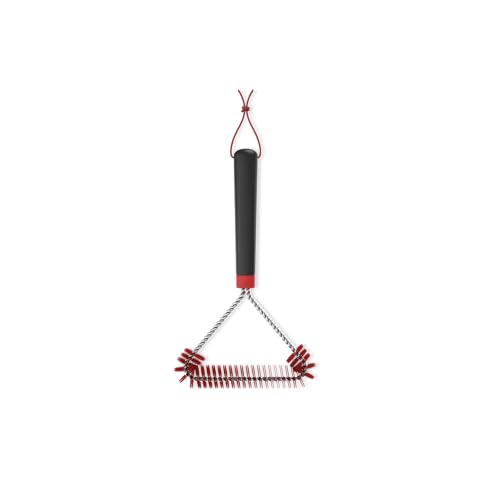
Weber 12-Inch Three-Sided Grill Brush
A three sided head wraps around individual grate bars, cleaning the top and both sides in one pass instead of three. It is a straightforward stainless bristle brush at a low price, built for a quick burn off and brush routine before cooking. Weber sizes it to their own grates, though it fits most standard bar spacing.
Pros
- Cleans three sides of a bar in one pass
- Priced low for a known brand name
- Compact enough to hang on the grill hook
Cons
- Short handle keeps hands close to heat
- Stainless bristles can shed with age

Kona 360 Clean Grill Brush
A dense wrap around bristle head reaches the sides and underside of thick cast iron bars, where flat brushes only skim the top. Cast iron holds seasoning and grease differently than stainless, so this level of contact makes a real difference. A long handle keeps the job comfortable over a hot grill.
Pros
- Reaches the sides and underside of thick bars
- Dense bristles cut through cast iron buildup
- Long handle stays comfortable over a hot grill
Cons
- Wire bristles are unsuited to porcelain
- Dense head takes longer to rinse clean

Great Scrape Woody Paddle
Solid hardwood burns its own grooves into the surface on first use, matched exactly to your grate’s bar spacing. From then on it scrapes the top and sides of every bar with zero bristle risk. It will not shift caked on carbon the way a wire brush does, but for routine cleaning it is the safest tool here.
Pros
- Removes bristle risk completely
- Custom grooves match your exact grate spacing
- Safe on porcelain, cast iron, and stainless
Cons
- Wears down over a season and needs replacing
- Struggles against heavy carbonized buildup

Char-Broil Cool-Clean Nylon Bristle-Free Brush
Nylon bristles clean without scratching, which is exactly what porcelain coated grates need, since a wire brush chips that coating and invites rust. This design is meant for a cool grill, so it fits an after cooking routine rather than a pre-heat one. Owners report the nylon melts on a hot grate, so timing matters.
Pros
- Will not chip porcelain grate coating
- No metal bristles to shed into food
- Ergonomic grip stays comfortable during scrubbing
Cons
- Must not be used on a hot grill
- Less effective against heavy baked on residue

Traeger BBQ Cleaning Brush
This brush is sized for the wide grates and larger cooking chambers common on pellet grills, where a narrow brush turns cleaning into a long job. A scraper combines with bristles on one head, and handle length reaches the back of a deep barrel. It is a sensible companion tool for anyone who already owns a pellet cooker.
Pros
- Wide head covers large grates quickly
- Reaches the back of deep cooking chambers
- Scraper edge handles cooked on drippings
Cons
- Oversized for small portable grills
- Wire bristles need routine inspection
What matters most
Are wire grill brushes actually dangerous? Loose wire bristles from worn brushes can end up in food, and that risk alone has pushed bristle-free tools into much of the market. Inspect a wire head before every use, replace it at the first sign of splaying or missing bristles, and wipe the grate with a damp cloth afterward. Steam heads, wooden paddles, and coil style scrapers remove the risk entirely, since they carry no bristles at all.
Which cleaning tool matches your grate material? Stainless and heavy cast iron grates tolerate wire brushes and aggressive scrapers well. Porcelain coated grates do not, since a chipped coating exposes bare metal that rusts from that point on. Nylon bristles on a cool grill, a wooden paddle, or a steam style head all suit porcelain instead. Cast iron benefits from a wrap around brush that reaches the sides of the bars, plus a light re-oiling after cleaning.
Should you clean a grill hot or cold? Running a grill hot for ten to fifteen minutes after cooking carbonizes residue, then cleaning while it is still warm lets debris release easily. Steam head brushes and wooden paddles are built for exactly this routine. Nylon brushes are the exception, since their bristles melt on a hot grate and must only touch a cool one. A consistent routine beats an occasional deep clean either way.
What belongs in a full grill cleaning kit? A full kit usually covers more than the grate brush alone. A flat scraper handles the inside of the lid and the grease tray, a drip pan liner skips scrubbing almost entirely, and a stiff putty style scraper clears the firebox on charcoal and pellet cookers. Long handles and hanging loops matter more than they sound, since a tool within easy reach of the grill hook actually gets used.
The lineup, side by side
| # | Model | Cleaning method | Best for | Score | Price |
|---|---|---|---|---|---|
| 1 | Grill Rescue BBQ Grill Brush with Replaceable Scrubber Head | Steam from a soaked head | Best overall | 9.4 | Check price |
| 2 | Grillart Grill Brush and Scraper | Woven wire brush with scraper | Best value | 9.2 | Check price |
| 3 | Weber 12-Inch Three-Sided Grill Brush | Three sided wrap around | Best budget | 9.0 | Check price |
| 4 | Kona 360 Clean Grill Brush | 360 degree bristle wrap | Best for cast iron grates | 8.8 | Check price |
| 5 | Great Scrape Woody Paddle | Solid hardwood paddle | Best bristle-free scraper | 8.6 | Check price |
| 6 | Char-Broil Cool-Clean Nylon Bristle-Free Brush | Nylon, non scratching | Best for porcelain grates | 8.3 | Check price |
| 7 | Traeger BBQ Cleaning Brush | Wide sweep head | Best for pellet grills | 8.0 | Check price |
Questions worth asking
Are wire grill brushes safe to use?
They clean well, but they carry a real risk of shedding bristles that can end up in food. Inspect one before every cook, replace it as soon as bristles splay or go missing, and wipe the grate with a damp cloth afterward. Bristle-free tools avoid the risk entirely.
What is the best way to clean porcelain coated grill grates?
Use nylon bristles on a cool grill, a wooden scraper, or a steam style fabric head. Wire brushes and metal scrapers chip the porcelain and expose bare metal that then rusts. Gentle, regular cleaning beats occasional aggressive scrubbing on this coating.
Should I clean a grill hot or cold?
Hot, for most tools. Running the grill for ten to fifteen minutes after cooking carbonizes residue so it brushes off easily. Nylon brushes are the exception, since they must only touch a cool grate or the bristles melt.
How often should grill grates be cleaned?
A quick brush before or after every cook keeps buildup from becoming a problem. Plan a deeper clean of the grates, grease tray, and interior a few times per season, more often for fatty foods.
Do steam cleaning grill brushes actually work?
Yes, on a properly preheated grill. A soaked head releases steam against hot metal, which loosens residue so it wipes away with light pressure. Results drop off on a cool grate, so this style needs a hot cleaning routine.
How do you clean cast iron grill grates without ruining the seasoning?
Brush while the grate is warm, skip soap and long soaks, and re-oil lightly afterward with a high smoke point oil. A wrap around brush that reaches the sides of the bars clears buildup without the scouring that strips seasoning.
Can grill brush heads go in the dishwasher?
Some are, and the specifications say so directly, including several wire heads and the fabric heads on steam brushes. Wooden paddles should never go in the dishwasher, since soaking splits the wood.
What tool works best for the grease tray and firebox?
A flat metal scraper or putty style tool clears hardened grease far better than a bristle brush. Disposable drip pan liners are the simplest fix, since they let you lift the mess out instead of scraping it off.
Wire brush vs bristle-free brush: which is safer?
A wire brush cuts through heavy carbon fastest but risks shedding a bristle into food if the head is worn. Bristle-free options such as steam heads and wooden paddles trade a bit of aggression for zero shedding risk. Cast iron and stainless tolerate wire well; porcelain does not.
Is a wooden grill scraper worth buying?
Yes for routine upkeep and anyone who wants zero bristle risk. The wood burns its own grooves to match your bar spacing on first use, though it will not shift heavy carbonized buildup the way a wire brush does.
Our take
Grill Rescue is the pick for most people, since it cleans hard using steam and carries no bristle risk at all, and the replaceable head keeps it going season after season. Grillart’s brush and scraper suits stainless or cast iron owners who do not mind inspecting wire, while the Weber three sided brush is the cheap tool worth keeping on the grill hook for daily use.