Which Gripe Water Actually Soothes a Colicky Baby?
Mommy’s Bliss Gripe Water Original is the most common starting point, combining ginger and fennel without alcohol. Wellements Organic Gripe Water suits parents wanting a certified organic, preservative free formula. BioGaia Protectis Baby Probiotic Drops take a different approach, supplying Lactobacillus reuteri instead of herbs.
Mommy’s Bliss Gripe Water Original is the most common first choice for colic relief, built around ginger and fennel with no alcohol. Wellements Organic Gripe Water offers a USDA certified organic alternative instead. BioGaia Protectis Baby Probiotic Drops work on an entirely different principle, delivering a studied probiotic strain rather than herbal extracts.
Colic has no single cause, so no single product suits every baby, which makes this choice genuinely hard. Formulas differ on alcohol, sodium bicarbonate, added sugar, preservatives and minimum age. We compared listed ingredients, stated age guidance, dosing instructions, storage needs and delivery method, then weighed what parents report. Speak to your paediatrician before giving a newborn anything, especially if feeding is affected.
The best picks, ranked

Mommy’s Bliss Gripe Water Original
Organic ginger and organic fennel extract anchor this formula, both traditional carminatives for wind and stomach discomfort. The label states no alcohol, no parabens and no artificial colours or flavours. A calibrated dosing syringe ships in the box, with guidance starting from two weeks of age.
Pros
- Short ingredient list with no alcohol
- Syringe makes small doses measurable
- Widely stocked, so restocking is easy
Cons
- Needs refrigeration once opened
- Contains added sweetener some parents avoid

Wellements Organic Gripe Water
USDA certification backs this formula, which skips preservatives entirely and must stay refrigerated from arrival. Chamomile, ginger and fennel do the work here. A glass bottle keeps the liquid away from plastic contact during storage.
Pros
- Certified organic with no preservatives
- Glass bottle instead of plastic
- Chamomile adds a second traditional soothing herb
Cons
- Must stay refrigerated at all times, including transit
- Shorter shelf life once opened than preserved formulas

Little Remedies Gripe Water
Ginger extract and fennel extract sit in purified water, with no alcohol, dyes, gluten or artificial flavours added. Bottles typically come in a larger volume than competitors, lowering cost per dose over a long colic stretch. Labeled dosing covers babies from two weeks upward.
Pros
- Low cost per dose over a long fussy period
- No dyes or artificial flavours
- Simple two-herb formula
Cons
- Plastic bottle rather than glass
- Refrigeration needed after opening
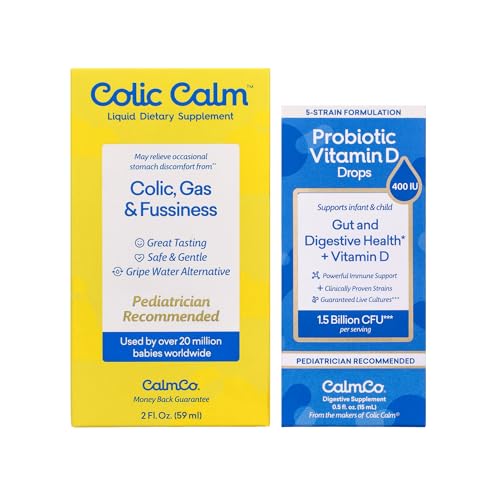
Colic Calm Homeopathic Gripe Water
Vegetable charcoal gives this homeopathic formula its distinctive black colour, which can show up in nappies afterward. That colour change is expected and not a cause for concern. The formula skips sugar, gluten, dairy and simethicone entirely.
Pros
- No added sugar in the formula
- Parents report quick calming during evening bouts
- Does not require refrigeration
Cons
- Charcoal stains clothing and bedding easily
- Homeopathic evidence base is limited

BioGaia Protectis Baby Probiotic Drops
Lactobacillus reuteri DSM 17938 replaces herbs here, the specific strain most studied in infant colic research. Five drops make up a standard daily serving, given by spoon or mixed into cooled expressed milk. The formula skips gluten, dairy protein and soy protein.
Pros
- Uses the strain most studied for infant colic
- Tiny daily dose, easy to give on a spoon
- No herbal extracts or added sweeteners
Cons
- Works gradually rather than during a crying bout
- Oil suspension needs shaking before every dose

Gerber Soothe Comforting Probiotic Drops
Lactobacillus reuteri also drives this formula, packaged in a dropper bottle sized for several weeks of daily use. Five drops mix into cooled expressed milk or go straight onto a spoon before a feed. Room temperature storage, away from direct heat, makes it easy to carry in a changing bag.
Pros
- No refrigeration, so it travels easily
- Same probiotic approach at a lower cost
- Dropper marks make the serving obvious
Cons
- No immediate effect during a crying episode
- Bottle is small relative to the daily dose

Frida Baby Windi The Gaspasser
A flexible single-use tube with a moulded stopper releases trapped wind mechanically, limiting how far it can be inserted. Nothing is ingested, which is why some parents try it before any liquid formula. Packs typically include ten disposable tubes.
Pros
- Nothing is swallowed, so no ingredients to check
- Stopper prevents inserting too far
- Effect is immediate when trapped wind is the cause
Cons
- Single use, so packs run out quickly
- Only helps with wind, not other causes of crying
Compared at a glance
| # | Model | Key ingredients | Best for | Score | Price |
|---|---|---|---|---|---|
| 1 | Mommy’s Bliss Gripe Water Original | Organic ginger and organic fennel extract | Best overall | 9.4 | Check price |
| 2 | Wellements Organic Gripe Water | USDA certified organic | Best organic formula | 9.2 | Check price |
| 3 | Little Remedies Gripe Water | Ginger extract and fennel extract | Best value | 9.0 | Check price |
| 4 | Colic Calm Homeopathic Gripe Water | Homeopathic liquid with vegetable charcoal | Best for reflux discomfort | 8.8 | Check price |
| 5 | BioGaia Protectis Baby Probiotic Drops | Lactobacillus reuteri DSM 17938 | Best probiotic option | 8.6 | Check price |
| 6 | Gerber Soothe Comforting Probiotic Drops | Lactobacillus reuteri probiotic | Best for daily routine | 8.3 | Check price |
| 7 | Frida Baby Windi The Gaspasser | Single use gas relief tube | Best drug free option | 8.0 | Check price |
Before you buy
What is gripe water, and what does it actually contain? Gripe water is a liquid herbal supplement, not a medicine, and formulas vary widely between brands. Modern versions usually combine ginger and fennel, sometimes with chamomile, in purified water. Older recipes contained alcohol or sodium bicarbonate, which most current brands have removed. Checking the label for added sugar, preservatives and minimum age matters more than the brand name. A paediatrician’s view should come before the first dose, since these products are not evaluated the way prescription medicines are.
Herbal gripe water vs probiotic drops: what is the difference? These solve different problems entirely. Herbal gripe water gets used during a fussy episode and works quickly or not at all. Probiotic drops like BioGaia Protectis or Gerber Soothe form a daily routine instead, with research on Lactobacillus reuteri focused on crying time reduced over several weeks. Some parents run both: drops every morning, gripe water kept in reserve for a hard evening.
Does colic relief differ for breastfed and formula fed babies? Breastfed babies sometimes react to something in a parent’s diet, so an elimination trial of dairy or caffeine usually comes before any supplement. Formula fed babies may respond better to a slower flow teat or an anti-colic bottle that vents air away from the milk. Paced feeding and ten minutes of upright winding after a feed help in both cases, often more than any product. A supplement is worth trying only after feeding technique has been checked.
When is crying not colic, and when should you call a doctor? Colic describes crying with no other explanation, typically in a baby who still feeds and gains weight normally. Fever, blood in stool, forceful vomiting, poor weight gain or a sudden change in crying pattern all call for a paediatrician, not another product. Alcohol, sodium bicarbonate and honey should never go to a newborn in any form. Nothing here substitutes for a medical assessment.
Questions worth asking
What age can you start giving gripe water?
Most current labels, including Mommy’s Bliss and Little Remedies, state from two weeks of age. Some brands say from birth instead. Always follow the specific bottle and confirm with your paediatrician first, especially for a premature baby.
Does gripe water actually work for colic?
Evidence stays mixed and mostly anecdotal. Many parents report calmer evenings, though controlled research is limited. Probiotic drops using Lactobacillus reuteri have more published study behind them for reducing crying time in breastfed infants.
How often can you give gripe water in a day?
Labels typically allow several doses spaced through the day, with a stated daily maximum based on age and weight. Do not exceed the bottle instructions, and avoid combining two different gripe waters at once.
Is gripe water or simethicone better for gas?
Simethicone drops break up gas bubbles and are widely considered low risk, though studies show limited benefit. Gripe water works through herbs instead. Some parents find a mechanical tool like the Windi more reliable when trapped wind is clearly the cause.
Can gripe water be mixed into a bottle of milk?
Most brands recommend giving it directly by syringe or spoon rather than mixing into a full bottle, since a baby who stops feeding early misses the full dose. Probiotic drops are more often approved for mixing into cooled expressed milk.
Why do some gripe waters need refrigeration and others do not?
Preservative free formulas such as Wellements have nothing to stop bacterial growth once opened, so refrigeration is required. Even preserved brands often ask for refrigeration after opening to protect the herbal extracts. Colic Calm is one exception, stored at room temperature.
Do probiotic drops help colic in formula fed babies too?
The strongest research on L. reuteri involved breastfed infants, and results in formula fed babies are less clear. Many paediatricians still consider a trial reasonable. Giving it consistently for a few weeks matters more than the first few days.
When does colic usually stop on its own?
Peak crying typically falls around six weeks and eases substantially by three to four months. Intense crying continuing past that point, or paired with feeding or weight problems, calls for a medical review rather than another product.
What is the best drug free option for trapped gas?
The Frida Baby Windi releases trapped wind mechanically, with nothing swallowed and a stopper limiting insertion depth. It helps fastest when gas, not general fussiness, is the clear cause of crying.
The bottom line
Mommy’s Bliss Gripe Water Original remains the sensible first purchase for most families, since the formula stays simple and easy to find at short notice. Parents wanting certified organic and preservative free should choose Wellements, while those willing to commit to a daily routine may see more from BioGaia Protectis drops. Speak to your paediatrician before starting any of these with a newborn.


