Hand Saws for DIY Projects: Picks That Cut Clean and Last
For most DIYers, the Stanley FATMAX 20-inch Hand Saw is the top pick because it offers a comfortable handle and aggressive teeth that cut quickly through dimensional lumber. Its main advantage is the combination of speed and control, but it is limited to rough carpentry and not ideal for fine joinery.
Hand saws still earn their place in every toolbox. They work when batteries die, they give you feel for the cut, and they cost far less than power tools. For DIY projects like building shelves, trimming branches, or cutting PVC, a good hand saw makes the job easier.
This roundup covers seven of the best hand saws currently sold on Amazon. We looked at blade material, tooth geometry, handle comfort, and owner feedback. Whether you need a coarse rip saw or a fine dovetail saw, this list helps you choose the right one.
How to choose
What we recommend

Stanley FATMAX 20-Inch Hand Saw
This classic saw features a 20-inch blade with 8 TPI for fast cuts. The ergonomic handle reduces hand fatigue, and the hardened steel blade stays sharp for a long time. Owners report smooth cutting through 2x4s without much effort.
Pros
- Aggressive teeth cut quickly
- Comfortable grip for long sessions
- Durable blade holds edge
Cons
- Too coarse for fine joinery
- Blade can bind in wet wood

Irwin Tools Universal Handsaw 20-Inch
This saw has a triple-ground tooth design that cuts on both push and pull strokes. The blade is coated to reduce friction and rust. It works well for a variety of materials, making it a great all-around DIY saw.
Pros
- Cuts on both strokes for speed
- Coating prevents rust
- Works on multiple materials
Cons
- Slightly heavier than others
- Not ideal for plunge cuts

Bahco 2600-22-XT-HP Professional Bow Saw
This bow saw is built for outdoor tasks like cutting branches and logs. Its replaceable blade cuts aggressively on the pull stroke. The frame is sturdy and comfortable to use for extended periods.
Pros
- Replaceable blades are affordable
- Cuts green wood efficiently
- Stable frame reduces flex
Cons
- Bulky for indoor use
- Requires more storage space
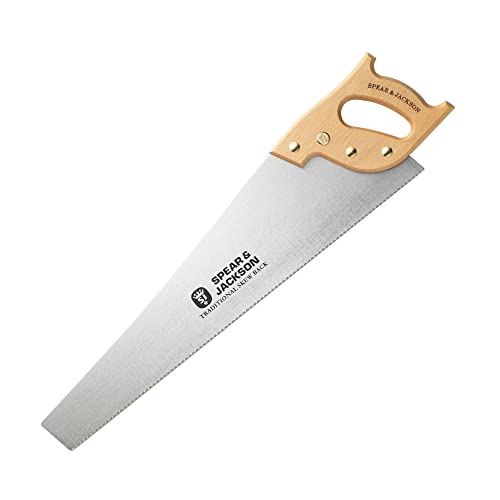
Spear and Jackson 20-Inch Rip Cut Hand Saw
Specifically designed for ripping wood, this saw has larger teeth that act like chisels. It cuts fast along the grain and leaves a reasonably clean edge. The handle is designed for a secure grip.
Pros
- Excellent for ripping lumber
- Hardwood handle feels classic
- Fast material removal
Cons
- Not suitable for crosscuts
- Requires more effort to start

SUIZAN Japanese Pull Saw 9.5-Inch
This Japanese pull saw cuts on the pull stroke, which gives you more control and a thinner kerf. The blade has 20 TPI for smooth cuts. It is excellent for dovetails, trimming dowels, and other precise work.
Pros
- Ultra-fine cuts without splintering
- Replaceable blade
- Lightweight and easy to control
Cons
- Short blade limits deep cuts
- Not for rough construction

Irwin Tools 20-Inch Professional Coping Saw
This coping saw has a deep throat to cut complex curves and shapes. It uses pinned blades that tension easily. The comfortable handle reduces hand strain during detailed work.
Pros
- Cuts tight curves smoothly
- Adjustable blade tension
- Comfortable grip
Cons
- Blades can break if twisted
- Requires practice for accuracy

Stanley 20-Inch 8-Point Crosscut Saw
This saw offers reliable performance at an affordable price. It has a hardened steel blade and a comfortable handle. It is suited for occasional DIY tasks and is a solid backup saw.
Pros
- Low cost
- Decent cutting speed
- Lightweight
Cons
- Blade may dull quickly
- Handle less ergonomic
How they stack up
| # | Model | Blade Length | Best for | Score | Price |
|---|---|---|---|---|---|
| 1 | Stanley FATMAX 20-Inch Hand Saw | 20 inches | General rough cutting and crosscutting of lumber | 9.4 | Check price |
| 2 | Irwin Tools Universal Handsaw 20-Inch | 20 inches | Cutting wood, plastic, and drywall | 9.1 | Check price |
| 3 | Bahco 2600-22-XT-HP Professional Bow Saw | 21 inches | Pruning and cutting green wood | 8.9 | Check price |
| 4 | Spear and Jackson 20-Inch Rip Cut Hand Saw | 20 inches | Rip cutting along the grain | 8.7 | Check price |
| 5 | SUIZAN Japanese Pull Saw 9.5-Inch | 9.5 inches | Fine woodworking and joinery | 9.0 | Check price |
| 6 | Irwin Tools 20-Inch Professional Coping Saw | 6.5 inches (blade) | Cutting curves and intricate shapes | 8.5 | Check price |
| 7 | Stanley 20-Inch 8-Point Crosscut Saw | 20 inches | Budget-friendly general use | 8.2 | Check price |
Questions worth asking
What is the best hand saw for general DIY projects?
The Stanley FATMAX 20-Inch Hand Saw is a top choice for general DIY because it cuts quickly and comfortably through lumber. For more versatility, the Irwin Universal Handsaw also handles plastic and drywall.
What does TPI mean and why does it matter?
TPI stands for teeth per inch. It indicates how many teeth are in one inch of blade. Higher TPI gives smoother cuts but slower cutting. Lower TPI cuts faster but leaves a rougher finish. Choose based on the material and finish you need.
Can I use the same hand saw for wood and metal?
No. Hand saws for wood have teeth designed to cut wood fibers. For metal, you need a hacksaw with a fine-tooth blade. Using a wood saw on metal will damage the teeth.
How do I cut a straight line with a hand saw?
Start with a shallow cut using your thumb as a guide. Keep the saw at a 45 degree angle to the work surface. Use long, smooth strokes and let the saw do the work. Focus on the line and adjust as you go.
What is the difference between a rip cut and a crosscut?
A rip cut goes with the grain of the wood, while a crosscut goes across the grain. Rip saws have fewer teeth that act like chisels. Crosscut saws have more teeth with a knife-like edge to slice the fibers.
Are Japanese pull saws better than Western push saws?
Pull saws are often easier to control because the blade is thin and cuts on the pull stroke, which prevents buckling. They produce cleaner cuts but are typically shorter. Western saws are better for aggressive cutting and longer strokes.
How do I sharpen a hand saw?
Sharpening a hand saw requires a saw file and a saw set. It is a skill that takes practice. Many DIYers prefer to replace the blade or buy a new saw because sharpening is time-consuming and requires special tools.
What safety precautions should I take when using a hand saw?
Always wear safety glasses. Keep your free hand away from the cutting path. Use a workbench or clamp to secure the material. When finished, store the saw with a guard to protect the teeth and yourself.
Final word
For most DIYers, the Stanley FATMAX 20-Inch Hand Saw is the best all-around choice because it balances speed, comfort, and durability. If you do fine woodworking, consider the SUIZAN Japanese Pull Saw for its precision. For outdoor tasks, the Bahco Bow Saw is unbeatable. Start with the FATMAX and expand your collection as your projects become more specific.