Handheld GPS Units That Keep You Found
For most outdoors enthusiasts, the Garmin GPSMAP 67i stands out as the top pick. It offers a large sunlight-readable screen and inReach satellite messaging. Its main limitation is the higher price tag, but for backcountry confidence, it is worth it.
A handheld GPS is a lifeline in remote areas where cell phones fail. Whether you are hiking, hunting, or geocaching, these devices provide reliable navigation and safety features.
We looked at the latest models from Garmin, known for outdoor GPS leadership. We compared screen size, battery life, mapping capabilities, and connectivity options.
The top picks, ranked

Garmin GPSMAP 67i
The GPSMAP 67i combines a high-sensitivity GPS with inReach satellite messaging, providing two-way communication and SOS capabilities. Its large 3-inch color screen is readable in sunlight, and it supports multi-band GNSS for improved accuracy in challenging environments. With a battery life of up to 180 hours in GPS mode, it is built for extended trips.
Pros
- Integrated satellite messaging for emergencies
- Long battery life for multi-day trips
- Sunlight-readable display
Cons
- Premium price point
- Requires subscription for messaging
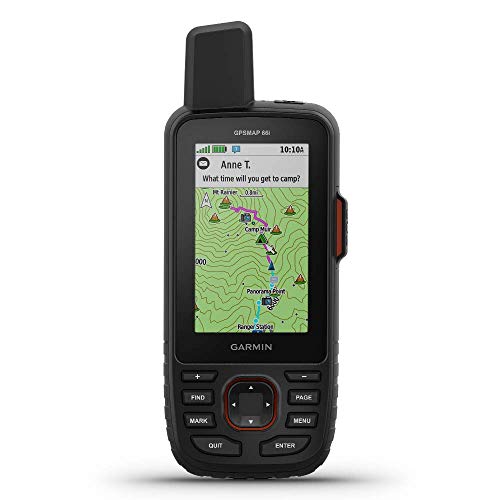
Garmin GPSMAP 66i
The GPSMAP 66i is a proven workhorse with a 3-inch color display and inReach technology. It has a rugged build that meets military standards for thermal, shock, and water resistance. It offers 100K topo maps preloaded and supports active weather forecasts. Owners praise its accuracy in dense forests and canyons.
Pros
- Rugged military-grade construction
- Preloaded topo maps
- Reliable satellite communication
Cons
- Shorter battery life than newer models
- Heavier at 10 ounces

Garmin eTrex 32x
The eTrex 32x is an affordable handheld that does not skimp on essentials. It features a 2.2-inch sunlight-readable display, 8GB of internal memory, and a microSD card slot for additional maps. It is IPX7 waterproof and has a battery life of up to 25 hours on two AA batteries. Ideal for hikers who need a reliable GPS without frills.
Pros
- Economical price
- Simple, intuitive interface
- AA batteries easily replaceable
Cons
- No satellite messaging or maps
- Smaller screen

Garmin Montana 700i
The Montana 700i is a multi-purpose GPS with a large 5-inch touchscreen, making it ideal for use on a bike, ATV, or in hand. It includes inReach technology and has a battery life of up to 18 hours. It is compatible with Garmin’s Explore app for easy trip planning. Its size and weight are trade-offs for the big display.
Pros
- Large, bright touchscreen
- Multiple mounting options
- Wireless connectivity for sharing routes
Cons
- Bulky and heavy for hiking
- Shorter battery life

Garmin Oregon 700
The Oregon 700 is a touchscreen handheld with a 3-inch display and dual-orientation capability. It supports paperless geocaching, allowing you to view cache descriptions and hints directly on the device. It has a built-in 3-axis compass and barometric altimeter. With a battery life of up to 16 hours, it is suitable for full-day caching trips.
Pros
- Paperless geocaching support
- Precise compass and altimeter
- Wireless sharing of caches
Cons
- No satellite messaging
- Average battery life
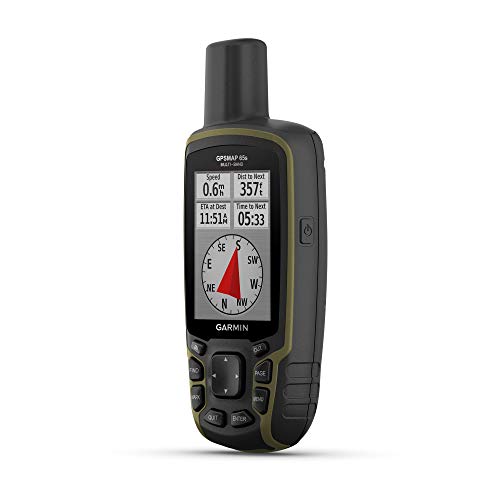
Garmin GPSMAP 65s
The GPSMAP 65s features multi-band GNSS technology that provides superior accuracy, especially in canyons and dense forests. It has a 2.6-inch color display and supports multiple global navigation satellite systems. It is built to military standards for durability. With a battery life of up to 16 hours in GPS mode, it is dependable for day hikes.
Pros
- Exceptional positional accuracy
- Rugged design
- Compatible with GPS, GLONASS, and Galileo
Cons
- No maps included
- Smaller screen

Garmin inReach Mini 2
The inReach Mini 2 is not a full-featured GPS but excels as a satellite communicator. It pairs with your phone for mapping, but also has basic GPS navigation. Its compact size (3.5 ounces) makes it easy to carry. It offers two-way messaging, weather forecasts, and an SOS feature. The battery lasts up to 14 days in tracking mode.
Pros
- Ultra-lightweight
- Reliable satellite messaging
- Long battery life in tracking mode
Cons
- Small screen with limited mapping
- Requires smartphone for full functionality
How they stack up
| # | Model | Screen Size | Best for | Score | Price |
|---|---|---|---|---|---|
| 1 | Garmin GPSMAP 67i | 3 inches | Best Overall for Backcountry Adventures | 9.4 | Check price |
| 2 | Garmin GPSMAP 66i | 3 inches | Best for Rugged Reliability | 9.1 | Check price |
| 3 | Garmin eTrex 32x | 2.2 inches | Best Budget-Friendly Option | 8.9 | Check price |
| 4 | Garmin Montana 700i | 5 inches | Best for Versatile Mounting | 9.0 | Check price |
| 5 | Garmin Oregon 700 | 3 inches | Best for Geocaching Enthusiasts | 8.7 | Check price |
| 6 | Garmin GPSMAP 65s | 2.6 inches | Best for Accuracy in Challenging Terrain | 8.8 | Check price |
| 7 | Garmin inReach Mini 2 | 3.5 ounces | Best for Emergency Communication | 9.2 | Check price |
How to pick the right one
Questions worth asking
What is the best handheld GPS for hiking?
The Garmin GPSMAP 67i is the best for hiking due to its long battery life, sunlight-readable screen, and integrated satellite messaging. It excels for multi-day backpacking trips.
Do I need a subscription for inReach?
Yes, Garmin inReach devices require an active satellite subscription for two-way messaging and SOS features. Plans start at a monthly fee and can be paused when not needed.
Can I use a handheld GPS without cell service?
Yes, handheld GPS units receive signals from satellites directly, so they work anywhere with a clear view of the sky. They do not rely on cell towers.
What is the difference between GPS and GNSS?
GPS is the US satellite system, while GNSS refers to all global navigation satellite systems, including GPS, GLONASS (Russia), and Galileo (Europe). Multi-band GNSS receivers can use multiple systems for better accuracy.
Are there waterproof handheld GPS units?
Most handheld GPS units have an IPX7 rating, meaning they can withstand immersion in water up to 1 meter for 30 minutes. They are not designed for prolonged submersion.
How accurate is a handheld GPS?
Consumer handheld GPS units typically have an accuracy of about 3 to 5 meters under open sky. Multi-band GNSS models can achieve sub-meter accuracy in ideal conditions.
Can I get topographic maps on a handheld GPS?
Many models come with preloaded topo maps, or you can purchase additional maps from Garmin. Some units allow you to load free maps from sources like OpenStreetMap.
What is the battery life of handheld GPS units?
Battery life varies widely. The Garmin GPSMAP 67i lasts up to 180 hours in GPS mode, while the Montana 700i lasts about 18 hours due to its large screen. Units using AA batteries typically last 16 to 25 hours.
The bottom line
Choose the Garmin GPSMAP 67i if you need a reliable all-around GPS with satellite communication. If you are on a budget, the Garmin eTrex 32x offers solid navigation without extra costs. For those who prioritize emergency communication above all, the Garmin inReach Mini 2 is the best safety companion.


