7 Beginner Friendly Headlamps for First Time Hikers
The Black Diamond Spot 400 is the top pick for beginners, with intuitive controls, a genuinely useful beam and reliable waterproofing. The Petzl Tikkina is the simplest option with almost nothing to learn. The BioLite HeadLamp 425 is the most comfortable to wear for long stretches.
The Black Diamond Spot 400 balances brightness and simple operation well, which is what matters most for a first headlamp at a trailhead. Anyone who wants light on a single button press should look at the Petzl Tikkina instead. Comfort over hours of wear favors the BioLite HeadLamp 425.
Beginner headlamps are harder to choose than they should be, since lumen numbers dominate the marketing while the details that actually frustrate new users go unmentioned. Mode cycling order, lock out functions, battery type and strap comfort decide whether a headlamp becomes a tool or a drawer occupant. We compared control layouts, published output and runtime figures, battery systems, and what owners consistently report after a first season of use.
Before you buy
Why lumens matter less than beginners think Every headlamp box leads with a peak lumen figure, usually a burst mode the light cannot sustain for long. Useful runtime at a mid level matters more, since almost nobody walks around on maximum. For general camp and trail use, 200 to 400 lumens is plenty, and clean controls at 300 lumens beat a confusing light rated at 1000.
How battery type shapes daily use AAA powered lamps let you carry spares and swap them in seconds, reassuring on a multi day trip or in cold weather. Built in rechargeable batteries weigh less, cost less to run and create no waste, but leave you stuck once flat unless a power bank is on hand. Hybrid designs that accept both make the safest first purchase.
What beam pattern and red mode do A flood beam lights a wide area close by and suits cooking, reading and camp chores. A spot beam throws further and suits moving over ground quickly. Most good headlamps mix both. A red mode preserves night vision and avoids blinding tentmates at two in the morning, more useful than beginners expect.
Which comfort details actually annoy new users Weight sitting on the front of the strap causes bounce, so lighter front units feel steadier when moving. A lock out function stops the lamp switching on inside a pack, the most common cause of a dead battery when it is needed. Look for IPX4 or better if rain is likely, and check that the tilt hinge holds its angle.
Our top picks

Black Diamond Spot 400 Headlamp
This headlamp hits the sweet spot for a first purchase, bright enough for trail running and camp chores while sealed against rain. Brightness memory brings it back on at the level you left it, exactly what a beginner wants. A lock mode prevents the classic dead battery surprise inside a packed bag.
Pros
- Bright enough for real trail use
- Brightness memory and lock out
- Strong waterproof rating for the class
Cons
- Touch sensitive dimming takes practice
- Disposable batteries add ongoing cost

Petzl Tikkina Headlamp
Press the button for light, press again to change level, and that is the entire interface. Nothing needs configuring and there is no red mode to cycle through, which explains why this is so often the recommendation for a first headlamp or a car spare. A wide flood beam suits camp tasks better than distance spotting.
Pros
- Almost nothing to learn
- Accepts an optional rechargeable core later
- Comfortable, low profile strap
Cons
- No red light mode
- Flood beam throws less distance than a spot

Petzl Actik Core Headlamp
A mixed beam, a red mode and a USB rechargeable battery pack step this model up from the Tikkina. It still accepts AAA batteries, so a flat pack on day three of a trip stops being a problem. That flexibility matters to a beginner who has not yet learned their own habits.
Pros
- Rechargeable but falls back to AAA batteries
- Red mode for tents and campsites
- Mixed beam covers trail and close work
Cons
- Heavier than the Tikkina
- Mode cycling is slower than a two button design

BioLite HeadLamp 425
A flat front panel sits nearly flush against the forehead instead of bouncing on the strap, which is the difference between a headlamp you forget about and one you keep adjusting. USB-C charging lets it run while plugged into a power bank. Owners cite fit as the main reason they chose it over brighter rivals.
Pros
- Barely noticeable on the forehead
- Runs while plugged into a power bank
- Very little bounce when moving
Cons
- No swappable batteries in the field
- Rear battery pack adds a little bulk

Energizer Vision HD+ LED Headlamp
This cheap, dependable headlamp suits the garage, the dog walk and the glovebox, running on batteries most households already stock. Output is respectable and the pivoting head aims the beam where needed. Build quality sits a step below outdoor brands, which is fine for the jobs it is meant for.
Pros
- Very inexpensive for the output
- Widely available batteries
- Pivoting head aims easily
Cons
- Plastic build feels less durable
- Weather sealing is basic

Foxelli MX20 LED Headlamp
Few headlamps this light stay bright enough to be genuinely useful, which makes this a favorite among runners who dislike weight on their head. A soft, washable strap and a wide beam angle range add comfort. Runtime on the low setting covers repeated evening use before a battery change.
Pros
- Extremely light and stable when running
- Soft washable strap
- Long runtime on low settings
Cons
- Not bright enough for fast technical trail
- Basic mode control
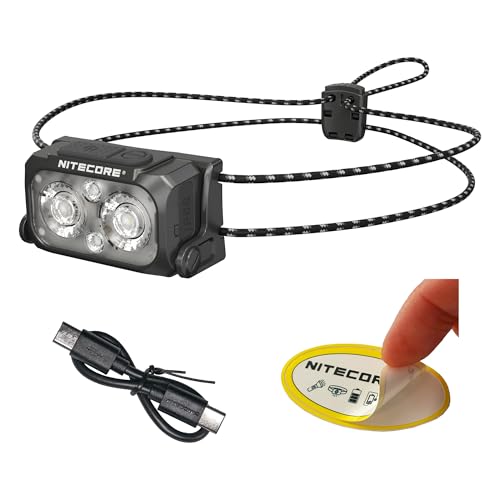
Nitecore NU25 UL Headlamp
Separate spot, flood and red emitters pack into a rechargeable headlamp that weighs almost nothing. Thru hikers favor it for exactly that reason, though the small controls take a little learning. Anyone who already counts grams gets a beginner headlamp here that will not need replacing later.
Pros
- Remarkably light for the output
- Three separate beam types
- USB-C charging
Cons
- Small buttons are fiddly with gloves
- Battery cannot be swapped in the field
How they compare
| # | Model | Max output | Best for | Score | Price |
|---|---|---|---|---|---|
| 1 | Black Diamond Spot 400 Headlamp | 400 lumens | Best overall | 9.4 | Check price |
| 2 | Petzl Tikkina Headlamp | 300 lumens | Best for simplicity | 9.2 | Check price |
| 3 | Petzl Actik Core Headlamp | 600 lumens | Best rechargeable | 9.0 | Check price |
| 4 | BioLite HeadLamp 425 | 425 lumens | Best for comfort | 8.7 | Check price |
| 5 | Energizer Vision HD+ LED Headlamp | Around 350 lumens | Best budget | 8.5 | Check price |
| 6 | Foxelli MX20 LED Headlamp | Around 165 lumens | Best lightweight pick | 8.2 | Check price |
| 7 | Nitecore NU25 UL Headlamp | 400 lumens | Best for backpacking | 8.0 | Check price |
Good to know
How many lumens does a beginner headlamp actually need?
Between 200 and 400 lumens covers camp tasks, dog walks, night hikes and most trail running. Higher numbers help on fast technical descents or search work but drain batteries quickly and go unused most of the time. Consistent output at a mid setting beats a high peak figure.
Rechargeable or disposable batteries for a first headlamp?
Rechargeable costs less and weighs less over time, suiting anyone who returns home to charge regularly. Disposable AAA cells make more sense for multi day trips, cold conditions and emergency kits where a spare set solves everything. Models accepting both keep the option open.
What does an IPX rating mean on a headlamp?
It describes water resistance. IPX4 handles rain splashes, IPX6 handles heavy spray, and IPX7 or IPX8 means survival after immersion to a stated depth. IPX4 is the practical minimum for general outdoor use, and anything higher is a bonus.
Why does a headlamp dim after a while?
Most lamps regulate output and step it down as the battery drains or the LED heats up, protecting both the cells and the emitter. This is normal behavior. A lamp claiming a very high maximum usually drops to a fraction of it within minutes of continuous use.
Is a red light mode worth having?
It is not essential, but it becomes a favorite feature fast. Red light preserves dark adaptation, disturbs other people far less and attracts fewer insects. Anyone camping with others or reading in a tent uses it more than expected.
How should a headlamp fit on the head?
Snug enough that it does not slide when you look down, loose enough to leave no pressure line on the forehead. Anyone planning to wear a hat or helmet should check the strap has enough adjustment range. A top strap helps with heavier lamps but is unnecessary on lightweight models.
Can a headlamp be used safely in the rain?
Yes, provided it carries a water resistance rating. Check that the battery compartment closes fully, since that is where water usually gets in. After a wet outing, open the compartment and let it dry rather than sealing moisture inside.
How do I stop a headlamp turning on inside a bag?
Use the lock out function if the model has one, usually activated by holding the button for a few seconds until it flashes. Without a lock out, reverse one battery in the compartment or store the lamp in an outside pocket where an accidental press is obvious.
What is the best headlamp for a beginner backpacker?
Ultralight rechargeable options like the Nitecore NU25 UL add almost no weight and offer separate beam types for camp and trail use. Anyone new to counting pack weight benefits most from that category.
Final word
The Black Diamond Spot 400 is the headlamp to hand someone buying their first, since it stays bright, sealed properly and easy to run without reading the manual twice. The Petzl Tikkina reduces the whole thing to one button if even that feels like too many modes. For long evenings with the lamp staying on for hours, the BioLite HeadLamp 425 is the most comfortable of the group.