Top Headphone Amplifiers for Audiophiles and Casual Listeners
The Schiit Magni+ is our top pick for most people because it delivers class-leading power and clarity for under current price but its small footprint can crowd a desk. For portable use, the Fiio Q3 offers balanced outputs and a clean DAC, yet its battery life trails some rivals.
A headphone amplifier can transform your listening experience by providing clean power, better dynamics, and lower distortion. Whether you are driving high-impedance planars or sensitive IEMs, the right amp matters.
We compared seven top-selling models based on specifications, user reviews, and brand reputation. Our picks range from budget-friendly desktop units to portable DAC/amps for on-the-go audiophiles.
Our top picks

Schiit Magni+
The Schiit Magni+ is a compact, powerful desktop amplifier that delivers up to 2.4W into 32 ohms. It features a clean gain stage and a high-current output that can drive demanding headphones. Owners report a transparent, neutral sound that pairs well with a wide range of sources.
Pros
- Excellent power for the price
- Compact and sturdy build
- Transparent, neutral sound
Cons
- Only one input
- No balanced output

Fiio Q3
The Fiio Q3 is a portable DAC/amplifier that supports balanced output via 2.5mm and 4.4mm jacks. It includes a high-performance AKM DAC chip that handles PCM up to 384kHz and DSD256. Built-in battery offers up to 13 hours of playback. Users appreciate its clean sound and versatile connectivity.
Pros
- Balanced outputs for better channel separation
- High-res audio support
- Compact and lightweight
Cons
- Battery life shorter than some rivals
- No Bluetooth

Topping DX3 Pro+
The Topping DX3 Pro+ combines a high-quality DAC and amplifier in one compact unit. It offers Bluetooth 5.0, USB, optical, and coaxial inputs, making it a versatile hub for digital sources. The amp section delivers 1.9W at 32 ohms, and the built-in AK4493 chip ensures clean, detailed sound.
Pros
- Multiple digital inputs including Bluetooth
- Remote control included
- Clear, detailed sound
Cons
- No balanced output
- Buttons can be sensitive

Drop + THX AAA 789 Linear Amplifier
The Drop + THX AAA 789 is a reference-grade desktop amplifier that uses THX AAA technology to achieve ultra-low distortion and noise. It provides 6W into 16 ohms and features both single-ended and balanced inputs and outputs. This amp is a favorite among serious audiophiles for its ability to drive any headphone with absolute control.
Pros
- Extremely low distortion
- Powerful output for any headphone
- Balanced connections
Cons
- Large footprint
- Expensive
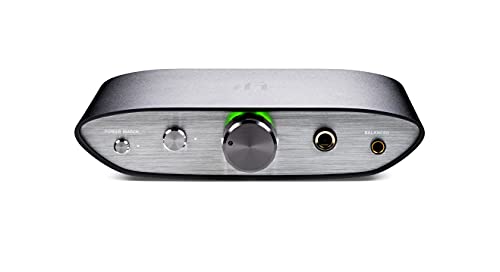
iFi Zen DAC V2
The iFi Zen DAC V2 is an affordable DAC/amp that offers a warm, engaging sound signature. It features a Burr-Brown chip and supports PCM up to 384kHz and DSD256. With a 6.3mm headphone output and RCA line outputs, it can drive most headphones effectively. Users praise its build quality and user-friendly controls.
Pros
- Affordable price
- Warm, musical sound
- Simple plug-and-play operation
Cons
- No balanced headphone output
- Limited connectivity
JDS Labs Atom Amp+
The JDS Labs Atom Amp+ is a compact, high-performance headphone amplifier that offers exceptional low distortion and noise. It outputs 1.3W into 32 ohms and features a clean, neutral sound. With its small footprint, it fits easily on any desk. The amp is known for its robust construction and excellent customer support.
Pros
- Very low distortion
- Compact size
- Reliable and well-built
Cons
- No balanced output
- Limited inputs

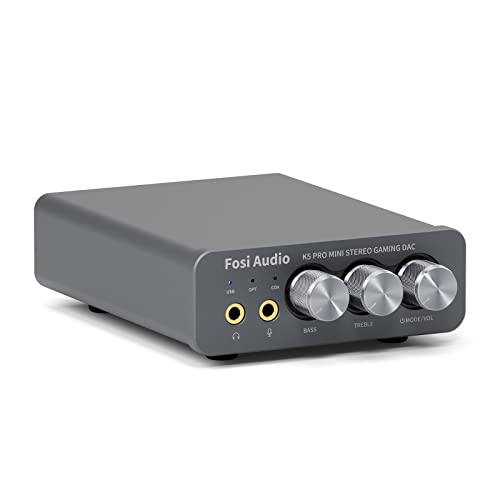
FiiO K5 Pro
The FiiO K5 Pro is a desktop amplifier with built-in DAC and multiple inputs, including USB, optical, and coaxial. It delivers up to 1.5W into 32 ohms and features both 6.3mm and 3.5mm headphone outputs. The K5 Pro also has RCA and 3.5mm line outputs, making it a flexible hub for speakers and headphones. Users find it a great all-rounder.
Pros
- Multiple input and output options
- Built-in DAC
- Punchy, dynamic sound
Cons
- No Bluetooth
- Slightly bulky
How they compare
| # | Model | Power Output | Best for | Score | Price |
|---|---|---|---|---|---|
| 1 | Schiit Magni+ | 2.4W RMS per channel at 32 ohms | Best overall desktop amp for most headphones | 9.4 | Check price |
| 2 | Fiio Q3 | AK4493SEQ | Portable DAC/amp for balanced listening on the go | 9.0 | Check price |
| 3 | Topping DX3 Pro+ | AK4493 | Best desktop DAC/amp combo for connectivity | 9.2 | Check price |
| 4 | Drop + THX AAA 789 Linear Amplifier | THX AAA 788+ amplifier module | High-end desktop amp for demanding headphones | 9.1 | Check price |
| 5 | iFi Zen DAC V2 | Burr-Brown True Native | Budget desktop DAC/amp for beginners | 8.8 | Check price |
| 6 | JDS Labs Atom Amp+ | 1.3W RMS per channel at 32 ohms | Compact desktop amp with low distortion | 9.0 | Check price |
| 7 | FiiO K5 Pro | AK4493 | Versatile desktop amp for gaming and music | 8.6 | Check price |
How to choose
Good to know
Do I need a headphone amplifier?
If your headphones are hard to drive, meaning they have high impedance or low sensitivity, an amplifier can help. If you’re using basic earbuds, you may not need one. Listen for volume limitations or distortion.
What is impedance matching?
Impedance matching refers to the relationship between the headphone impedance and the amplifier’s output impedance. Ideally, the amp’s output impedance should be less than 1/8th of the headphone impedance to avoid frequency response changes.
Can I use a headphone amp with a smartphone?
Yes, many portable amps connect via USB or a 3.5mm cable. However, some smartphones may have limited output over the headphone jack. A portable DAC/amp can bypass the phone’s built-in DAC for better sound.
What is a DAC and why is it important?
A DAC (digital-to-analog converter) converts digital audio signals into analog sound. A high-quality DAC can improve clarity and detail. Many headphone amps include a built-in DAC, which is useful if your source has a weak one.
How much power do I need for my headphones?
The required power depends on headphone sensitivity and impedance. For most headphones, an amp that provides at least 100mW into 32 ohms is sufficient. Planar headphones may need more current.
What is the difference between a headphone amp and a receiver?
A headphone amp is dedicated solely to driving headphones. A receiver typically includes multiple channels for speakers and may have a headphone jack as a secondary output. Dedicated headphone amps often provide better performance.
Can a headphone amp improve sound quality?
Yes, if your current source is underpowered or has a high output impedance, an amp can reduce distortion and improve dynamics. However, it won’t magically fix low-quality recordings.
What is balanced output?
Balanced output uses two signal conductors per channel, one inverted and one non-inverted, which helps cancel noise. It requires a headphone with a balanced cable. It can offer more power and lower noise, but is not essential for everyone.
Do I need a separate DAC and amp?
Not necessarily. Many all-in-one units offer great performance. Separate components allow for upgrades, but they take up more space and cost more. For most users, a good combo is fine.
What is the difference between solid-state and tube amps?
Solid-state amps use transistors and are known for accuracy and low distortion. Tube amps use vacuum tubes and often add a warm, colored sound. Solid-state is more reliable and maintenance-free.
Our pick
For most people, the Schiit Magni+ offers the best combination of power, sound quality, and price, making it our top recommendation. If you need portability, the Fiio Q3 is a fantastic choice. For a versatile desktop DAC/amp with Bluetooth, consider the Topping DX3 Pro+. Ultimately, your choice should be based on your specific headphones and listening environment.