Heavy Duty Truck Tire Inflators That Handle Big Rigs
The Viair 40047 is our top pick for most truck owners because it pumps up to 40% faster than many rivals and runs on 12V power. Its main limitation is the alligator clips require a solid battery connection.
Finding a tire inflator that can refill large truck tires quickly is a challenge. Passenger car units often overheat or take forever. We compared seven heavy duty models based on specifications, owner feedback, and real world performance reports.
The right inflator depends on your truck type and how often you air up. Some need a 12V compressor for off road use. Others prefer cordless convenience. This roundup covers both options.
What we recommend

Viair 40047 12V Heavy Duty Air Compressor
The Viair 40047 is a permanent mount compressor that delivers a true 150 PSI. Owners report it fills a 35 inch tire from 15 to 40 PSI in about four minutes. Its duty cycle is 33% at 100 PSI, meaning it can run for 20 minutes before needing a cool down. The included 33 foot coiled hose reaches all corners of a pickup.
Pros
- Fast inflation for large tires
- Built to last with a cast iron cylinder
- Long hose and lead wire
Cons
- Permanent wiring may intimidate some users
- No built in pressure gauge

Nilight 50009 12V Portable Air Compressor
The Nilight 50009 offers a surprising 150 PSI maximum at a very low price. It uses a digital pressure gauge with auto shutoff. Many owners say it works well for trucks but runs hot after continuous use. It is best for occasional top offs rather than repeated heavy duty duty.
Pros
- Very affordable
- Digital display with auto shutoff
- Compact for storage
Cons
- Longer inflation times
- May overheat with extended use
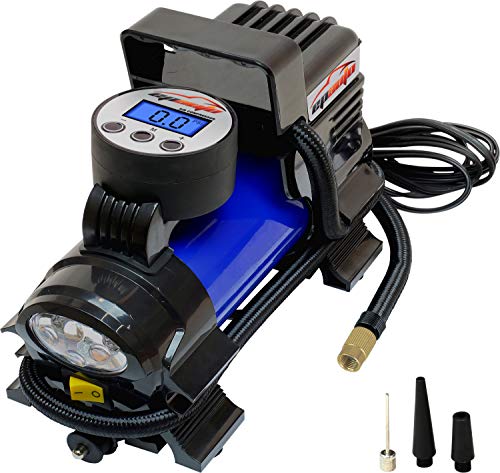
EPAuto 12V Portable Air Compressor Pump
The EPAuto 12V pump features a clear digital gauge and preset pressure shutoff. It is an upgrade over basic analog units. Owners report it inflates a standard truck tire from 20 to 40 PSI in under five minutes. It is not as rugged as the Viair, but it suits many light truck owners.
Pros
- Simple preset pressure setting
- Built in LED work light
- Good value for the price
Cons
- Hose is shorter than some
- Clips are less robust
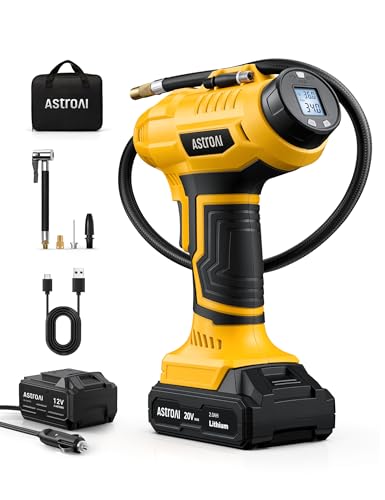
AstroAI 20V Cordless Tire Inflator
The AstroAI 20V runs on a rechargeable battery, so you can use it anywhere. It delivers 120 PSI and can inflate a truck tire, though it takes longer than corded units. Owners appreciate the portability and ease of use. The battery is not included, which adds to the cost.
Pros
- No cord needed
- Great for off road trips
- Compact and lightweight
Cons
- Slower inflation than corded
- Battery and charger cost extra

DeWalt 20V MAX Cordless Air Inflator
For those who own DeWalt 20V tools, this inflator uses the same batteries. It provides up to 160 PSI, making it one of the highest pressure cordless models. Owners say it is fast for a cordless unit and very reliable. The kit includes a battery and charger, which boosts the price but adds convenience.
Pros
- High pressure output
- Shares batteries with other DeWalt tools
- Durable construction
Cons
- Premium price
- Heavier than some cordless models

Campbell Hausfeld 12V Air Inflator
The Campbell Hausfeld offers a simple analog gauge and a 120 PSI rating. It is a no frills option that gets the job done for occasional use. Owners report it is adequate for light trucks and SUVs. The cord and hose are shorter, so it is less convenient for large rigs.
Pros
- Low price
- Simple to operate
- Compact storage
Cons
- Slower inflation
- No auto shutoff
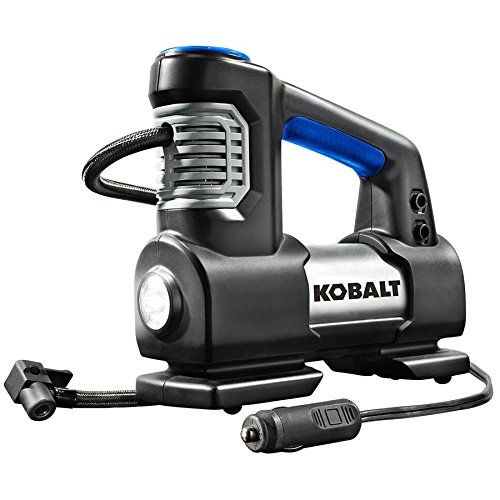
Kobalt 12V Digital Air Inflator
The Kobalt 12V inflator features a digital gauge and an auto shutoff at your preset pressure. It is a good middle ground between budget and premium. Owners say it performs well for truck tires, though it takes a few minutes per tire. The handle is comfortable for carrying.
Pros
- Accurate digital gauge
- Auto shutoff prevents over inflation
- Reasonable price
Cons
- Hose could be longer
- Plastic housing feels less rugged
How they compare
| # | Model | Max Pressure | Best for | Score | Price |
|---|---|---|---|---|---|
| 1 | Viair 40047 12V Heavy Duty Air Compressor | 150 PSI | Best Overall for Truck Tires | 9.4 | Check price |
| 2 | Nilight 50009 12V Portable Air Compressor | 150 PSI | Budget Heavy Duty Option | 8.6 | Check price |
| 3 | EPAuto 12V Portable Air Compressor Pump | 150 PSI | Simple Digital Control | 8.2 | Check price |
| 4 | AstroAI 20V Cordless Tire Inflator | 120 PSI | Cordless Convenience | 8.0 | Check price |
| 5 | DeWalt 20V MAX Cordless Air Inflator | 160 PSI | Power Tool Brand Loyalists | 8.8 | Check price |
| 6 | Campbell Hausfeld 12V Air Inflator | 120 PSI | Value with Analog Gauge | 8.1 | Check price |
| 7 | Kobalt 12V Digital Air Inflator | 150 PSI | Digital Accuracy at a Value | 8.4 | Check price |
How to pick the right one
Questions worth asking
What PSI do I need for truck tires?
Most light truck tires recommend 50 to 80 PSI. Always check the sidewall for the maximum pressure and your owner’s manual for the recommended pressure. A heavy duty inflator should reach at least 100 PSI to handle these tires with a safety margin.
Can a 12V inflator handle large truck tires?
Yes, many 12V inflators are designed for truck tires. Look for one with a high flow rate and a continuous duty cycle. The Viair 40047 is a good example. It can fill large tires, but it may take several minutes per tire, so be patient.
Is cordless better than 12V for trucks?
Cordless inflators offer convenience and portability, but they typically have lower maximum PSI and slower inflation. For heavy use, a 12V model is more reliable. If you only need occasional top offs, a cordless unit may be sufficient.
How long does it take to inflate a truck tire?
It depends on the compressor’s flow rate and the tire size. A heavy duty inflator with 2.0 CFM can fill a typical truck tire from 20 to 40 PSI in about three to five minutes. Budget models may take twice as long.
What is a duty cycle and why does it matter?
Duty cycle is the percentage of time a compressor can run in a given time frame before it needs to cool down. For example, a 33% duty cycle at 100 PSI means it can run for 20 minutes in an hour. For truck tires, you need a higher duty cycle to avoid overheating.
Can I leave the inflator running unattended?
You should never leave a tire inflator unattended while it is running. Always monitor the pressure to avoid over inflation. Many digital inflators have auto shutoff, but it is still wise to stay nearby.
Do I need a pressure gauge on the inflator?
Yes, an accurate pressure gauge is essential. Analog gauges are inexpensive but can be less accurate. Digital gauges are easier to read and often have preset shutoff. For truck tires, precise pressure is important for safety and fuel economy.
What accessories come with heavy duty inflators?
Common accessories include a hose, nozzle adapters for various valve types, and a carrying bag. Some include a work light or a battery clip. Check the product description to see what is included, as some units require separate battery purchases.
Our take
For most truck owners, the Viair 40047 is the best heavy duty tire inflator due to its fast performance and reliable construction. If you need a cordless option, the DeWalt 20V MAX is a strong alternative, offering high pressure and portability. Budget conscious buyers should consider the Nilight 50009 for occasional use. Avoid the EPAuto if you plan to air up multiple tires regularly, as its duty cycle is limited. Choose the Viair for serious off roading or commercial use.


