Ski Goggles Built to Survive Rocks, Falls and Fog
Smith Optics I/O MAG holds up best for rugged all-mountain use, with a magnetic lens swap and reinforced frame. Riders chasing peripheral vision should look at the Oakley Flight Deck. Budget-conscious skiers get interchangeable lenses and a durable TPU frame from the OutdoorMaster Ski Goggles PRO.
Rocks, tree branches and hard falls test a goggle frame long before the lens fogs. Smith Optics I/O MAG survives that abuse with a reinforced polyurethane frame built to flex rather than crack. Riders chasing maximum peripheral vision lean toward the Oakley Flight Deck instead.
Heavy duty goggles trade some weight and cost for frame flex and lens strength that casual pairs skip entirely. We compared frame material, double-lens anti-fog construction and owner reports on cracking after repeated hard use.
What to look for
What Makes Ski Goggles Heavy Duty? Frame material decides how a goggle survives falls and branch strikes, and reinforced TPU or polycarbonate outperforms basic plastic. Double-layer lenses with anti-fog coating resist fogging better than single-pane lenses during aggressive skiing. Foam density affects comfort and moisture management over a full day on the mountain. Interchangeable lens systems add versatility, though they are not strictly required for durability.
Magnetic vs Clip-In Lens Systems: Which Is Better? Magnetic systems, used by Smith and Anon, let skiers swap lenses in seconds without removing gloves or the goggle itself. Clip-in systems cost less but take longer and risk misalignment when fingers are cold and stiff. Skiers who chase changing light conditions all day benefit most from a magnetic design. Riders who stick with one lens most of the season may not need the added cost.
Best Ski Goggles for High Altitude or Extreme Cold Rapid light changes above treeline favor photochromic lenses, like Julbo’s Aerospace, since clouds move fast across exposed terrain. Extreme cold also raises fogging risk, so fan-assisted venting or double-layer lenses matter more than at moderate elevations. Full days above treeline call for frames with minimal foam, because less foam retains less moisture in freezing air. Standard resort skiing rarely needs this level of altitude-specific engineering.
Do Ski Goggles Fit Over Glasses or Helmets? Over-the-glasses, or OTG, goggles use a wider internal frame with extra foam clearance for eyeglass arms. Budget-friendly models like the Zionor Lagopus commonly include this fit. Helmet compatibility depends on matching the goggle’s frame curve to the helmet brand, and most major goggle and helmet lines coordinate sizing on purpose. Checking the gap between goggle and helmet before the season starts prevents cold air leaks.
The shortlist, ranked

Smith Optics I/O MAG Goggles
Magnets let this goggle swap lenses in seconds without removing it from a helmet. A TPU frame flexes under impact rather than cracking, which matters on rocky terrain. Two included lenses cover both bright sun and flat light conditions.
Pros
- Magnetic lens swap takes seconds on the mountain
- TPU frame flexes rather than cracks on impact
- Two lenses included for varied light conditions
Cons
- Higher cost than single-lens goggles
- Magnetic lens system adds slight frame weight

Oakley Flight Deck Goggles
A taller, wider lens shape extends peripheral vision beyond most frames in this class. Prizm lens technology adjusts contrast for specific snow conditions. Triple-layer face foam manages moisture during aggressive skiing.
Pros
- Widest peripheral vision in this lineup
- Prizm lens improves contrast in flat light
- Triple-layer foam manages sweat and moisture
Cons
- Larger frame doesn’t suit narrower face shapes
- Replacement Prizm lenses cost more than standard lenses
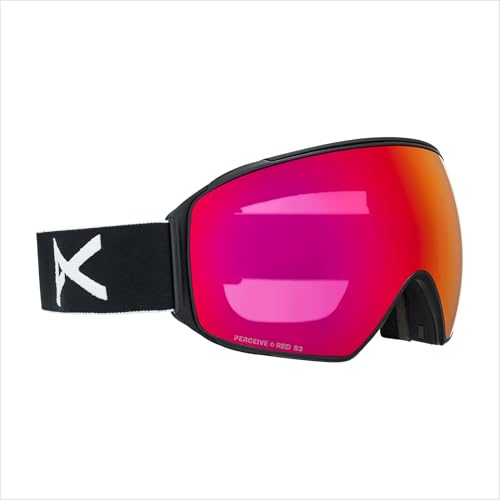
Anon M4 Toric Goggles
A toric lens curves both horizontally and vertically for a more natural field of view. Anon’s magnetic facemask attaches directly to the goggle for cold, wind-heavy days. Lens changes take seconds through that same magnetic system.
Pros
- Toric lens curve reduces peripheral distortion
- Magnetic facemask blocks wind on cold days
- Fast lens changes without removing the goggle
Cons
- Facemask accessory sold separately from base kit
- Premium price relative to single-lens goggles

Julbo Aerospace Goggles
A photochromic lens darkens and lightens automatically as clouds move in and out. Dual-lens construction with a built-in fan reduces fogging at high altitude, where temperature swings run extreme. Minimal foam keeps moisture retention low in freezing conditions.
Pros
- Photochromic lens adapts without swapping
- Fan-assisted venting reduces fog at altitude
- Performs well in rapidly changing light
Cons
- Photochromic lens response lags in fast-changing light
- Higher cost than fixed-tint alternatives

Dragon Alliance PXV Goggles
A spherical, wide lens shape mimics pricier magnetic goggles but uses a traditional clip-in lens system. Anti-fog coating sits on the inner lens surface rather than a separate insert. Triple-layer foam adds comfort for extended wear.
Pros
- Wide lens view without magnetic-system pricing
- Triple-layer foam comfortable for full days
- Clip-in lenses still swap reasonably quickly
Cons
- Lens swaps slower than magnetic competitors
- Fewer lens tint options than premium rivals

OutdoorMaster Ski Goggles PRO
Interchangeable lenses and a magnetic quick-change system come in well below premium brand pricing. A TPU frame holds up to moderate impact, though it flexes less predictably than reinforced competitors. Double-layer lenses with anti-fog coating handle most groomed-run conditions.
Pros
- Magnetic lens system at a fraction of premium pricing
- Double-layer anti-fog lens handles most conditions
- Includes two lenses for different light levels
Cons
- Frame flexes less predictably in hard impacts
- Lens optics less refined than premium brands
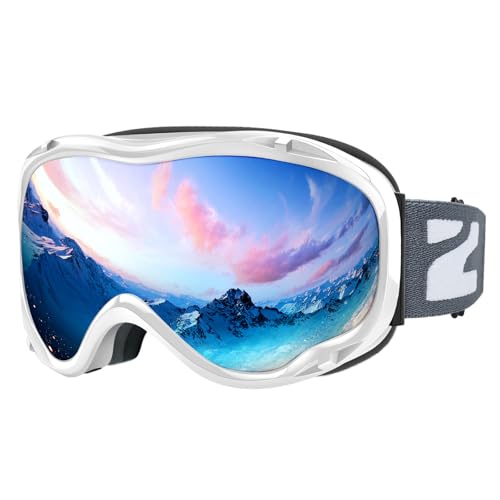
Zionor Lagopus Ski Goggles
A double-layer anti-fog lens and foam-lined frame cover the basics at an entry price point. Lens swapping relies on clips rather than magnets, which takes longer on the hill. Fit still accommodates most prescription glasses for skiers who need that clearance.
Pros
- Lowest cost double-lens goggle in this roundup
- Fits over most prescription glasses
- Foam lining comfortable for shorter sessions
Cons
- No quick-change magnetic lens system
- Frame less reinforced than premium alternatives
How they compare
| # | Model | Lens type | Best for | Score | Price |
|---|---|---|---|---|---|
| 1 | Smith Optics I/O MAG Goggles | Interchangeable, magnetic ChromaPop lenses | Best overall | 9.4 | Check price |
| 2 | Oakley Flight Deck Goggles | Prizm spherical lens, interchangeable | Best for wide field of view | 9.1 | Check price |
| 3 | Anon M4 Toric Goggles | Toric, magnetic quick-change | Best for magnetic lens and shield swaps | 8.8 | Check price |
| 4 | Julbo Aerospace Goggles | Photochromic, adjusts to light automatically | Best for extreme cold and high altitude | 8.5 | Check price |
| 5 | Dragon Alliance PXV Goggles | Spherical, clip-in interchangeable | Best for peripheral vision on a budget | 8.2 | Check price |
| 6 | OutdoorMaster Ski Goggles PRO | Interchangeable, magnetic attachment | Best value | 8.1 | Check price |
| 7 | Zionor Lagopus Ski Goggles | Double-layer, clip-in single lens | Best budget | 8.0 | Check price |
Common questions
Are heavy duty ski goggles worth the extra cost?
For frequent skiers or rough terrain, reinforced frames and interchangeable lenses cut replacement costs over multiple seasons compared with basic single-lens goggles.
How do I stop ski goggles from fogging up?
Double-layer lenses with anti-fog coating, proper helmet venting and keeping goggles off a warm forehead during breaks all reduce fogging.
What is the difference between spherical and cylindrical lenses?
Spherical lenses curve in two directions for a wider field of view and less glare, while cylindrical lenses curve only horizontally and typically cost less.
Can ski goggles be used for snowboarding too?
Yes. Ski and snowboard goggles share the same lens and frame technology, and helmet compatibility matters more than the specific sport.
How often should ski goggles be replaced?
Visible lens scratches or a cracked frame signal it’s time. Regular skiers typically replace goggles every three to five seasons depending on care.
What lens tint works best for overcast days?
Lighter tints or photochromic lenses that lighten automatically perform best in flat, overcast light by boosting contrast on the snow surface.
Do magnetic lens goggles fall apart on the mountain?
Magnetic systems from established brands like Smith and Anon hold lenses securely during normal skiing and falls, according to owner reports over repeated seasons.
Are cheap ski goggles safe to use?
Budget goggles still provide UV protection and basic impact resistance, though frame flex and anti-fog performance typically lag behind premium reinforced models.
Ski goggles vs snowboard goggles: is there a real difference?
Not in the lens or frame technology. The distinction comes down to helmet compatibility and style, since both sports use the same core construction.
Our pick
Riders who hit rough terrain and changing light benefit most from the Smith Optics I/O MAG’s reinforced frame and quick lens swaps. Those chasing maximum peripheral vision should look at the Oakley Flight Deck. Budget-conscious skiers get most of the same interchangeable-lens convenience from the OutdoorMaster Ski Goggles PRO.


