Indoor Hockey Gear Made for Gym Floors, Not Ice
Mylec’s Pro Street Hockey Goal earns the top spot with a near-regulation steel frame that sets up tool-free and survives repeated shots. Franklin Sports’ NHL Street Hockey Stick delivers the best value through a floor-safe ABS blade. Franklin Sports Street Hockey Ball completes the pick for controlled play on any surface.
Sneakers replace skates and a rubber ball replaces the puck once hockey moves indoors. Floor-safe blades and low-bounce balls matter more here than any ice-hockey brand name.
Gym floors and driveways punish gear differently than a rink does, so this comparison weighs blade material, ball weight and frame construction rather than pro-league pedigree. We looked at what owners report after months of hardwood and concrete use.
How to choose
What Makes Hockey Gear Safe For Indoor Floors Street and indoor hockey equipment swaps metal blades and ice pucks for ABS plastic and rubber, materials that will not gouge hardwood or scuff a gym floor. Checking blade material before buying prevents damage in shared gym or basement spaces. Frame and net construction matter too, since a goal that needs wall mounting is not an option in a rented space.
Ball Or Puck: Which Rolls Better Indoors Low-bounce rubber balls, like the Franklin Sports Street Hockey Ball, roll more predictably on hardwood than a puck built for ice friction. Some players prefer a weighted street puck for a feel closer to real ice hockey. Balls remain the safer default for shared indoor spaces where control matters more than speed.
Sizing Sticks And Gloves For Kids Versus Adults Junior and youth sticks, including the Mylec Junior and Winnwell models, shorten shaft length so smaller players keep control. Gloves follow the same pattern, with lighter padding and smaller sizing than adult street hockey gloves. Matching gear to age reduces fatigue and improves stick handling for younger players.
Setting Up A Goal Without Damaging Floors Folding steel-frame goals like the Mylec Pro Street Hockey Goal assemble without tools and skip the wall-mounted holes permanent nets require. Their weight keeps them stable during play while still allowing storage against a wall between sessions. A near-regulation size like this one suits players with the space to use it.
The shortlist, ranked

Mylec Pro Street Hockey Goal
Fifty-four by forty-four inches puts this net closer to regulation size than the mini goals sold for backyard shooting. A powder-coated steel frame snaps together without tools and folds flat between sessions. Owners report the knotless polyester net resists tearing even after repeated hard rubber-ball shots.
Pros
- Near-regulation size for realistic shooting practice
- Folds flat for storage against a wall
- Net withstands repeated hard shots without tearing
Cons
- Larger footprint demands more indoor space
- Steel frame is heavier to move than mini nets

Franklin Sports NHL Street Hockey Stick
An ABS plastic blade glides across hardwood and concrete without gouging the surface. Wood construction keeps the price below composite alternatives. Both forehand and backhand passing work well thanks to a blade curve built for beginner and intermediate play.
Pros
- Low cost for beginner or backyard use
- Blade slides without marking floors
- Sold in multiple length sizes
Cons
- Wood shaft weighs more than composite sticks
- Blade wears faster on rough asphalt than hardwood
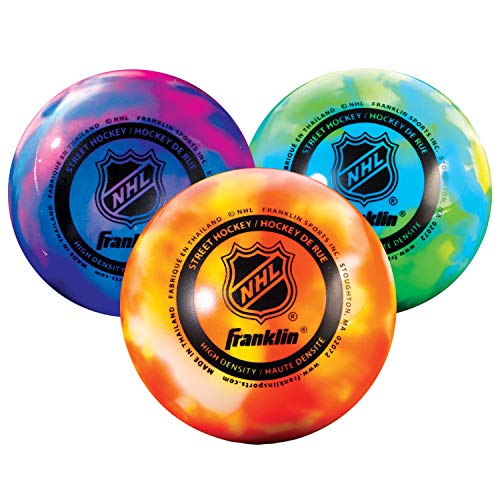
Franklin Sports Street Hockey Ball
Low-bounce rubber keeps this ball controllable across both indoor and outdoor surfaces. Its weight sits between a street hockey ball and an ice hockey puck, which gives it predictable rolling behavior on hardwood. Several color options help mark drills by skill level.
Pros
- Low bounce keeps play controlled indoors
- Performs on both gym and driveway surfaces
- Color options help organize practice drills
Cons
- Wears faster than a puck on rough concrete
- Feels light compared with a weighted puck

Bauer Vapor Street Hockey Stick
Bauer carries its ice hockey shaft geometry into a composite build meant for gym and street surfaces. A lighter shaft cuts swing weight compared with wood alternatives, which speeds up stick handling. Reinforced blade construction holds up to repeated ball and puck impacts on hard flooring.
Pros
- Lighter composite shaft speeds up handling
- Reinforced blade withstands frequent impacts
- Familiar shaft geometry for skaters moving to street play
Cons
- Costs more than entry-level wood sticks
- Overkill for casual, occasional play

Winnwell Street Hockey Stick
A shorter shaft improves control for smaller frames on this youth-sized stick. Its ABS blade slides across hardwood the same way adult models do, avoiding scuffs. Reduced overall weight cuts fatigue during longer practice sessions.
Pros
- Shorter length improves control for kids
- Floor-safe blade avoids scuffing hardwood
- Lighter weight reduces fatigue
Cons
- Youth sizing gets outgrown quickly by taller kids
- Wears faster than adult composite sticks under heavy use

Franklin Sports Street Hockey Gloves
Lighter foam padding matches the lower-impact nature of street and gym hockey, unlike bulkier ice hockey gloves. Ventilated mesh panels cut heat buildup during long indoor sessions. A flexible cuff preserves wrist mobility for stick handling and passing.
Pros
- Ventilated design reduces heat during play
- Flexible cuff preserves wrist mobility
- Lighter padding suits lower-impact indoor games
Cons
- Offers less protection than full ice hockey gloves
- Padding wears down faster with daily use

Mylec Junior Street Hockey Stick
A wood shaft pairs with a molded plastic blade at junior length, sized for first-time players. Low cost makes this stick practical for group or classroom settings where rough handling is common. Its flat blade shape works for both passing and basic shooting drills.
Pros
- Low cost suits group or classroom use
- Junior length fits smaller players
- Flat blade works for passing and shooting drills
Cons
- Wood shaft flexes less than composite options
- Basic construction wears faster under daily use
How they compare
| # | Model | Goal size | Best for | Score | Price |
|---|---|---|---|---|---|
| 1 | Mylec Pro Street Hockey Goal | 54 x 44 inches | Best overall | 9.4 | Check price |
| 2 | Franklin Sports NHL Street Hockey Stick | ABS plastic | Best value | 9.1 | Check price |
| 3 | Franklin Sports Street Hockey Ball | Low-bounce rubber | Best for gym and driveway play | 8.9 | Check price |
| 4 | Bauer Vapor Street Hockey Stick | Reinforced composite | Best for advanced players | 8.6 | Check price |
| 5 | Winnwell Street Hockey Stick | ABS plastic | Best for youth players | 8.3 | Check price |
| 6 | Franklin Sports Street Hockey Gloves | Lightweight foam | Best for hand protection | 8.1 | Check price |
| 7 | Mylec Junior Street Hockey Stick | Molded plastic | Best for beginners | 8.0 | Check price |
Good to know
Can you use ice hockey sticks indoors on hardwood?
Metal or reinforced blades on ice hockey sticks can scuff or gouge hardwood, so an ABS plastic blade is the safer indoor choice.
What is the difference between street hockey and ice hockey gear?
Street and indoor equipment uses floor-safe plastic blades, rubber balls and lighter padding. Ice hockey gear uses metal blades, pucks and heavier padding built for contact on ice.
Is a hockey ball or a puck better for indoor play?
A low-bounce rubber ball rolls more predictably than a puck designed for ice friction, which makes it the better choice on hardwood or concrete.
What size street hockey goal fits a garage or basement?
Mini nets fit tight spaces well, while a 54 by 44 inch goal like the Mylec Pro gives more realistic practice for players with extra room.
Do kids need different gloves for street hockey than adults?
Youth-sized gloves with lighter padding, like the Franklin Sports Street Hockey Gloves, improve mobility and comfort for smaller hands compared with adult ice hockey gloves.
Can an ice hockey stick be used for street hockey?
Composite ice hockey sticks such as the Bauer Vapor cross over well, though their blades are not optimized for ball play the way dedicated street sticks are.
How long does a street hockey ball last on concrete?
Rough concrete or asphalt wears a rubber ball faster than a smooth gym floor does, so replacement frequency depends on the surface used.
What indoor hockey equipment works best for beginners?
Entry-level wood-shaft sticks such as the Franklin Sports NHL Street Hockey Stick or Mylec Junior model offer an affordable, forgiving start.
Does street hockey gear scuff gym floors?
Not when the blade is ABS plastic and the ball is rubber. Metal blades and hard pucks are the parts that cause scuffing.
What should I look for in a street hockey stick?
Match blade material to your surface, check shaft length against player height, and confirm whether the stick is rated for hardwood, concrete or both.
The bottom line
Mylec’s Pro Street Hockey Goal and the Franklin Sports NHL Street Hockey Stick cover the core of an indoor setup without damaging floors. Younger players should size down with the Mylec Junior stick and Franklin gloves. Advanced players can step up to the Bauer Vapor composite for faster handling.


