Hockey Equipment Built to Handle Outdoor Rinks
Mylec’s Pro Street Hockey Stick shrugs off asphalt abuse better than composite ice sticks. Franklin’s NHL Street/Roller Hockey Goal holds up through driveway wind and rain. Bauer’s RSX Roller Hockey Skates grip pavement instead of ice, and together the three cover shooting, scoring, and skating outdoors.
Mylec’s Pro Street Hockey Stick, Franklin’s NHL Street/Roller Hockey Goal, and Bauer’s RSX Roller Hockey Skates anchor this outdoor lineup. Pavement grit and temperature swings wear out ice-hockey gear fast, since thin composite blades and leather palms crack or stiffen within a season outside. Weather-rated plastic and asphalt-rated rubber replace those materials across all seven picks.
Choosing outdoor gear gets complicated once temperature enters the picture, since a ball rated for summer asphalt turns brick-hard in freezing air. Skates built for pavement will not glide on rink ice, and kids’ pickup games call for softer padding than an adult league running on concrete. We compared listed materials, dimensions, and temperature ratings, then weighed owner feedback on durability before ranking these seven.
The shortlist, ranked

Mylec Pro Street Hockey Stick
A molded ABS plastic blade bonds to a fiberglass-reinforced shaft built to resist curb scrapes and asphalt abrasion. Senior and intermediate lengths cover different heights, with a low-kick flex point tuned for street and roller play. The blade holds its curve through repeated pavement contact, unlike wood blades that splinter outdoors.
Pros
- Blade resists cracking on rough pavement
- Multiple lengths fit different player heights
- Low-kick flex suits quick street shots
Cons
- Heavier than composite ice sticks
- Blade curve is fixed, not adjustable
Franklin Sports NHL Street/Roller Hockey Goal
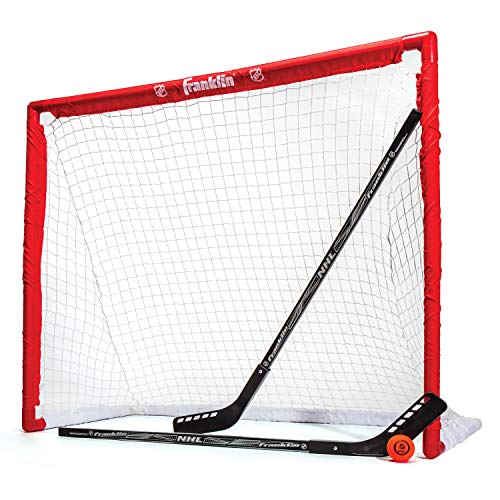
A powder-coated steel frame pairs with target-corner mesh netting built for repeated outdoor setup and teardown. Fifty-four inches of width fits most driveways while still giving shooters realistic aim points. Steel tubing resists rust better than the painted metal used on entry-level folding goals.
Pros
- Steel frame holds shape after repeated moves
- Target-corner net gives shooters aim points
- Folds flat for garage or shed storage
Cons
- Needs stakes or sandbags in high wind
- Assembly takes longer than mini nets

Mylec All-Weather Street Hockey Ball
A low-temperature rubber compound stays flexible down to roughly 14 degrees Fahrenheit instead of turning brittle on cold pavement. Its 2.5-inch diameter matches standard street hockey blades and regulation-style goals. Dimpled surface texture cuts bounce on asphalt compared to smoother street balls.
Pros
- Stays flexible in cold instead of turning brittle
- Reduced bounce keeps play controllable on asphalt
- Diameter matches standard sticks and goals
Cons
- Softer compound can nick against curbs when new
- Not built for warm asphalt over 80°F
Franklin Sports High Density Foam Street Hockey Ball
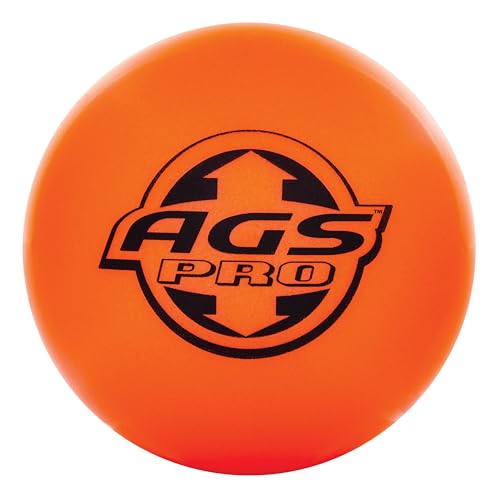
A high-density closed-cell foam core stays true-rolling on hot asphalt without going sticky or soft. Diameter matches rubber street balls at 2.5 inches, but the lighter weight cuts sting from close-range shots. Franklin rates it for play above roughly 50°F, where cold-rated rubber balls can feel too hard.
Pros
- Lower sting on close-range shots than rubber balls
- True-rolling on hot asphalt surfaces
- Same diameter as standard street hockey sticks
Cons
- Not rated for cold-weather play below 50°F
- Foam surface wears faster on rough concrete

Bauer RSX Roller Hockey Skates
An ice-hockey-style boot pairs with an 80mm inline wheel chassis built for outdoor rolling instead of ice blades. A heat-moldable liner matches Bauer’s ice skate line, so the fit feels familiar to players moving outdoors. Wheels carry an asphalt and concrete rating rather than an indoor rink rating.
Pros
- Heat-moldable liner gives a familiar ice-skate fit
- 80mm wheels roll smoothly on rough asphalt
- Aluminum chassis holds alignment over time
Cons
- Break-in period needed before wheels roll freely
- Not designed for smooth indoor rink floors

Franklin Sports Youth Street Hockey Glove Set
Foam-padded gloves pair with a lightweight shin guard sized for players roughly ages 5 to 9. Knuckle and wrist padding stays light enough to avoid restricting stick handling. Franklin builds the set for youth hands specifically, rather than scaling down adult gear.
Pros
- Lightweight foam padding doesn’t restrict stick handling
- Sized specifically for youth hands and shins
- Costs less than adult-scaled protective sets
Cons
- Padding is thinner than adult-level protection
- Sizing runs small near the upper age range

Mylec Senior Street Hockey Player Gloves
A foam and plastic-reinforced back pairs with a synthetic leather palm sized for adult hands in competitive street or roller leagues. Reinforced fingers and a thumb guard add protection youth-oriented sets skip. Sizing follows standard ice-hockey glove charts.
Pros
- Reinforced back and thumb guard for adult-level contact
- Palm material grips stick shaft in wet weather
- Sizing matches standard ice-hockey glove charts
Cons
- Bulkier fit than youth or beginner gloves
- No junior sizing available in this line
Side by side
| # | Model | Material | Best for | Score | Price |
|---|---|---|---|---|---|
| 1 | Mylec Pro Street Hockey Stick | ABS plastic blade, fiberglass shaft | Best overall | 9.4 | Check price |
| 2 | Franklin Sports NHL Street/Roller Hockey Goal | powder-coated steel tubing | Best goal for driveway play | 9.1 | Check price |
| 3 | Mylec All-Weather Street Hockey Ball | low-temperature rubber compound | Best ball for cold outdoor temps | 8.8 | Check price |
| 4 | Franklin Sports High Density Foam Street Hockey Ball | high-density closed-cell foam | Best ball for warm weather/asphalt | 8.5 | Check price |
| 5 | Bauer RSX Roller Hockey Skates | heat-moldable liner, ice-hockey-style fit | Best for skating on pavement | 8.3 | Check price |
| 6 | Franklin Sports Youth Street Hockey Glove Set | foam knuckle and wrist protection | Best budget protective gear for kids | 8.1 | Check price |
| 7 | Mylec Senior Street Hockey Player Gloves | synthetic leather palm, foam-plastic back | Best for adult/serious players | 8.0 | Check price |
How to pick the right one
What changes when hockey gear moves outdoors Ice-hockey equipment targets a controlled indoor surface, not sun, rain, or rough pavement. Composite sticks and leather gloves wear out fast against curbs and asphalt grit. Street-rated gear substitutes ABS plastic, reinforced fiberglass, and weather-treated foam so it survives repeated outdoor sessions. Ball behavior shifts too, since bounce height and roll speed depend on surface texture and temperature, not rubber hardness alone.
How to set up a driveway or street hockey game A driveway or cul-de-sac game usually needs a stick, a ball, and a goal that assembles without tools. Franklin’s 54-inch steel-frame goal fits most driveways while giving shooters realistic aim points. Stick length matters more outdoors than indoors, since curb height and slope change how a rink-sized stick feels. Anchoring the goal with stakes or sandbags stops it from sliding on wind-exposed pavement.
Choosing a street hockey ball for the temperature you play in Rubber balls stiffen as temperatures drop, which is why cold-rated options like Mylec’s All-Weather model use a softer compound rated down to about 14°F. Foam balls, such as Franklin’s high-density model, roll better above roughly 50°F but wear faster on rough concrete. Picking the wrong ball for the season leaves either a rock-hard projectile in winter or a slow, mushy roll in summer. Matching material to expected game-day temperature avoids both problems.
Protective gear and skates for different player levels Youth pickup games call for lighter, foam-padded gloves like Franklin’s youth set, sized for smaller hands rather than scaled-down adult gear. Adult and competitive leagues need reinforced gloves, such as Mylec’s senior line, built for harder shots and more contact. Players skating on pavement instead of sneakers need outdoor-rated wheels, like the 80mm chassis on Bauer’s RSX skates, since ice blades and indoor rollerblade wheels are not built for asphalt. Matching protection and footwear to age and surface cuts injury risk without over-buying gear.
Frequently asked questions
What’s the difference between street hockey and ice hockey equipment?
Street gear substitutes weather-resistant plastic and foam for the wood, composite, and leather used in ice hockey. ABS plastic blades replace curved composite blades built for ice contact, and balls replace pucks entirely. Roller or inline wheels also swap in for steel blades to grip pavement.
Can you use an ice hockey stick for street hockey?
A composite ice stick can technically hit a street ball, but asphalt contact cracks thin composite blades faster than a street-specific ABS blade. Sticks like Mylec’s Pro Street model use reinforced plastic built to absorb curb scrapes. A dedicated street stick simply lasts longer over a season.
What size ball do I need for street hockey?
Most street hockey balls, including Mylec’s and Franklin’s, measure about 2.5 inches across to match standard stick blades and goal openings. That size stays consistent across cold-weather rubber balls and warm-weather foam balls. Checking diameter against your goal’s opening height still confirms fit.
Street hockey ball vs ice hockey puck, what’s the difference?
A street hockey ball is round rubber or foam, while an ice hockey puck is a flat vulcanized rubber disc built for gliding on ice. Pucks do not roll predictably on pavement, so street play uses a ball instead. Ball weight and bounce also shift by temperature rating, unlike a puck’s fixed weight.
Do roller hockey skates work on regular pavement?
Roller hockey skates with outdoor-rated wheels, such as the 80mm wheels on Bauer’s RSX skates, are built for asphalt and concrete. Indoor-only inline wheels wear down faster and lose grip on rough pavement. Checking the wheel’s surface rating before buying avoids using an indoor-only skate outside.
What temperature rating should a street hockey ball have?
Cold-weather rubber compounds, like Mylec’s All-Weather ball, typically list a minimum around 14°F. Foam balls, by contrast, usually list a minimum near 50°F for proper roll and bounce. Matching that rating to expected game-day conditions keeps the ball from cracking or turning mushy.
Is street hockey gear safe for kids to use outdoors?
Youth-specific sets, like Franklin’s Youth Street Hockey Glove Set, use lighter foam padding sized for smaller hands and lower-impact pickup games. They offer less protection than adult-level gloves, so supervision and pace still matter for younger players. Gear sized for the player’s actual age group fits and protects better than scaled-down adult equipment.
How do you set up a street hockey goal on a driveway?
Setup usually means unfolding the steel frame, securing the net clips, and anchoring the base with stakes or sandbags. Franklin’s NHL Street/Roller Hockey Goal folds without tools, which speeds up repeated setup and teardown. Anchoring matters most on windy or sloped driveways where an unweighted goal can slide.
What is the best hockey stick for outdoor asphalt play?
Mylec’s Pro Street Hockey Stick pairs a fiberglass-reinforced shaft with a molded ABS blade built to resist curb scrapes and repeated asphalt contact, holding up better than composite ice sticks outdoors.
The verdict
For most driveway or street setups, Mylec’s Pro Street Hockey Stick, Franklin’s NHL Street/Roller Hockey Goal, and Bauer’s RSX Roller Hockey Skates cover the core gear without relying on indoor ice equipment. Ball choice should follow local temperature, cold-rated rubber below 50°F and foam above it, while glove sizing should match player age rather than defaulting to adult gear. Matching each piece to surface, temperature, and player level matters more than picking one universal product.