How to Get Cleaner Drinking Water Straight From the Tap
APEC’s ROES-50 leads for thorough tap water treatment thanks to its five-stage reverse osmosis design and long-lasting filters. Aquasana’s AQ-5200 is simpler to live with day to day. ZeroWater’s pitcher needs no plumbing, which suits renters best.
Reverse osmosis addresses the broadest range of contaminants, and the APEC ROES-50 has a long track record with filters that last, making it the pick for thorough tap water treatment. Aquasana’s AQ-5200 fits under the sink without a tank and wastes no water, while the ZeroWater pitcher needs no installation at all, ideal for a rented flat.
No filter removes everything, and the right choice depends entirely on what is actually in your supply. We compared what each system is certified to reduce, flow rate, filter life, running cost, and installation effort, then weighed that against what owners report about maintenance a year or two in.
Before you buy
How do I know what is actually in my tap water? Buying a filter before knowing what needs filtering is the most common mistake in this category. Public water suppliers publish a free annual water quality report listing what has been detected and at what level. Private wells need independent testing instead. Once you know whether the concern is taste, hardness, lead, or something specific, choosing between carbon and reverse osmosis gets far easier.
Carbon filter vs reverse osmosis: what is the real difference? Activated carbon works through adsorption, handling chlorine, taste, odor, and many organic compounds well, which is why even a cheap pitcher improves tap water. It does little against dissolved minerals and salts. Reverse osmosis pushes water through a membrane that blocks a much broader range of dissolved substances, at the cost of slower flow, water sent to drain, and the loss of beneficial minerals. Some reverse osmosis systems add a remineralizing stage afterward.
What does water filter certification actually mean? Marketing language about purity carries no regulation, but certification against a recognized standard states specifically what a filter reduces. Check which claims a certification covers rather than assuming it applies to everything. A filter certified for chlorine taste and odor has not necessarily been tested for lead, and that distinction matters.
How much do water filters cost to maintain over time? Purchase price is the smaller cost here. Pitcher filters need replacing every month or two, faucet mounts every few months, under-sink carbon filters roughly twice a year, and reverse osmosis membranes every couple of years with pre-filters changed more often. A saturated cartridge that goes unreplaced performs worse than no filter at all, since it can harbor bacteria. Check replacement filter cost and availability before buying the system.
What we recommend

APEC Water Systems ROES-50 Essence Reverse Osmosis System
APEC has sold this five-stage system for years, and it remains the default under-sink reverse osmosis pick. Sediment and carbon pre-filters protect the membrane, and filters come in standard, easy-to-source sizes that keep costs predictable. Installation means drilling for a dedicated tap and running a drain line, which suits an owned home more than a rental.
Pros
- Thorough multi-stage treatment reduces a broad range of contaminants
- Filters are easy and cheap to source long term
- Long-standing reputation for reliability
Cons
- Sends water to the drain during production
- Requires drilling and a drain-line connection
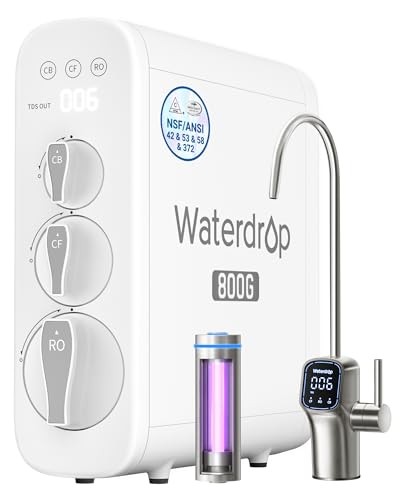
Waterdrop G3P800 Reverse Osmosis System
Removing the storage tank frees up under-sink space and produces water on demand instead of holding it in a bladder. This unit fills a glass quickly for a reverse osmosis system and displays remaining filter life. A nearby power socket is required, a real consideration in older kitchens, and the price runs well above tanked systems.
Pros
- Frees the space a storage tank would take
- Fast flow compared with tanked reverse osmosis
- Clear filter-life tracking on the display
Cons
- Needs a power socket under the sink
- Costs considerably more than tanked systems

Aquasana AQ-5200 Under Sink Water Filter
This two-stage carbon and claryum filter skips reverse osmosis, keeping naturally occurring minerals while sending no water to the drain. No tank or power connection is needed. Flow runs fast enough that filling a kettle is not a chore, though it cannot reduce dissolved solids the way reverse osmosis does.
Pros
- No waste water and no tank required
- Retains naturally occurring minerals in the water
- Good flow rate for daily use
Cons
- Does not reduce dissolved solids like reverse osmosis
- Filters need changing more often than RO membranes

ZeroWater 12-Cup Ready-Pour Water Filter Pitcher
A five-stage cartridge reduces dissolved solids far more than a standard carbon pitcher, and an included meter shows exactly when the filter is spent. That removes the guesswork common with other pitchers. Trade-offs include slow filtering, short filter life in high-mineral areas, and a taste some drinkers find flat.
Pros
- Reduces dissolved solids more than standard pitchers
- Meter shows exactly when to replace the filter
- No installation needed, which suits renters
Cons
- Filters wear out quickly in hard-water areas
- Filtering a full pitcher takes a while
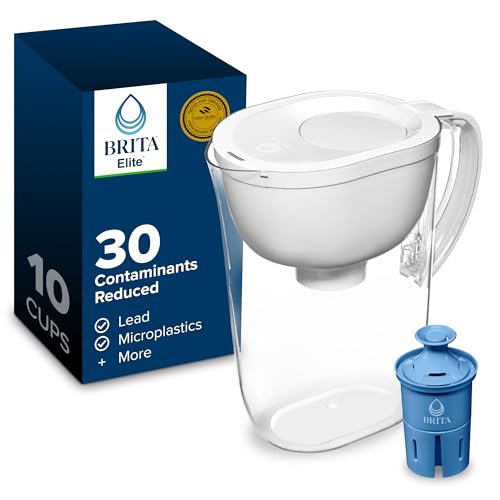
Brita Elite Water Filter Pitcher
Brita’s Elite cartridge lasts far longer than its older filters, making this the cheapest way to improve tap water taste day to day. Filters are stocked nearly everywhere, and the pitcher fits most fridge doors. As a carbon filter, it improves taste and odor more than dissolved minerals, and flow slows as a cartridge ages.
Pros
- Lowest running cost among the pitchers here
- Filters are stocked in almost any supermarket
- Noticeable improvement in taste and odor
Cons
- Limited effect on dissolved solids
- Flow slows as the cartridge nears the end of its life

PUR PLUS Faucet Mount Water Filter
Screwing a filter onto the tap delivers filtered water on demand, skipping both a jug refill and any plumbing work under the sink. A lever switches between filtered and unfiltered water, saving cartridge life during dishwashing. Standard threaded taps only work here, ruling out pull-out sprayers and many modern faucet designs.
Pros
- Filtered water on demand without a jug
- Simple installation with no plumbing work
- Selector avoids wasting the filter on washing up
Cons
- Will not fit pull-out or unthreaded taps
- Adds bulk and weight to the faucet

LifeStraw Home Water Filter Pitcher
LifeStraw pairs a hollow-fiber membrane with a carbon and ion-exchange stage, a different approach from carbon-only pitchers and one built on the brand’s outdoor filtration reputation. Glass and steel versions look better on a table than typical plastic jugs. Filtering runs slower than a plain carbon pitcher, and replacement filters cost more.
Pros
- Multi-stage filtration in a pitcher format
- Attractive enough to leave out on a table
- Long-life membrane stage reduces filter swaps
Cons
- Slower to filter than carbon-only pitchers
- Replacement filters cost more than standard cartridges
How they stack up
| # | Model | Type | Best for | Score | Price |
|---|---|---|---|---|---|
| 1 | APEC Water Systems ROES-50 Essence Reverse Osmosis System | Five stage reverse osmosis | Best overall | 9.4 | Check price |
| 2 | Waterdrop G3P800 Reverse Osmosis System | Tankless reverse osmosis | Best tankless system | 9.2 | Check price |
| 3 | Aquasana AQ-5200 Under Sink Water Filter | Two stage carbon filtration | Best carbon system | 9.0 | Check price |
| 4 | ZeroWater 12-Cup Ready-Pour Water Filter Pitcher | Five stage pitcher cartridge | Best pitcher | 8.8 | Check price |
| 5 | Brita Elite Water Filter Pitcher | Carbon pitcher filter | Best value pitcher | 8.6 | Check price |
| 6 | PUR PLUS Faucet Mount Water Filter | Faucet mounted carbon filter | Best faucet mount | 8.3 | Check price |
| 7 | LifeStraw Home Water Filter Pitcher | Membrane with carbon and ion exchange | Best for taste and design | 8.0 | Check price |
Frequently asked questions
How do I know which water filter I actually need?
Start with your supplier’s water quality report, published annually, or an independent test on a well. That reveals what is present. Carbon filters handle chlorine, taste, and odor well, while reverse osmosis covers a much broader range of dissolved substances.
Is reverse osmosis really better than a carbon filter?
It removes more, but that is not automatically the better choice for every household. Reverse osmosis wastes water to the drain, filters slower, and strips beneficial minerals along with contaminants. A carbon system like the Aquasana AQ-5200 is simpler and cheaper to run if taste and chlorine are the only concerns.
Do water filter pitchers actually work?
Yes, within limits. A carbon pitcher noticeably improves taste and odor, and a multi-stage cartridge like ZeroWater’s reduces dissolved solids considerably more. No pitcher matches an under-sink system for throughput, and pitcher filters need frequent changing.
How often do water filters need to be replaced?
Roughly every one to two months for pitchers, every few months for faucet mounts, about twice a year for under-sink carbon filters, and every couple of years for a reverse osmosis membrane with more frequent pre-filter changes. Follow the manufacturer’s schedule rather than waiting for taste to change.
Does reverse osmosis waste a lot of water?
Traditional systems send several liters to the drain per liter produced, though newer designs improve that ratio considerably. Tankless systems like the Waterdrop G3P800 run more efficiently. This is a real factor where water use matters.
Can I install an under-sink water filter myself?
Many people do, since these systems ship with instructions and connections built for home installation. Drilling a dedicated tap hole in a stone or composite worktop and running a drain line cause the most trouble, and either is a reasonable job to hand off to a plumber.
Will a water filter remove hardness or limescale?
Standard carbon filters do not soften water. Reverse osmosis reduces hardness-causing minerals at the tap it serves, but it will not protect a boiler or washing machine elsewhere in the house. Whole-house softening requires a separate system entirely.
What does certification on a water filter mean?
It means an independent body tested the product against a recognized standard for specific reductions, rather than the manufacturer simply claiming performance. Check exactly which claims the certification covers, since coverage for one contaminant does not guarantee coverage for another.
Our pick
The APEC ROES-50 suits a household wanting thorough reverse osmosis treatment and able to accommodate a tank and drain connection. Choose the Aquasana AQ-5200 instead when taste and chlorine are the real concern, since it installs easier and wastes nothing. Renters get most of the everyday benefit from the ZeroWater pitcher and its built-in filter meter.


