Which Horse Lead Rope Fits Your Handling Style?
Most owners get the best mix of control and comfort from the Weaver Leather Flat Cotton Lead Rope with Chain. Budget buyers do well with the Tough-1 Nylon Lead Rope. Trainers working green horses lean on the Downunder Horsemanship Clinton Anderson Lead Rope for its popper end and extra length.
A spooked horse tests a lead rope instantly, and the wrong material or clip can fail at the worst moment. The Weaver Leather Flat Cotton Lead Rope with Chain lands as the strongest all-around pick here. Mustang Manufacturing’s cotton lead and the Downunder Horsemanship training lead round out a top three built for value and groundwork.
Cotton, nylon, poly, and biothane behave differently once wet or under a horse’s full weight. We compared listed material construction, clip hardware, and stated length across seven models. Each pick gets matched to a specific handling scenario rather than ranked by price alone.
How to pick the right one
How do I choose a horse lead rope? Start with the job the lead does most often: daily leading, groundwork, or trailer loading. Each task favors a different length and stiffness. An 8 to 10 foot lead covers general handling, while groundwork and training benefit from 12 feet or more. Clip type matters as much as material, since a panic snap releases under sudden load but a chain end adds leverage over a pushy horse.
Cotton vs nylon vs biothane, which lead rope material wins? Cotton softens with use and feels gentle in hand, though it holds moisture and can mildew in a damp barn. Nylon webbing dries faster and resists mildew, but turns slick once wet or gloved. Biothane sheds rain and mud with a quick wipe, trading a firmer feel for near zero maintenance.
What length and clip type actually fit daily leading? Everyday leading rarely needs more than 8 to 10 feet, since extra rope just piles up underfoot. Groundwork methods built around distance cues call for 12 to 14 feet with a popper or weighted end. Bolt snaps stay locked under steady pressure, while panic snaps release fast, a detail that matters more for tied horses than for hand leading.
Which lead rope works best for trailer loading and young horses? Trailer loading favors a stiffer rope with a chain end, since rigidity feeds through tie rings and the chain adds control if a horse rushes backward. Young or green horses learning pressure and release cues do better with a longer poly lead and a popper end. Extra length lets a handler apply pressure without standing close to the hindquarters.
The best picks, ranked

Weaver Leather Flat Cotton Lead Rope with Chain
A 30 inch nickel-plated chain runs off the end of this flat cotton lead, adding leverage over horses that lean or barge. Flat webbing sits flatter in the hand than round rope, cutting rope burn risk during a sudden pull. Owners report it holds up through years of daily turnout and grooming.
Pros
- Chain end adds leverage over pushy horses
- Flat webbing eases strain on hands
- Holds up under daily turnout use
Cons
- Chain needs practice to handle safely
- Bulkier to coil than a plain rope

Mustang Manufacturing 10 ft Cotton Lead Rope
Twisted cotton rope meets a solid brass bolt snap on this straightforward daily lead. Ten feet of length covers basic leading and simple groundwork circles. Brass resists corrosion better than nickel plating, and the fiber softens with repeated washing rather than stiffening.
Pros
- Simple build with no added hardware
- Brass snap resists corrosion over years
- Cotton fiber softens with each wash
Cons
- No chain option for strong pullers
- Holds moisture longer than synthetic rope
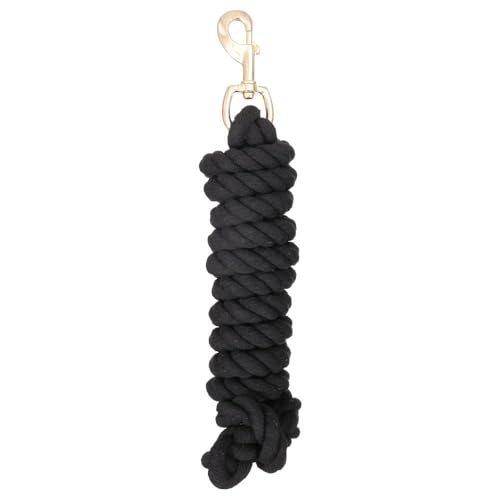
Tough-1 Nylon Lead Rope with Bolt Snap
Nylon webbing replaces cotton on this 8 foot lead, resisting mildew in humid barns better than natural fiber. A nickel-plated bolt snap keeps cost down for a spare or backup lead. Grip suffers some tradeoff, since nylon slips through wet or gloved hands more readily than cotton.
Pros
- Costs less than most cotton leads
- Resists mildew in damp barns
- Lightweight enough for a spare rope
Cons
- Slicker grip when wet
- Eight foot length limits groundwork room

Downunder Horsemanship Clinton Anderson Lead Rope
A leather popper caps this 14 foot poly lead, reinforcing groundwork cues from a distance on young or green horses. Extra length supports lunging-style drills without swapping equipment. Poly rope resists weather better than cotton, holding its shape through repeated wet turnout.
Pros
- Extra length suits groundwork and lunging drills
- Popper reinforces cues without close contact
- Poly resists weather better than cotton
Cons
- Longer rope is harder to coil one-handed
- Not built as a short everyday lead

Professional’s Choice Cactus Rope Lead with Chain
Stiffer cactus-style rope pairs with a 24 inch chain on this trailer-focused lead. Rigidity helps the rope feed through a trailer tie ring one-handed during loading. Owners report the chain leverage discourages a horse from rushing backward off the ramp.
Pros
- Stiff rope feeds through tie rings easily
- Chain adds control during trailer loading
- Holds its shape better than soft cotton
Cons
- Stiffness feels harsh for everyday leading
- Chain requires careful handling near legs
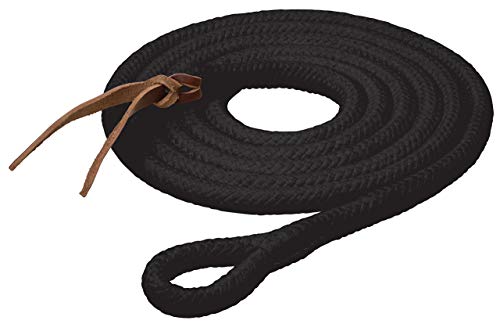
Zilco Soft Cotton Web Lead Rope
Wide flat cotton webbing spreads pressure across the palm on this 8 foot lead, reducing rope burn during a sudden pull. A panic snap releases under load, a feature that matters most for horses tied and pulling back. Comfort takes priority here over added leverage.
Pros
- Wide webbing reduces strain on hands
- Panic snap releases under sudden load
- Comfortable for long handling sessions
Cons
- Panic snap can release if bumped hard
- Shorter length limits advanced groundwork

Aubri-Lane’s Biothane Lead Rope
Coated biothane replaces natural fiber on this 8 foot lead, shedding mud and rain without soaking through. A solid brass bolt snap rounds out the hardware. Cleanup needs only a rinse, unlike cotton leads that require a full wash cycle, based on the product specifications.
Pros
- Wipes clean instead of needing a wash
- Sheds rain and mud without soaking through
- Resists absorbing barn odors over time
Cons
- Feels firmer than cotton in cold weather
- Costs more than basic nylon or cotton leads
Side by side
| # | Model | Length | Best for | Score | Price |
|---|---|---|---|---|---|
| 1 | Weaver Leather Flat Cotton Lead Rope with Chain | 10 ft plus 30 in chain | Best overall | 9.4 | Check price |
| 2 | Mustang Manufacturing 10 ft Cotton Lead Rope | 10 ft | Best value | 9.2 | Check price |
| 3 | Tough-1 Nylon Lead Rope with Bolt Snap | 8 ft | Best budget | 8.9 | Check price |
| 4 | Downunder Horsemanship Clinton Anderson Lead Rope | 14 ft | Best for young horse training | 8.6 | Check price |
| 5 | Professional’s Choice Cactus Rope Lead with Chain | 10 ft plus 24 in chain | Best for trailer loading | 8.4 | Check price |
| 6 | Zilco Soft Cotton Web Lead Rope | 8 ft | Best for handling comfort and grip | 8.2 | Check price |
| 7 | Aubri-Lane’s Biothane Lead Rope | 8 ft | Best for durability and weather resistance | 8.0 | Check price |
Good to know
What is the best length for a horse lead rope?
Most everyday handling works with an 8 to 10 foot lead. Groundwork and training methods often call for 12 to 14 feet to keep distance from the horse.
Cotton vs nylon lead rope, which is better?
Cotton feels softer and eases hand strain, while nylon dries faster and resists mildew in humid barns. Climate and wash frequency decide which suits you best.
What is the best lead rope for young horses?
The Downunder Horsemanship Clinton Anderson Lead Rope, a longer poly rope with a leather popper end, is built for reinforcing cues at a distance during early training.
Do lead ropes need a chain end?
Not always. A chain adds leverage for horses that lean or pull, and helps during trailer loading, while a plain snap suits calmer everyday leading.
How long should a lead rope be for trailer loading?
A 10 foot rope with a 24 to 30 inch chain gives enough reach to guide a horse up a ramp while keeping the handler clear of the trailer opening.
Are biothane lead ropes worth the extra cost?
Biothane costs more than cotton or nylon but wipes clean instead of needing a wash. Owners dealing with regular mud or wet turnout tend to value that tradeoff.
Bolt snap or panic snap, which clip is safer for horse leads?
Panic snaps release quickly under sudden load, which matters most for tied horses. Bolt snaps stay locked and suit hand leading and groundwork instead.
Can one lead rope handle both groundwork and everyday leading?
A mid length rope around 10 to 12 feet manages both jobs reasonably well. Dedicated groundwork sessions still benefit from a longer 14 foot rope with a popper end.
What width lead rope is easiest on the hands?
Flat webbing around 1 inch wide, like the Weaver or Zilco leads, spreads pressure across the palm better than a narrow round rope.
Do horse lead ropes need to be washed?
Cotton and nylon ropes benefit from occasional washing to remove sweat and grime, while biothane only needs a rinse to stay clean.
The bottom line
The Weaver Leather Flat Cotton Lead Rope with Chain covers the widest range of everyday handling needs. Budget-focused owners do well with the Tough-1 Nylon Lead Rope. Trainers working young horses should look at the Downunder Horsemanship Clinton Anderson Lead Rope for its length and popper end.