Impact Drivers for DIYers: Top Picks for Every Project
The Milwaukee 2853-20 leads as the top pick for DIYers who want professional-grade performance without the bulk. It delivers exceptional torque in a compact frame, making it ideal for driving long screws and lag bolts. Its main limitation is the higher price, but for serious home projects, the investment pays off.
Impact drivers have become a staple for DIYers, offering high torque and reduced wrist strain compared to standard drills. Whether you are assembling furniture, building a deck, or hanging drywall, the right impact driver makes the job faster and easier.
We compared seven popular models based on specifications and user feedback, highlighting the strengths and trade-offs of each. Our goal is to help you choose a driver that matches your typical projects and budget.
The best picks, ranked

Milwaukee M18 Fuel Impact Driver Kit (2853-20)
The Milwaukee 2853-20 is a brushless impact driver that delivers up to 2,000 in-lbs of torque, making it one of the most powerful compact drivers on the market. Its POWERSTATE brushless motor and REDLINK PLUS intelligence offer durability and efficiency. Users report excellent runtime with M18 batteries, and the compact design reaches tight spaces.
Pros
- Outstanding power for its size
- Excellent build quality and durability
- Compact and lightweight for tight spots
Cons
- Premium price point
- Battery and charger sold separately
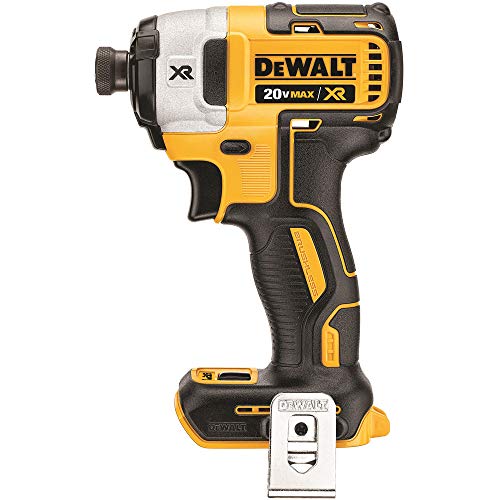
DeWalt 20V MAX XR Impact Driver (DCF887B)
DeWalt’s DCF887B is a brushless impact driver with a three-speed, three-mode control that lets you adjust speed and torque for precision tasks like driving small screws or high-speed fastening. It delivers up to 1,825 in-lbs of torque, and its LED light with a delay feature improves visibility. The ergonomic grip and 1/4 inch hex chuck are user-friendly.
Pros
- Multiple speed modes for control
- Powerful yet manageable for DIY
- Durable construction
Cons
- Tool only, battery not included
- Slightly heavier than some competitors

Makita XDT131 18V LXT Impact Driver
Makita’s XDT131 features a brushless motor providing up to 1,550 in-lbs of torque, but its standout is the Extreme Protection Technology (XPT) that seals against dust and water. With a variable speed trigger and electric brake, it offers good control. The compact design and built-in L.E.D. light are appreciated, and it uses Makita’s 18V LXT batteries, which are known for long life.
Pros
- XPT dust and water resistance
- Excellent battery efficiency
- Comfortable grip
Cons
- Lower torque than top competitors
- Battery and charger not included

Bosch GDX18V-1800B 18V EC Brushless Impact Driver
The Bosch GDX18V-1800B is a unique tool that functions as both an impact driver and an impact wrench, with a 1/4 inch hex collet and a 1/2 inch square drive. It delivers up to 1,800 in-lbs of torque, and the user can switch modes easily. The brushless motor is efficient, and the tool includes a belt clip and two 18V batteries in some kits.
Pros
- Two tools in one, saves money and space
- Powerful enough for lug nuts and bolts
- Compact design for its capability
Cons
- Heavier than standard drivers
- May be overkill for light DIY tasks

Craftsman V20 Impact Driver Kit (CMCF825)
Craftsman’s CMCF825 offers a good balance of performance and affordability. It provides up to 1,500 in-lbs of torque, has a variable speed trigger, and includes a LED light. The kit comes with a 20V battery and charger, making it ready to use out of the box. Users find it reliable for basic home projects.
Pros
- Great price for a kit with battery
- Lightweight and easy to handle
- Good power for most DIY tasks
Cons
- Less torque than premium models
- Battery technology not as advanced
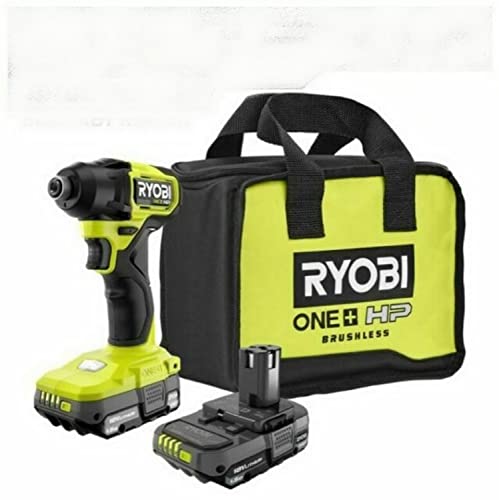
Ryobi ONE+ HP 18V Brushless Impact Driver Kit (PBLID01B)
Ryobi’s PBLID01B is a brushless impact driver that produces up to 1,550 in-lbs of torque. It is part of the ONE+ system, so it works with over 300 tools. The kit includes a battery and charger, making it a convenient addition for existing Ryobi owners. Its compact size and comfortable grip are pluses.
Pros
- Compatible with a wide range of Ryobi tools
- Brushless motor improves efficiency
- LED light with mode-specific brightness
Cons
- Torque is moderate compared to top tier
- Build quality not as rugged as some

PORTER-CABLE 20V MAX Impact Driver Kit (PCCK600B)
The Porter-Cable PCCK600B is a basic impact driver for light-duty DIY tasks. It delivers 1,400 in-lbs of torque and has a variable speed trigger. The kit includes a 20V battery and charger, offering an entry-level solution at a low cost. It is not as feature-rich as others but gets the job done for occasional use.
Pros
- Very affordable
- Comes with battery and charger
- Simple to use
Cons
- Lower torque output
- Limited speed control
What to look for
Compared at a glance
| # | Model | Torque | Best for | Score | Price |
|---|---|---|---|---|---|
| 1 | Milwaukee M18 Fuel Impact Driver Kit (2853-20) | 2,000 in-lbs | Best Overall for Power and Compactness | 9.4 | Check price |
| 2 | DeWalt 20V MAX XR Impact Driver (DCF887B) | 1,825 in-lbs | Best for Versatility with Three Speed Settings | 9.2 | Check price |
| 3 | Makita XDT131 18V LXT Impact Driver | 1,550 in-lbs | Best for Extended Runtime and Dust Resistance | 9.0 | Check price |
| 4 | Bosch GDX18V-1800B 18V EC Brushless Impact Driver | 1,800 in-lbs | Best for 2-in-1 Impact Driver and Wrench | 8.8 | Check price |
| 5 | Craftsman V20 Impact Driver Kit (CMCF825) | 1,500 in-lbs | Best Budget Pick for Occasional Use | 8.5 | Check price |
| 6 | Ryobi ONE+ HP 18V Brushless Impact Driver Kit (PBLID01B) | 1,550 in-lbs | Best for Ryobi Ecosystem Users | 8.4 | Check price |
| 7 | PORTER-CABLE 20V MAX Impact Driver Kit (PCCK600B) | 1,400 in-lbs | Best for Tight Budgets | 8.0 | Check price |
Frequently asked questions
What is the difference between an impact driver and a drill?
An impact driver uses a combination of rotational force and concussive blows to drive screws, providing more torque and reducing cam-out. A drill is designed for drilling holes and driving screws with less torque but more precision. Impact drivers are better for long screws and tough materials.
Can I use an impact driver for drilling holes?
Impact drivers are not ideal for drilling holes because they lack the chuck to hold drill bits securely and the rotational speed control needed for clean holes. They can be used with hex shank drill bits for small holes, but a drill is the proper tool for most drilling tasks.
How much torque do I need for DIY projects?
For ordinary DIY tasks like assembling furniture, driving screws into drywall, or building small projects, 1,200 to 1,800 in-lbs of torque is sufficient. For heavy duty tasks like driving lag bolts or deck screws, choose a model with at least 1,800 in-lbs.
Are brushless motors worth the extra cost?
Yes, brushless motors are more efficient, providing longer runtime and more power. They also have a longer lifespan. While they cost more upfront, the savings in battery replacement and performance make them a good investment for regular use.
What is the best battery voltage for a DIY impact driver?
Most modern impact drivers use 18V or 20V batteries, which offer a good balance of power and portability. Lower voltages like 12V are lighter but less powerful, suitable for light tasks. Higher voltages like 36V are heavier and usually for professional use.
Can I use impact driver bits in a regular drill?
Yes, impact driver bits have a 1/4 inch hex shank that fits into a standard drill chuck. However, regular drill bits may not be designed to withstand the high torque of an impact driver, so always use impact rated bits for driving.
Why does my impact driver make a loud noise?
The loud noise is the mechanism of the impact driver, which uses a spring and hammer to generate concussive blows. This is normal and indicates the driver is working. The noise is more pronounced when driving into dense materials.
How do I maintain my impact driver?
Keep it clean and free of dust. Check the chuck for debris. Store in a dry place. Avoid dropping it. Periodically inspect the battery contacts. If the tool has a brushless motor, there’s no need to replace brushes.
Can I use an impact driver to remove lug nuts?
Impact drivers are not typically used for lug nuts because they have a 1/4 inch hex drive, not a 1/2 inch square drive. Some models like the Bosch GDX18V-1800B have a 1/2 inch adapter, but for heavy duty work, an impact wrench is more suitable.
The verdict
For most DIYers, the Milwaukee 2853-20 is the best investment due to its outstanding power and compact design. If you are on a tighter budget, the Craftsman V20 Kit offers reliable performance at a lower cost. However, if you already own tools from a specific brand like DeWalt or Makita, consider their models to share batteries and save money.


