How to Choose an Impact Wrench for Lug Nuts and More
Milwaukee’s M18 FUEL 2767-20 leads for automotive work with strong breakaway torque and reassembly control. DEWALT’s DCF900B suits anyone already on the 20V MAX platform, and the compact Milwaukee M12 FUEL 2555-20 fits tight engine bays a full size wrench cannot reach.
Home mechanics and technicians get the most from the Milwaukee M18 FUEL 2767-20, since it removes seized lug nuts and suspension bolts while offering a low speed mode for reassembly. DEWALT owners are better served by the DCF900B, and cramped spaces call for the M12 FUEL 2555-20.
Comparing impact wrenches is hard because manufacturers quote different numbers for fastening torque and breakaway torque, and the headline figure rarely reflects how a tool behaves on a rusted fastener. We compared published torque ratings, drive sizes, control modes, tool weight and head length, then weighed what owners report about battery drain, heat and usability overhead or under a car.
Our top picks
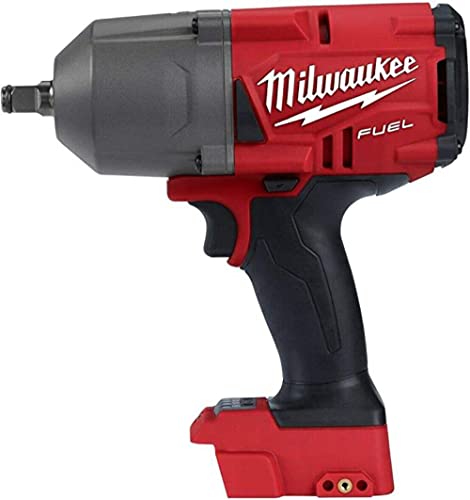
Milwaukee M18 FUEL 2767-20
This tool made high torque cordless impact wrenches the default choice in home garages. Breakaway grunt handles rusted lug nuts and suspension work, and four mode drive control prevents sheared studs during reassembly. Owners report it replaces jobs that once needed an air line and compressor.
Pros
- Enormous breakaway torque
- Four mode control protects fasteners
- Huge M18 battery ecosystem
Cons
- Heavy for extended overhead work
- Long head limits tight bay access

DEWALT DCF900B
DEWALT’s high torque half inch wrench is the obvious pick for anyone already running 20V MAX batteries. Its head sits noticeably shorter than earlier DEWALT high torque models, which helps around brake calipers. Precision Wrench mode slows the tool once a nut breaks loose, reducing the chance of dropping it.
Pros
- Compact head for a high torque tool
- Precision Wrench mode aids removal
- Works with FLEXVOLT packs
Cons
- Sold as a bare tool only
- Still heavy with a large battery fitted

Makita XWT08Z
Strong torque pairs with an auto stop reverse function that halts the tool the moment a fastener frees, cutting down on fumbling as a nut spins off. A brushless motor and three speed selector make this a controlled tool rather than a blunt instrument. Balance stays good even at full size.
Pros
- Auto stop reverse prevents dropped nuts
- Well balanced in the hand
- Smooth speed control
Cons
- Lower peak torque than the leaders
- LXT batteries sold separately
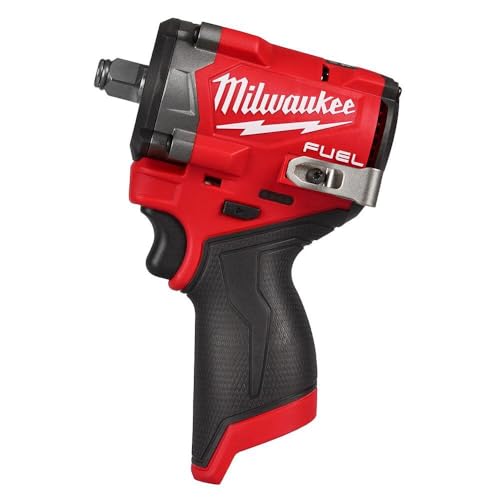
Milwaukee M12 FUEL 2555-20
Remarkably capable for its size, this wrench delivers enough torque for most fastener work in a body barely longer than a socket set case. Engine bays and tight spots behind subframes are where it earns its keep. Owners report it replaces a ratchet for most bolt removal.
Pros
- Fits where full size tools cannot
- Light enough for one handed use
- Four mode output control
Cons
- Not enough torque for seized lug nuts
- Small batteries drain quickly under load

Bosch GDS18V-740CN
Raw output takes priority here, backed by a robust brushless drivetrain and a straightforward mode selector. Truck, trailer and agricultural fasteners suit this wrench, where torque matters more than finesse. A connectivity ready platform appeals to anyone tracking tools across a fleet.
Pros
- Very strong on large fasteners
- Solid brushless drivetrain
- Simple mode selection
Cons
- Smaller battery ecosystem than rivals
- Bulky head for car work

Ryobi PBLIW01B
Home mechanics get most of what they need here at a fraction of the outlay professional tools demand. Four modes include a tyre removal setting, and the ONE plus platform spans a wide range of other tools. Owners report it handles wheel changes and general bolt work without complaint.
Pros
- Excellent value for occasional use
- Wide ONE plus tool range
- Brushless motor at a modest price
Cons
- Less durable under daily professional use
- Struggles with badly seized fasteners

Ingersoll Rand 2235TiMAX
Anyone already running a compressor gets the benchmark air wrench here, with a titanium hammer case keeping weight low for the torque on offer. Long shop sessions never run out of battery, since there is none to drain. Airflow from a capable compressor is the one requirement it cannot skip.
Pros
- Light for the torque it produces
- No batteries to charge or replace
- Proven durability in shop use
Cons
- Needs a capable compressor and hose
- Not portable away from an air supply
The lineup, side by side
| # | Model | Drive | Best for | Score | Price |
|---|---|---|---|---|---|
| 1 | Milwaukee M18 FUEL 2767-20 | 1/2 inch friction ring | Best overall | 9.4 | Check price |
| 2 | DEWALT DCF900B | 1/2 inch hog ring anvil | Best for DEWALT owners | 9.2 | Check price |
| 3 | Makita XWT08Z | 1/2 inch friction ring | Best for control | 9.0 | Check price |
| 4 | Milwaukee M12 FUEL 2555-20 | 1/2 inch friction ring | Best for tight spaces | 8.8 | Check price |
| 5 | Bosch GDS18V-740CN | 1/2 inch friction ring | Best for heavy fasteners | 8.6 | Check price |
| 6 | Ryobi PBLIW01B | 1/2 inch friction ring | Best value | 8.3 | Check price |
| 7 | Ingersoll Rand 2235TiMAX | 1/2 inch | Best air impact wrench | 8.0 | Check price |
What to look for
Understanding fastening torque versus breakaway torque Manufacturers publish two torque numbers: fastening torque, which is what the tool applies while tightening, and breakaway or nut busting torque, the higher figure used for loosening a stuck fastener. Breakaway numbers matter most for rusted lug nuts and suspension bolts. A torque wrench, not the impact wrench’s maximum setting, is the only correct way to set final wheel torque.
Drive size and socket choice Half inch drive is the automotive standard, covering wheels, suspension and most chassis bolts. Three eighths suits engine bay and interior fasteners where space runs tight. Impact rated sockets matter here too, since chrome hand sockets can shatter under hammer action, and thin wall sockets fit deep into alloy wheel recesses.
Cordless or air power Cordless wrenches now match air tools for torque and win easily on portability, which explains their dominance in home garages. Air tools stay attractive for anyone who already owns a compressor with adequate airflow, since they weigh less for the same output and cost less per tool. Hidden costs live in the compressor, hose and moisture management air tools require.
Weight and where the wrench will actually be used A high torque wrench runs heavy and long, which becomes a real problem overhead or in a cramped bay. Many owners end up owning two tools: a full size half inch wrench for wheels and suspension, plus a stubby or three eighths model for everything else. Buying just one means being honest about which jobs come up most often.
Good to know
Will an impact wrench remove seized lug nuts?
A high torque half inch model rated above roughly 700 ft lbs breakaway torque removes most seized lug nuts. Badly corroded fasteners may still need penetrating oil and heat first.
Can I tighten wheel nuts with an impact wrench?
Running nuts down with the wrench works fine, but finishing with a calibrated torque wrench is essential. Overtightening stretches studs and can warp brake rotors, and impact wrenches cannot set an accurate final torque.
What is the difference between an impact wrench and an impact driver?
A square anvil for sockets and far more torque for nuts and bolts define an impact wrench. Impact drivers take hex bits instead, built for screws and fasteners in wood and metal.
Do I need impact rated sockets?
Yes. Tougher, more ductile steel absorbs hammer blows in impact sockets, while chrome hand sockets can crack or shatter, which is a genuine injury risk.
What battery size should I use?
Larger capacity packs deliver both more runtime and better sustained output on high torque tools, since these tools draw heavily. Small compact batteries work but sag under load and run hot.
Is a stubby impact wrench powerful enough for most work?
Engine bay, interior and general bolt work suit a stubby wrench well. Seized lug nuts and large suspension fasteners still call for a full size high torque tool.
How much compressor do I need for an air impact wrench?
Matching the tool’s air consumption figure to a compressor that sustains that flow at the required pressure matters most. Undersized compressors starve the tool and produce far less torque than its rating suggests.
Do impact wrenches damage fasteners?
Full power on soft or fine threaded fasteners can cause damage. Lower modes suit reassembly and aluminium components, and stopping as soon as a fastener seats avoids most problems.
Our take
The Milwaukee M18 FUEL 2767-20 solves the widest range of automotive jobs, pairing breakaway torque for seized fasteners with enough control for careful reassembly. DEWALT owners should reach for the DCF900B instead, while the M12 FUEL 2555-20 answers the call when access, not power, limits the job.


