Joint Compound Types Compared for Smooth Drywall
USG Sheetrock Brand All Purpose Joint Compound remains the safest default for taping and filling because it bonds hard and sands predictably. Sheetrock Plus 3 Lightweight is the pick when you dread sanding, and Easy Sand 45 is the one to reach for when a repair has to be painted the same day.
For general taping and coating, USG Sheetrock Brand All Purpose Joint Compound in the green lid is the compound most finishers keep on the truck. Sheetrock Plus 3 Lightweight sands with far less effort for skim coats, and Easy Sand 45 handles same-day patch work that ready mix cannot.
Choosing compound is tricky because the buckets look nearly identical and the lid colours mean nothing until you know the system. All purpose mud is strong but heavy to sand, lightweight formulas sand easily but bond less aggressively, and setting type powders harden chemically rather than by drying. We compared published working times, shrinkage behaviour, sanding effort and what drywall finishers consistently report about each formula over tape and screw heads.
The best picks, ranked

USG Sheetrock Brand All Purpose Joint Compound (Green Lid)
This is the reference compound almost every other product gets measured against. It embeds paper tape without starving the joint, holds corner bead firmly and takes texture well, which is why it does duty as both a taping and finishing mud. The trade is weight and sanding effort, since it dries harder than any lightweight formula.
Pros
- Strongest bond of the ready mixed options
- Works for every coat, so you only stock one bucket
- Thins easily for skim coating and texture
Cons
- Heavy to sand overhead
- Shrinks more than lightweight formulas on deep fills

USG Sheetrock Brand Plus 3 Lightweight All Purpose Joint Compound (Blue Lid)
Plus 3 weighs noticeably less in the bucket and on the knife, and it sands with a fraction of the effort of green lid mud. It shrinks less on fill coats, which cuts a round of touch up on deeper joints. Owners report it is the right choice for a whole room of ceilings where arm fatigue decides how good the finish gets.
Pros
- Dramatically easier sanding than standard mud
- Less shrinkage on fill coats
- Lighter bucket and lighter on the knife
Cons
- Softer surface dents more easily before paint
- Not the strongest choice for bedding metal corner bead

USG Sheetrock Brand Easy Sand 45 Setting Type Joint Compound
A powder you mix in small batches that hardens chemically in about 45 minutes rather than waiting on evaporation. That makes it the go to for patching a hole in the morning and painting after lunch, and it barely shrinks so deep fills need fewer passes. The clock is real, so mix only what you can spread.
Pros
- Multiple coats in a single day
- Minimal shrinkage on deep patches
- Sands more easily than standard setting compounds
Cons
- Hardens in the pan if you mix too much
- Requires clean tools immediately after use
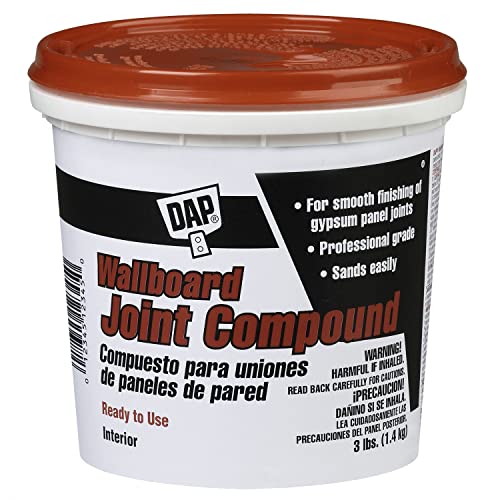
DAP Wallboard Joint Compound
Sold in tub sizes that make sense when you are patching one wall rather than finishing a house, so you are not throwing out most of a bucket. It spreads smoothly and sands cleanly for small repairs and nail pops. For full room taping the larger contractor buckets are still the sensible buy.
Pros
- Right size for one repair, so less waste
- Smooth out of the tub with little mixing
- Widely stocked and easy to replace
Cons
- Not economical for whole room work
- Skins over quickly once the lid is off

DAP Fast N Final Lightweight Spackling
Not a taping mud, but the fastest way to close nail holes and small dings without a second coat. It goes on white, does not shrink back into the hole and can be sanded almost immediately with light pressure. Keep a tub alongside your compound for touch ups rather than opening a bucket for one screw head.
Pros
- One coat covers most small holes
- Sands with almost no effort
- Very little waste for quick jobs
Cons
- Not suitable for taping joints
- Too soft for large flat fills

3M High Strength Small Hole Repair Compound
A reinforced filler aimed at holes that keep reopening, such as anchor pull outs and doorknob strikes in hallways. It cures firmer than standard spackling, so the repair resists the knock that caused the damage in the first place. Sanding takes a little more work than a lightweight paste, which is the cost of that strength.
Pros
- Holds up where soft spackling cracks out
- Good choice for hallways and rental turnovers
- Paints without flashing when primed
Cons
- Harder to sand than lightweight paste
- Overkill for simple nail holes
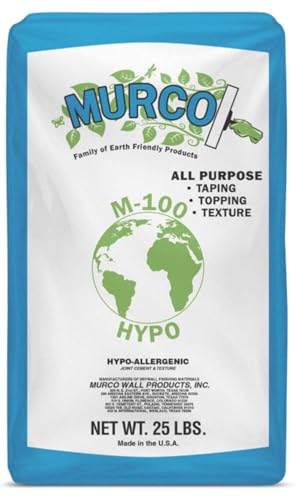
Murco M-100 Hypo-Allergenic Joint Compound
A powder compound formulated without the biocides and preservatives found in ready mixed buckets, which is why it shows up in chemically sensitive builds. It mixes to a workable consistency and finishes well, though you are trading convenience for control over what goes on the wall. Mix small batches until you learn how it behaves.
Pros
- Popular with chemically sensitive households
- Long shelf life as a dry powder
- Mix only what a job needs
Cons
- Mixing adds time and mess to every batch
- Harder to find locally than mainstream buckets
What matters most
All purpose, lightweight or setting type All purpose ready mix is the strongest and most versatile, so it handles tape, bead and topping in one bucket. Lightweight formulas trade some bond strength for far easier sanding and less shrinkage, which matters on ceilings and skim coats. Setting type powders harden by chemical reaction on a fixed clock, so they let you stack coats in a day and barely shrink on deep fills.
Read the lid, not the label art Within a single brand the lid colour is the fastest way to identify the formula, and mixing them up is the most common beginner mistake. Green lid all purpose bonds hard and sands hard. Blue lid lightweight sands easily but should not be your bedding coat for metal bead. Setting type comes as a bag of powder with a number that tells you the working time in minutes.
Thin coats beat thick fills Nearly every bad drywall finish comes from trying to do in two coats what needs three. Compound shrinks as it dries, so a thick fill sinks and cracks while a thin one stays flat. Feather each coat wider than the last, let it dry fully, and knock down ridges with the knife before sanding rather than sanding them out later.
Storage and shelf life Ready mixed compound fails when it dries out or freezes. Smooth the surface flat, add a thin skim of water on top and seal the lid tight, and a bucket will keep for months. Discard any that smells sour or shows mould, since neither sands nor paints properly. Powder compounds last far longer but must stay dry, so keep the bag off a concrete floor.
How they stack up
| # | Model | Type | Best for | Score | Price |
|---|---|---|---|---|---|
| 1 | USG Sheetrock Brand All Purpose Joint Compound (Green Lid) | Ready mixed all purpose | Best overall | 9.4 | Check price |
| 2 | USG Sheetrock Brand Plus 3 Lightweight All Purpose Joint Compound (Blue Lid) | Ready mixed lightweight all purpose | Best for easy sanding | 9.2 | Check price |
| 3 | USG Sheetrock Brand Easy Sand 45 Setting Type Joint Compound | Setting type powder | Best for same day repairs | 9.0 | Check price |
| 4 | DAP Wallboard Joint Compound | Ready mixed vinyl compound | Best value | 8.7 | Check price |
| 5 | DAP Fast N Final Lightweight Spackling | Lightweight spackling paste | Best for small holes | 8.5 | Check price |
| 6 | 3M High Strength Small Hole Repair Compound | Reinforced repair compound | Best for damage-prone walls | 8.2 | Check price |
| 7 | Murco M-100 Hypo-Allergenic Joint Compound | Powder joint compound | Best for low odor sensitivity | 8.0 | Check price |
Questions worth asking
What is the difference between joint compound and spackling?
Joint compound is designed to bed tape and cover large areas in thin coats, while spackling is a thicker paste for small holes that dries fast without shrinking. Use compound for seams and whole wall work, and keep spackling for nail holes and dings.
Can I use lightweight compound for the tape coat?
You can, but most finishers do not. The tape coat is where bond strength matters most, so all purpose or setting type mud is the safer choice. Save lightweight compound for the fill and finish coats where easy sanding pays off.
How many coats does a drywall seam need?
Three is the normal answer: a tape coat, a fill coat and a wide finish coat, each feathered wider than the last. Deep gaps or butt joints often need a fourth. Rushing to two coats is the usual reason seams show under paint once the light hits them.
What does the number on setting type compound mean?
It is the approximate working time in minutes before the mix starts to harden. A 45 minute product gives you roughly that long to spread it, and a 20 minute product is for very small patches. Mix only what you can use inside that window.
Why does my compound crack as it dries?
Almost always because it was applied too thick, or because a fast drying environment pulled moisture out of the surface before the body cured. Build up in thinner coats, avoid running a heater directly on fresh mud, and use setting type compound for deep fills.
Do I need to prime before painting new compound?
Yes. Bare compound absorbs paint differently to the surrounding paper facing, which produces the patchy sheen known as flashing. A drywall primer or a coat of sealer levels the porosity so the topcoat looks even.
How do I cut down on sanding dust?
Wipe joints with a damp sponge instead of dry sanding, use a pole sander with a fine screen rather than paper, and knock down knife ridges while the mud is still soft. A lightweight compound also cuts dramatically less dust because it sands with less pressure.
Can joint compound be used in a bathroom?
On ceilings and walls that stay dry, yes, provided the room is properly ventilated and the surface is sealed with paint. It is not a waterproofing product, so it does not belong inside a shower enclosure or behind tile in a wet area, where cement board and the correct setting materials are required.
The bottom line
If you only want one bucket, USG Sheetrock Brand All Purpose in the green lid does every coat and bonds harder than anything else here. Switch to Plus 3 Lightweight once you are past the tape coat and your shoulders will notice the difference during sanding. For repairs that need paint the same day, Easy Sand 45 is the only formula on this list that can keep up.