Lacrosse Gear That Fits Right for New Players
Most beginners do well with the STX Stallion 200 complete stick, a pre-strung setup that meets NFHS and NCAA rules. Attackmen release shots faster with the Warrior Evo Warp head, and goalies need the wider STX Shield 100 for better shot coverage.
Lacrosse gear changes more by position than in almost any other team sport. A stick built for an attackman offers little help to a defender or a goalie.
League rules and pocket design decide legality and performance more than brand name does. We compared specs against position-specific needs and NFHS or NCAA requirements to rank the seven picks below.
How to choose
What to look for in lacrosse equipment Certification comes first for helmets and sticks, since NFHS and NCAA rules set legal head width, string height, and helmet standards. Position decides the rest of the kit. An attackman wants a narrow, quick-release head, a defender needs wider pad coverage, and a goalie needs a legally wide stick built for blocking.
How gear differs by position Attack and midfield players favor a lighter stick and slimmer pads to keep their speed and stick-handling. A defender needs more coverage in shoulder pads and arm guards, since checks land on them more often over a game. A goalie uses an entirely different stick, with a wider head face and often a different shaft grip.
Youth vs adult sizing Youth sticks and pads scale down in length and stiffness, since a younger player lacks the strength to control an adult-stiffness shaft. Helmets need correct circumference sizing rather than an age-based guess, since a loose helmet undercuts the protection NOCSAE certification is meant to guarantee. Gloves should fit snugly at the wrist without limiting finger movement on the stick.
Building a budget starter kit A complete stick, certified helmet, and basic gloves cover the legal minimum most leagues require for practice. Shoulder and arm pads can start at entry-level foam density and upgrade once a player settles into a permanent position. A universal head, rather than a narrow attack head, keeps options open while a player is still learning which position fits them.
The shortlist, ranked
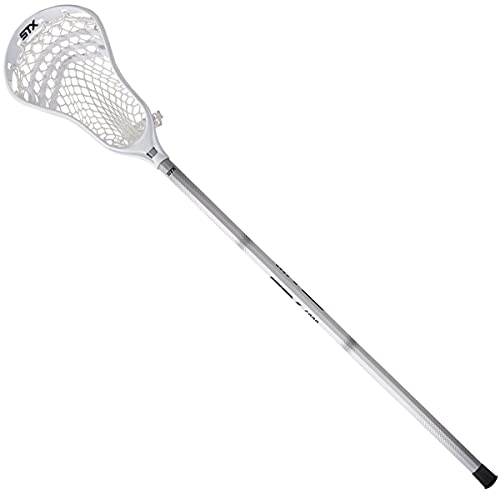
STX Stallion 200 Complete Stick
A pre-strung, legal head pairs with an aluminum shaft, so a new player can start practicing without learning to string a pocket first. The head meets NFHS and NCAA specifications for high school and college play. Moderate shaft stiffness suits youth and beginner strength better than the stiffer shafts built for attack specialists.
Pros
- Pre-strung head skips a separate stringing purchase
- Meets NFHS and NCAA legality standards out of the box
- Moderate flex matches a developing player’s strength
Cons
- Aluminum shaft weighs more than composite alternatives
- Less durable long-term than higher-tier sticks built for advanced play

Warrior Evo Warp Attack Head
A narrow face and low ball placement help an attackman release shots faster than a universal head designed for every position. The scoop shape favors quick ground ball pickups near the crease. Most listings sell the head unstrung, so it needs a separate shaft and stringing job.
Pros
- Narrow face speeds up shot release for attack specialists
- Low-profile scoop improves ground ball pickups near the crease
- Lighter build than heads made for defensive play
Cons
- Needs a separate shaft purchase on most listings
- Narrower face holds less ball control than a midfield head

STX Shield 100 Goalie Complete Stick
League rules allow a goalie a wider head face than any field player gets, and this stick uses the full legal width for shot blocking. A wider grip diameter on the goalie-specific shaft suits two-handed saves. Mesh pocket depth ships preset, which helps a beginner goalie still learning save technique.
Pros
- Wide face maximizes the legal shot-blocking surface
- Wider grip shaft matches goalie handling technique
- Complete package needs no separate stringing purchase
Cons
- Preset pocket depth limits customization for advanced goalies
- Heavier overall than a field player’s stick due to head width

Cascade S Lacrosse Helmet
NOCSAE certification on this helmet is required for NFHS and NCAA competition. A tool-free fit system tightens quickly, which helps a team sharing helmets across multiple players. A four-point chin strap adds stability during contact.
Pros
- NOCSAE certification required by most organized leagues
- Tool-free adjustment speeds up fitting between players
- Four-point chin strap holds steady on contact
Cons
- Costs more than a non-certified recreational helmet
- Facemask is sold separately on some listings

Warrior Burn Warp Lacrosse Gloves
Foam padding across the back of the hand and fingers blocks stick checks without the bulk built into gloves made for defenders. A breathable mesh palm cuts sweat buildup during long practices. Sizing runs true across youth and adult ranges.
Pros
- Lower cost than a premium defensive glove
- Breathable palm keeps hands drier during long practices
- True-to-size fit for both youth and adult players
Cons
- Less padding than a glove built for defensive contact
- Wrist strap closure wears out faster than a buckle

STX Cell IV Shoulder Pads
Coverage extends across the sternum and shoulders, suiting a defender who absorbs more checks than an attackman or midfielder does. Adjustable straps fit the pads over jerseys of different thickness across a season. Ventilation channels cut heat buildup during long defensive shifts.
Pros
- Extended coverage suits high-contact defensive play
- Adjustable straps fit over varying jersey layers
- Ventilation channels reduce heat during long possessions
Cons
- Bulkier fit than pads built for attack-focused speed
- Less mobility for a player who prioritizes speed over contact

Champro Adjustable Lacrosse Arm Guards
Coverage stops at the forearm, leaving the wrist free for the stick-handling motion a midfielder needs switching between offense and defense. Foam density runs lighter than a defender’s guard, which keeps cost and weight down. Hook-and-loop straps adjust to fit over or under a long-sleeve jersey.
Pros
- Lightweight design preserves wrist mobility for stick handling
- Lower cost than a defender-specific arm guard
- Straps adjust across multiple jersey thicknesses
Cons
- Less impact protection than a heavier defensive guard
- Foam compresses faster under daily practice use
The lineup, side by side
| # | Model | Shaft material | Best for | Score | Price |
|---|---|---|---|---|---|
| 1 | STX Stallion 200 Complete Stick | Aluminum | Best overall | 9.1 | Check price |
| 2 | Warrior Evo Warp Attack Head | Narrow, attack-specific | Best for attackmen | 9.0 | Check price |
| 3 | STX Shield 100 Goalie Complete Stick | Goalie-legal wide face | Best for goalies | 8.9 | Check price |
| 4 | Cascade S Lacrosse Helmet | NOCSAE certified | Best for protection | 9.2 | Check price |
| 5 | Warrior Burn Warp Lacrosse Gloves | Back of hand and fingers | Best value gloves | 8.5 | Check price |
| 6 | STX Cell IV Shoulder Pads | Shoulder and sternum | Best for defenders | 8.7 | Check price |
| 7 | Champro Adjustable Lacrosse Arm Guards | Forearm | Best budget | 8.2 | Check price |
Common questions
What lacrosse equipment does a beginner need?
A certified helmet, complete stick, gloves, and basic shoulder and arm pads cover the legal minimum most beginner leagues require.
What is the best lacrosse stick for attack?
The Warrior Evo Warp head suits an attackman well, thanks to its narrow face and low-profile scoop for quick shot release.
Do goalies use a different lacrosse stick than field players?
Yes. A goalie stick like the STX Shield 100 uses a legally wider head face and often a different shaft grip diameter for handling.
Is a NOCSAE certified helmet required for lacrosse?
Most organized leagues, including NFHS and NCAA programs, require NOCSAE certification for game and practice participation.
Youth vs adult lacrosse sticks, what’s the difference?
A youth stick runs shorter and less stiff to match lower strength levels, while an adult stick uses a stiffer shaft for more control.
What padding do lacrosse defenders need most?
A defender benefits most from extended shoulder and sternum coverage plus sturdier arm guards, since they absorb the most checks.
Can the same lacrosse gloves work for attack and defense?
General-purpose gloves work for both, though a defender sometimes prefers heavier back-of-hand padding for extra contact.
How do you size a lacrosse helmet correctly?
Measure head circumference and match it to the manufacturer’s sizing chart, rather than relying on age or generic sizing labels.
What’s the difference between a complete stick and a head?
A complete stick ships pre-strung and ready to play, while a head alone needs a separate shaft and stringing before it’s usable.
Our take
A new player building a first kit should start with the STX Stallion 200 complete stick and a certified Cascade S helmet before buying position-specific gear. Once someone settles into attack, defense, or goal, upgrading to the Warrior Evo Warp head or STX Shield 100 makes far more sense than buying specialized gear too early.