Laser Thermal Cameras That Earn Their Place in Your Toolbox
The FLIR TG267 tops our list for its 160 x 120 thermal resolution and integrated laser targeting. It suits electricians and HVAC technicians who need precise spot measurements. Its main limitation is a smaller screen compared to more expensive models.
Thermal cameras with laser targeting help you measure temperature from a safe distance. They are essential for finding hot spots in electrical panels, detecting moisture in walls, and spotting wildlife at night.
We evaluated popular models on Amazon, reading owner reviews and comparing specifications. Our goal is to help you pick a reliable camera that fits your work or hobby without overspending.
What to look for
The shortlist, ranked

FLIR TG267 Industrial Thermal Camera
The FLIR TG267 combines a 160 x 120 thermal sensor with a visible light camera and laser marker. It measures temperatures from -25°C to 380°C and displays both thermal and visual images side by side. Owners praise its build quality and intuitive interface. It is ideal for electrical panels, motors, and HVAC checks.
Pros
- Accurate laser-assisted targeting
- Dual thermal and visible imaging
- Rugged design with IP54 rating
Cons
- Higher price point
- Limited measurement range for extreme heat

HTI HT-301 Thermal Imaging Camera
The HTI HT-301 offers a 32 x 31 infrared resolution, which is low but sufficient for locating hot spots. It includes a laser pointer for aiming and a 2.4 inch color screen. Users report it works well for finding overheating wires and checking fuses. It is not suitable for fine detail work but is very affordable.
Pros
- Very affordable
- Simple one-hand operation
- Laser pointer for aiming
Cons
- Low thermal resolution
- Limited temperature range

Seek Thermal CompactPRO
The Seek Thermal CompactPRO is a compact camera that plugs into your phone’s USB-C or Lightning port. It offers 320 x 240 resolution and a thermal sensitivity of 70 mK. The companion app provides measurement tools and image capture. It is popular among home inspectors who want a portable solution.
Pros
- High resolution for the price
- Portable and easy to carry
- Strong software features
Cons
- Requires smartphone
- No built-in laser pointer

PerfectPrime IR0006 Thermal Camera
The PerfectPrime IR0006 measures temperatures from -50°C to 1000°C, covering most industrial needs. It has a 220 x 160 resolution and a laser pointer for targeting. Its large 2.8 inch screen is readable in bright conditions. Electricians appreciate the high temperature range for motor and transformer checks.
Pros
- Very wide temperature range
- Good thermal resolution
- Durable construction
Cons
- Heavier than some rivals
- Menu navigation can be complex
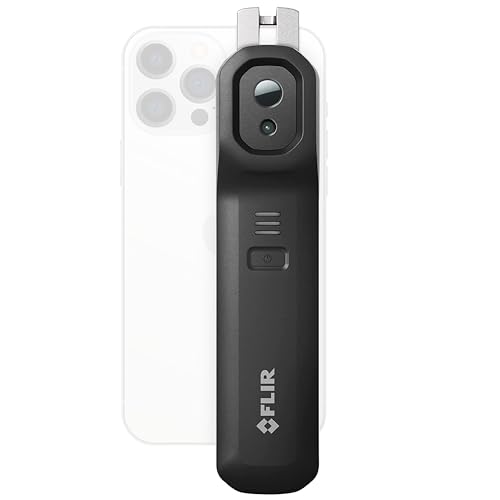
FLIR ONE Edge Pro
The FLIR ONE Edge Pro is a wireless thermal camera that connects to your phone via Wi-Fi, working with both iOS and Android. It offers 160 x 120 resolution and FLIR’s MSX technology, which overlays visible light edges on the thermal image for clarity. Owners love the adjustable angle and robust app. It does not have a built-in laser, but the app helps aim.
Pros
- MSX image enhancement
- Works with many phone models
- Wireless convenience
Cons
- No laser pointer
- Shorter battery life

Hti-Xintai HT-18 Thermal Imaging Camera
The Hti HT-18 offers a 32 x 32 resolution and a laser pointer, making it a step up from basic IR thermometers. It has a 2.4 inch screen and a simple interface. Reviewers say it is easy to use for finding air leaks and checking circuit breakers. The temperature range is up to 550°C, which covers most household needs.
Pros
- Low learning curve
- Laser pointer built-in
- Reasonable price
Cons
- Low resolution
- Limited features

AGM TM10-256 Thermal Monocular
The AGM TM10-256 is a thermal monocular with a built-in laser rangefinder, perfect for hunting and observation. It has a 256 x 192 thermal sensor and a detection range of up to 500 meters. The device is lightweight and waterproof. Users report crisp images and a clear display. It is more expensive but offers dual functionality.
Pros
- Integrated laser rangefinder
- High resolution for outdoor targets
- Rugged and weatherproof
Cons
- Premium price
- Not designed for close-up inspection
How they compare
| # | Model | Thermal Resolution | Best for | Score | Price |
|---|---|---|---|---|---|
| 1 | FLIR TG267 Industrial Thermal Camera | 160 x 120 | Best overall for professionals needing accurate spot measurements | 9.4 | Check price |
| 2 | HTI HT-301 Thermal Imaging Camera | 32 x 31 | Best budget option with laser pointer for basic inspections | 8.6 | Check price |
| 3 | Seek Thermal CompactPRO | 320 x 240 | Best smartphone attachment for on-the-go thermal imaging | 8.9 | Check price |
| 4 | PerfectPrime IR0006 Thermal Camera | 220 x 160 | Best for electricians needing wide temperature range | 8.8 | Check price |
| 5 | FLIR ONE Edge Pro | 160 x 120 | Best for smartphone users who want MSX image blending | 8.7 | Check price |
| 6 | Hti-Xintai HT-18 Thermal Imaging Camera | 32 x 32 | Best for beginners looking for a handheld with laser | 8.4 | Check price |
| 7 | AGM TM10-256 Thermal Monocular | 256 x 192 | Best for outdoor use and hunting with laser rangefinder | 9.0 | Check price |
Good to know
What is a laser thermal camera?
A laser thermal camera combines a thermal imaging sensor with a laser pointer or rangefinder. The laser helps you aim at a specific spot while the camera reads the temperature. Some models even measure distance.
How accurate are laser thermal cameras?
Accuracy varies by model, typically plus or minus 2°C or 2% of the reading. Higher-end models are more accurate. Always check the manufacturer’s specifications.
Can I use a laser thermal camera to find electrical faults?
Yes, many electricians use them to detect overheated wires, loose connections, and overloaded circuits. The laser helps identify the exact component.
Do I need high resolution for home inspections?
For basic home inspections, a resolution of 160 x 120 is sufficient. It shows clear hot and cold spots. Higher resolution is better if you need to detect small temperature differences.
What is the difference between a thermal camera and an IR thermometer?
An IR thermometer measures temperature at a single point, while a thermal camera creates an image showing temperature distribution. Thermal cameras provide more context and are more expensive.
Are laser thermal cameras safe for eyes?
The lasers used are typically Class 2 or 3R, which are safe if used properly. Avoid shining the laser directly into eyes. Follow safety guidelines.
Can I use a smartphone thermal camera instead of a handheld?
Yes, smartphone attachments are portable and often cheaper. They lack a built-in laser but can still be effective. Choose one with a good app and measurement features.
What temperature range do I need?
For most DIY and electrical work, a range of -20°C to 400°C suffices. For industrial or HVAC, you might need up to 1000°C. Check your specific needs.
How do I choose between a monocular and a camera?
Monoculars are designed for outdoor viewing and often include a rangefinder. Cameras are for close-up inspections. Decide based on your primary use.
Do laser thermal cameras record video?
Some models offer video recording, either internally or through a smartphone app. Check the product specifications if video is important to you.
The bottom line
For most professionals, the FLIR TG267 is the best laser thermal camera because it balances resolution, accuracy, and durability. If you are on a budget, the HTI HT-301 provides essential functionality at a low cost. For outdoor enthusiasts, the AGM TM10-256 offers a unique laser rangefinder but at a premium price. Choose the FLIR TG267 if you need reliable performance for electrical or HVAC work.


