How to Pick Lawn Edging That Actually Holds Its Line
Dimex’s EasyFlex no-dig edging suits most yards, curving easily around beds without any trenching. Master Mark’s Terrace Board offers the best value for long, straight barrier runs. Budget shoppers get a workable border from RTS Home Accents edging without much cost.
Dimex EasyFlex no-dig edging defines beds fastest, bending around curves and trees without a single trench. Master Mark Terrace Board follows close behind on value, and RTS edging works as a low-cost starter for simple borders. Each keeps grass and mulch on their own side of the line.
A flimsy or poorly anchored border heaves out of the ground after one freeze-thaw cycle, and rigid material refuses to follow a tight curve. Height matters too, since shallow edging lets aggressive grass roots sneak underneath. We compared material durability, install effort, flexibility, and barrier height so the edging you choose stays put season after season.
What we recommend

Dimex EasyFlex No-Dig Landscape Edging
Spikes anchor through built-in loops, so no trenching is required to install this system. Owners report it bends smoothly around curved beds and trees, and a rolled top edge resists heaving once anchored. Ground needs to be fairly even, and the plastic finish looks less premium than steel.
Pros
- Installs fast with no digging
- Bends easily around curves
- Rolled edge resists heaving
Cons
- Plastic look less premium than steel
- Needs fairly even ground
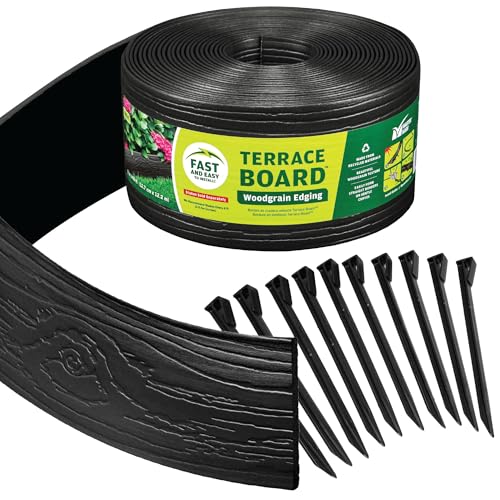
Master Mark Terrace Board Landscape Edging
A tall coiled design buries partway into a trench, creating a deep barrier against creeping grass roots. Owners note the extra height blocks aggressive turf well, and the recycled material holds up for years outdoors. Tight curves are stiffer to shape than with thinner edging.
Pros
- Tall barrier blocks root creep
- Strong value per foot
- Durable recycled material
Cons
- Requires digging a trench
- Stiffer on very tight curves

RTS Home Accents Landscape Edging
Interlocking sections and stake anchors turn this into a manageable weekend project for a tidy border. Its low cost and light weight make it an easy first edging project for new homeowners. Thinner material and a lower profile mean less rugged performance than steel or thick plastic.
Pros
- Very affordable
- Easy interlocking installation
- Lightweight to handle
Cons
- Less rugged than steel or thick plastic
- Lower barrier height

Amagabeli Steel Garden Edging
Interlocking powder-coated panels create a crisp, low-profile metal line with stakes included in the box. Owners report the coating resists rust well, and panels flex enough for gentle curves while holding rigid on straight runs. Sharp edges call for care when handling, and the steel adds weight to transport.
Pros
- Rust-resistant powder-coated steel
- Clean, low-profile line
- Panels lock together securely
Cons
- Edges can be sharp to handle
- Heavier to transport

EverEdge Classic Steel Lawn Edging
Flexible galvanized steel strips hammer straight into the ground using built-in spikes, no separate stakes needed. Owners note it shapes into flowing curves and nearly disappears into the lawn for a clean, professional look. Premium pricing and a thin edge mean installation calls for careful handling.
Pros
- Flexes into smooth curves
- Nearly invisible finished look
- Long-lasting coated steel
Cons
- Premium price
- Thin edge needs careful install
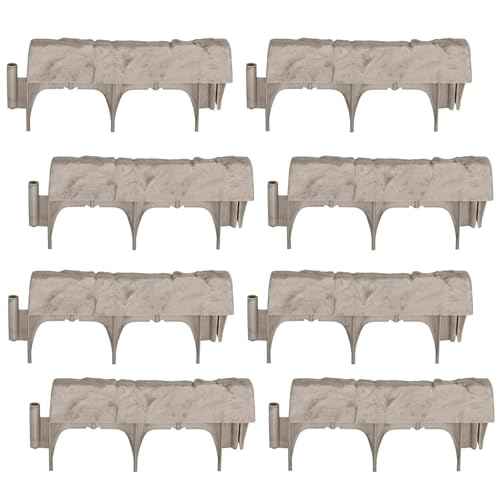
Suncast Border Landscape Edging
A raised decorative top mimics stacked stone or scalloped brick for a more finished garden look. Pound-in sections skip digging entirely, suiting flower beds where appearance matters as much as function. Soft soil can shift the taller top over time, and it reads as more visible than low edging.
Pros
- Attractive decorative profile
- No digging required
- Simple pound-in setup
Cons
- Taller top can shift in soft soil
- More visible than low edging

EcoBorder Rubber Landscape Edging
Recycled rubber bends around tight curves and absorbs mower impact without cracking, unlike rigid plastic. Owners report the connectors join sections firmly and stakes hold well over time. It costs more than basic plastic, and its darker color will not suit every garden bed.
Pros
- Very flexible for tight curves
- Resists cracking under impact
- Made from recycled material
Cons
- Costs more than basic plastic
- Dark color may not suit every bed
How they compare
| # | Model | Material | Best for | Score | Price |
|---|---|---|---|---|---|
| 1 | Dimex EasyFlex No-Dig Landscape Edging | Recycled plastic | Best overall | 9.3 | Check price |
| 2 | Master Mark Terrace Board Landscape Edging | Recycled polyethylene | Best value | 9.0 | Check price |
| 3 | RTS Home Accents Landscape Edging | Molded plastic | Best budget | 8.5 | Check price |
| 4 | Amagabeli Steel Garden Edging | Powder-coated steel | Best metal edging | 9.1 | Check price |
| 5 | EverEdge Classic Steel Lawn Edging | Galvanized coated steel | Best for clean curves | 9.0 | Check price |
| 6 | Suncast Border Landscape Edging | Resin plastic | Best decorative edging | 8.4 | Check price |
| 7 | EcoBorder Rubber Landscape Edging | Recycled rubber | Best flexible option | 8.6 | Check price |
How to choose
Which material is best for lawn edging: plastic, steel, or rubber? Lawn edging comes in plastic, steel, and rubber, and each fits a different job. Recycled plastic costs the least, installs easily, and bends well, making it the default choice for most homeowners. Steel gives the crispest, longest-lasting line but costs more upfront. Rubber flexes around the tightest curves and shrugs off mower hits.
Do you need to dig a trench to install edging? No-dig systems anchor with spikes or stakes driven straight through the edging, which suits a quick weekend project on reasonably even ground. Trench-style edging, like a tall terrace board, sits deeper and creates a stronger barrier against aggressive roots, though it takes more digging. Weigh how much labor you want against how tough a barrier your lawn actually needs.
How deep should edging be to stop grass roots? Taller, deeper edging blocks more grass and weeds from creeping into beds. Low-profile styles look subtle and are easy to mow over, but aggressive turf can still sneak underneath a shallow border. Fighting spreading grass calls for a deeper board that extends several inches into the soil to cut off the roots.
Which edging works best for curved beds? Sketch your beds before buying and count how many curves you have to work around. Rubber and thin flexible steel like EverEdge shape into smooth flowing lines, while rigid panels suit straight runs and gentle bends better. Matching edging to your actual layout avoids forcing stiff material into shapes it resists, which is where borders start looking uneven.
Questions worth asking
What type of lawn edging lasts the longest?
Steel edging generally lasts longest, especially galvanized or powder-coated versions that resist rust. Quality recycled plastic and rubber hold up for years too, but metal keeps its crisp line best over time.
Do you need to dig a trench for lawn edging?
Not always. No-dig systems anchor with spikes or stakes on the surface, while tall barrier boards need a trench. Trenching builds a stronger root barrier but takes more effort to install.
How do you stop grass from growing into flower beds?
Choose edging that sits several inches deep to block grass roots, and set the top slightly above soil level. Deeper barrier boards do the most to stop creeping turf from sneaking under.
Which lawn edging bends best around curves?
Flexible materials like recycled rubber or thin coiled steel bend into smooth curves most easily. Rigid panels work better for straight runs and only gentle bends.
Can you mow over lawn edging?
Low-profile edging installed flush with the lawn lets a mower wheel run along the top, cutting down on hand trimming. Taller decorative edging usually still needs a string trimmer along the border.
Does plastic lawn edging crack in cold weather?
Thin, cheap plastic can turn brittle and crack when temperatures drop. Thicker recycled plastic and rubber edging tolerate cold and frost heave far better.
How do you keep edging from popping out of the ground?
Drive plenty of anchoring spikes or stakes fully into firm soil. Products with looped spike channels or integrated stakes resist frost heave and stay put longer than lightly anchored options.
How much lawn edging do I need to buy?
Measure the total length of every bed border you plan to edge, then add extra for curves and overlap. Edging sells by roll length or in kits, so round up to cover your full layout.
Our pick
Dimex EasyFlex no-dig edging remains the top overall pick for a quick install and easy curves. Master Mark Terrace Board suits a deeper root barrier, Amagabeli or EverEdge steel delivers the crispest lasting line, and EcoBorder rubber handles beds full of tight curves best.