Which Life Jacket Works Best for an Indoor Pool?
Stearns Puddle Jumper suits toddlers starting swim lessons, O’Neill Reactor fits adults in water therapy, and Body Glove Method balances low-profile foam with all-day comfort. Full Throttle’s Rapid-Dry vest offers a lower-cost youth option. SwimSchool’s trainer vest works only as a learning aid, not a USCG-rated safety device.
Indoor pools call for a different vest than a boat trip. Bulky offshore jackets restrict arm movement during swim lessons and feel stiff against skin after an hour in chlorinated water. Foam construction and USCG approval type matter more indoors than they do on open water.
We compared USCG approval levels, foam construction, sizing charts, and owner feedback across seven current Amazon listings spanning toddler Puddle Jumpers, adult therapy vests, and non-rated swim trainers.
Before you buy
What to look for in an indoor pool life jacket USCG approval type printed on the label determines what a vest is legally rated to do. Type II and Type III vests suit calm, supervised water like a pool. Foam holds its shape and buoyancy without inflating, which matters for young or nervous swimmers who cannot self-rescue. Chest and waist sizing charts vary by brand, so measure before ordering rather than going by age alone.
USCG-approved vests versus swim training aids A USCG-approved vest, like the Stearns Puddle Jumper or O’Neill Reactor, meets a tested buoyancy standard for supervised water. A trainer vest, like the SwimSchool model, works as a teaching tool with removable foam and no safety rating. Instructors often start beginners on a rated vest, then move to a trainer aid once basic floating is established. Neither type replaces active adult supervision in the water.
Sizing for toddlers, kids, and adults Toddler and infant vests typically cover 30 to 50 lbs and add a grab handle plus crotch strap for lifting a child out quickly. Youth vests scale up to the 50-90 lb range with a taller torso panel. Adult vests use chest measurement rather than weight, commonly spanning 30 to 52 inches depending on the brand. A properly fitted vest should not ride up past the chin when lifted by the shoulder straps.
Comfort for extended wear in therapy and lessons Segmented or mesh-paneled foam flexes with the body, reducing the chafing that a rigid nylon shell causes over a 45-minute session. Mesh back panels and armholes drain faster between repeated pool entries, which matters for water therapy patients doing multiple sets. Low-profile cuts from brands like Body Glove and Onyx leave more room for full arm strokes during active drills. Neoprene shells feel softer against skin but absorb more water weight than mesh alternatives.
Our top picks

Stearns Puddle Jumper Youth Life Jacket
Buoyancy splits between a chest panel and two arm floats on this vest, keeping a child’s head above water while leaving shoulders free to paddle. USCG approval covers it as a Type V device with Type II performance, a common choice for supervised pool use. A side-release buckle speeds up putting it on compared to a traditional vest, according to owner reports.
Pros
- Arm floats keep shoulders mobile for kicking practice
- USCG-approved for supervised pool and lake use
- Quick side-release buckle speeds up changing
Cons
- Only fits the 30-50 lb weight bracket
- Arm floats can slip on very thin arms without adjustment

O’Neill Reactor USCG Life Vest
Nylon-covered foam panels wrap the torso without the bulk of an offshore jacket, a build many water-therapy patients favor for range of motion. USCG Type III approval covers use in calm, supervised water like an indoor pool. Adjustable side straps cinch it down over a wetsuit or swimsuit alike.
Pros
- Low-profile cut allows full arm rotation
- USCG Type III approval for calm supervised water
- Side straps adjust for a snug therapy-session fit
Cons
- Runs small; many buyers size up
- Foam retains some water weight after each session

Body Glove Method PFD
Segmented foam panels flex at the ribs and shoulders on this vest, cutting down the chafing that stiffer designs cause during a long swim class. USCG Type III approval applies, and mesh-lined armholes drain quickly between reps. According to the listing, the trim cut layers comfortably under a rash guard.
Pros
- Segmented foam bends with the body during laps
- Mesh armholes drain and dry faster between classes
- Wide size range covers most adult builds
Cons
- Costs more than basic youth vests
- Bright colorways run limited by size

Full Throttle Youth Rapid-Dry Life Vest
Rapid-Dry mesh panels shed pool water faster than solid nylon, so the vest feels lighter through a second or third swim session in one visit. USCG Type III approval covers supervised pool and lake use for kids in the 50-90 lb range. A reflective patch on the back helps instructors spot swimmers across a crowded pool.
Pros
- Mesh shell dries between back-to-back swim sessions
- Reflective back patch aids instructor visibility
- Priced below most adult-sized vests
Cons
- Sizing stops at 90 lbs, too small for most teens
- Buckle strap needs a firm tug to stay snug
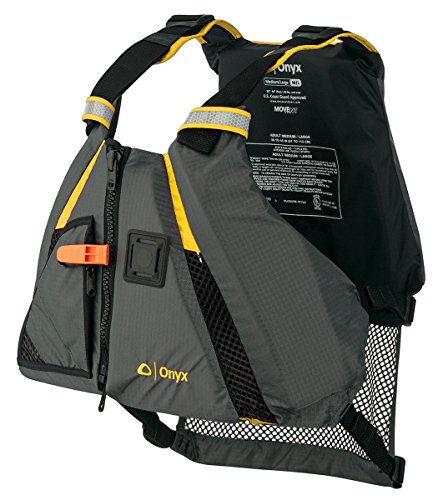
Onyx MoveVent Dynamic Paddle Sports Vest
A mesh back panel and shorter torso cut leave room for freestyle arm strokes during a structured lesson. USCG Type III approval applies to calm, supervised water rather than open-water conditions. Adjustable shoulder and side straps let instructors fit it quickly between students.
Pros
- Mesh back panel improves airflow during active drills
- Shorter cut clears the arms for stroke practice
- Fast strap adjustment between users
Cons
- Less torso coverage than full-panel vests
- Limited color options compared to youth lines

Airhead Infant/Toddler Neoprene Vest
Soft neoprene replaces the stiffer nylon shell found on most youth vests, a detail parents cite for reducing skin irritation on sensitive toddlers. USCG Type II approval applies, and a grab handle lets an adult lift a child straight out of the water. A crotch strap keeps the vest from riding up during kicking.
Pros
- Neoprene shell is softer against sensitive skin
- Grab handle lets an adult lift a child quickly
- Crotch strap prevents the vest riding up
Cons
- Neoprene holds more water weight than mesh shells
- Only one weight bracket available

SwimSchool Learn-to-Swim Trainer Vest
Removable foam segments let instructors reduce buoyancy step by step as a child gains confidence, a progression standard life vests do not offer. This is a swim aid, not a USCG-approved personal flotation device, so it should stay reserved for supervised lesson time. Adjustable buckles at the chest and waist keep it snug across several growth spurts.
Pros
- Removable segments let buoyancy decrease as skills improve
- Adjustable buckles extend fit across sizes
- Lower cost than full USCG-approved vests
Cons
- Not a substitute for a USCG-approved life jacket
- Requires direct supervision at all times
The lineup, side by side
| # | Model | Approval | Best for | Score | Price |
|---|---|---|---|---|---|
| 1 | Stearns Puddle Jumper Youth Life Jacket | USCG Type V (Type II performance) | Best overall | 9.4 | Check price |
| 2 | O’Neill Reactor USCG Life Vest | USCG Type III | Best for water therapy | 9.1 | Check price |
| 3 | Body Glove Method PFD | USCG Type III | Best for extended wear | 8.8 | Check price |
| 4 | Full Throttle Youth Rapid-Dry Life Vest | USCG Type III | Best value | 8.5 | Check price |
| 5 | Onyx MoveVent Dynamic Paddle Sports Vest | USCG Type III | Best for active swim lessons | 8.3 | Check price |
| 6 | Airhead Infant/Toddler Neoprene Vest | USCG Type II | Best for toddlers and infants | 8.1 | Check price |
| 7 | SwimSchool Learn-to-Swim Trainer Vest | Not USCG-rated (swim training aid) | Best swim lesson training aid | 8.0 | Check price |
Good to know
What is the best life jacket for indoor pool use?
Foam vests with a Type II or Type III USCG rating, such as the Stearns Puddle Jumper for kids or the O’Neill Reactor for adults, suit supervised indoor pool sessions best.
Are life jackets required for indoor swim lessons?
Requirements vary by facility. Many swim schools allow or require a flotation aid for beginners, while advanced classes often skip vests entirely to build independent swimming skills.
What USCG type is best for pool use?
Type II and Type III devices are designed for calm, supervised water like a pool, unlike Type I offshore jackets built for rough open water.
Can toddlers wear a life jacket in a swimming pool?
Yes, toddler-sized USCG Type II vests with a weight range around 30 to 50 lbs are common for supervised pool use, though direct adult supervision remains essential.
Is a Puddle Jumper the same as a life jacket?
A Puddle Jumper is a USCG-approved life jacket rated Type V with Type II performance. It differs from a standard vest by splitting buoyancy between the chest and two arm floats.
What size life vest do I need for water therapy?
Adult therapy vests are sized by chest measurement, typically 30 to 52 inches, rather than weight. Checking the brand’s specific chart avoids a vest that rides up during movement.
Foam vs inflatable life jackets for pools, which is better?
Foam vests hold constant buoyancy without needing inflation, making them a safer default for young children and non-swimmers in a supervised pool.
Do swim trainer vests count as USCG-approved PFDs?
No. Trainer vests like SwimSchool’s model are teaching aids with removable foam segments and carry no USCG safety rating, so they should not replace an approved life jacket.
How do I measure chest size for an adult life vest?
Wrap a tape measure around the fullest part of the chest, under the arms, and check that number against the brand’s own sizing chart instead of guessing from height or weight alone.
Our pick
Stearns Puddle Jumper remains the most versatile pick for toddlers starting swim lessons. O’Neill Reactor and Body Glove Method serve adults who need a low-profile fit for water therapy or extended pool time. Families wanting a lower-cost youth option should look at Full Throttle’s Rapid-Dry vest, while instructors phasing in independence can pair a rated vest with the SwimSchool trainer aid.