Lightweight Yet Rugged Tents for Serious Campers
For most backcountry campers, the Big Agnes Copper Spur HV UL2 is the top pick. It offers a superb balance of ultralight weight and durable construction. Owners report it withstands strong winds and rain when properly guyed out. Its main limitation is the higher price tag compared to other tents.
Choosing a tent that is both lightweight and heavy-duty is a challenge. Ultralight tents often sacrifice durability, while rugged tents can be too heavy for backpacking. The tents below strike a balance, using advanced materials and design.
We looked at factors like denier of the fly and floor, pole thickness, and overall construction. We also considered how well each tent handles wind and rain. The following tents are the best options we found for campers who refuse to compromise.
Our top picks
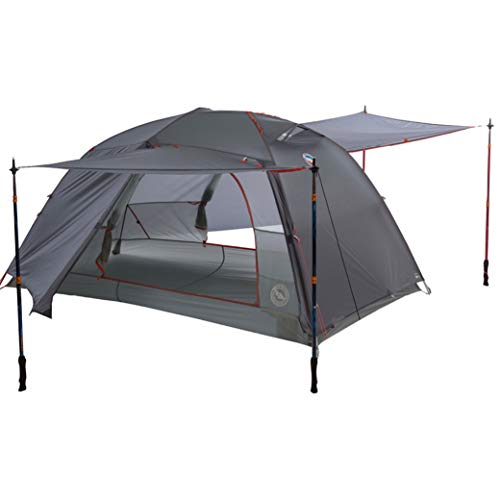
Big Agnes Copper Spur HV UL2
The Copper Spur HV UL2 is a freestanding, two-person tent that weighs just over three pounds. It uses high-volume pole architecture to maximize interior space. The fly and floor are made with ripstop nylon that has a waterproof coating. Owners praise its spaciousness and ability to handle storms.
Pros
- Very lightweight for the space
- Excellent weather resistance
- Easy to set up
Cons
- Pricey
- Floor is not the thickest

MSR Hubba Hubba NX 2
The MSR Hubba Hubba NX 2 is a classic that has been updated. It features a lightweight but durable design with Easton Syclone poles. The fly uses Xtreme Shield coating that lasts longer than standard coatings. This tent is known for its excellent ventilation and stable stance in wind.
Pros
- Durable poles resist bending
- Great ventilation
- Easy to pitch
Cons
- Heavier than some rivals
- Interior space is adequate but not huge

NEMO Dagger Osmo 2P
The NEMO Dagger Osmo 2P uses Osmo fabric, a blend of nylon and polyester that is both strong and breathable. It has a unique geometry that creates vertical walls for more headroom. The tent comes with a footprint that can be used to pitch the fly alone as a shelter.
Pros
- Spacious and comfortable
- Durable fabric resists sagging
- Integrated footprint
Cons
- A bit heavy for its class
- Setup takes practice

REI Co-op Half Dome SL 2+
The Half Dome SL 2+ is a well-rounded tent that offers great value. It has a simple, freestanding design with two large doors and vestibules. The poles are aluminum and the rainfly is made of ripstop polyester. It is not the lightest, but it is durable and roomy.
Pros
- Affordable
- Roomy interior
- Great warranty
Cons
- Heavier than premium tents
- Not as compact when packed

Marmot Tungsten UL 2P
The Marmot Tungsten UL 2P is a lightweight version of the popular Tungsten. It has a sturdy frame that holds up well in wind. The tent features a full-coverage fly with taped seams. It offers livable space and a convenient gear loft.
Pros
- Very stable in wind
- Good storage options
- Easy to set up
Cons
- Not the most spacious
- Fly can be tight to attach

Sierra Designs Meteor Lite 2
The Meteor Lite 2 is a lightweight tent that uses DAC Featherlite poles and ripstop nylon. It has a unique pole structure that creates a stable shape and reduces weight. The tent offers two doors and vestibules. It is simple and functional.
Pros
- Very light
- Simple design
- Good price for weight
Cons
- Interior space is tight
- Only one door if used with footprint

ALPS Mountaineering Lynx 2
The ALPS Mountaineering Lynx 2 is an entry-level tent that offers solid performance. It has a freestanding design with fiberglass poles. The walls are made of a polyester taffeta that is sturdy. While it is heavier and not as compact, it is very affordable.
Pros
- Very affordable
- Durable for the price
- Easy setup
Cons
- Heavy
- Bulkier packed size
What matters most
How they compare
| # | Model | Weight | Best for | Score | Price |
|---|---|---|---|---|---|
| 1 | Big Agnes Copper Spur HV UL2 | 3 lbs 2 oz | Best overall for ultralight backpackers | 9.4 | Check price |
| 2 | MSR Hubba Hubba NX 2 | 3 lbs 13 oz | Best for all-season versatility | 9.2 | Check price |
| 3 | NEMO Dagger Osmo 2P | 3 lbs 14 oz | Best for breathability and comfort | 9.0 | Check price |
| 4 | REI Co-op Half Dome SL 2+ | 4 lbs 5 oz | Best budget-friendly option | 8.8 | Check price |
| 5 | Marmot Tungsten UL 2P | 3 lbs 15 oz | Best for car campers who occasionally backpack | 8.6 | Check price |
| 6 | Sierra Designs Meteor Lite 2 | 3 lbs 2 oz | Best for minimalist campers | 8.4 | Check price |
| 7 | ALPS Mountaineering Lynx 2 | 5 lbs 10 oz | Best for budget-conscious beginners | 8.2 | Check price |
Common questions
What is the best lightweight heavy-duty tent for backpacking?
The Big Agnes Copper Spur HV UL2 is the best overall. It weighs just over three pounds and uses durable ripstop nylon and DAC poles. It offers good weather protection and is easy to pack.
How much should I weigh for a backpacking tent?
For solo backpacking, aim for under three pounds. For two people, a tent under four pounds is considered lightweight. Some tents go under three pounds but may sacrifice space.
What makes a tent heavy-duty?
Heavy-duty tents use thicker fabrics, stronger poles, and more robust stitching. They often have a higher denier fabric and a bathtub floor. They are designed to withstand harsh weather and frequent use.
Can I use a lightweight tent in winter?
Most lightweight tents are not designed for heavy snow loads. They may not handle strong winds or accumulate snow. For winter camping, you need a four-season tent with a stronger frame and less mesh.
How do I set up a tent to withstand wind?
Choose a sheltered spot. Orient the tent so the narrow end faces the wind. Stake all corners and use guylines. A taut pitch is essential. Some tents have additional guy-out points that should be used in high winds.
What is the difference between a 3-season and a 4-season tent?
A 3-season tent is lighter and has more mesh for ventilation. It is suitable for spring, summer, and fall. A 4-season tent has less mesh, stronger poles, and can handle snow and wind. It is heavier but more durable.
How should I store my tent?
Always dry your tent before storing it. Fold it loosely rather than rolling it tightly. Store it in a cool, dry place. Avoid prolonged exposure to sunlight, which can degrade fabrics.
Do I need a footprint for my tent?
A footprint is not mandatory but protects the floor from abrasion. It can also prevent condensation. Many tents offer a footprint sold separately. Using one can extend the life of your tent.
What is the best tent for two people on a budget?
The ALPS Mountaineering Lynx 2 is the most affordable. It is durable but heavy. If you want a lighter option, the REI Co-op Half Dome SL 2+ is a great value.
How important is the rainfly?
The rainfly is crucial for protecting against rain. A full-coverage fly extends to the ground, offering better protection. Some tents have a partial fly that leaves part of the body exposed, which is lighter but less weatherproof.
The verdict
If you want the best combination of light weight and durability, choose the Big Agnes Copper Spur HV UL2. It is the tent we would buy for serious backpacking. For those who want to save money, the REI Co-op Half Dome SL 2+ offers solid performance at a lower cost. If you need a tent that will last for years of heavy use, the MSR Hubba Hubba NX 2 is also an excellent choice. Any of these tents will serve you well.


