Lightweight Road Bikes That Climb Without Wearing You Out
Most riders do best with the Tommaso Imola, which pairs an aluminum frame with a carbon fork and endurance geometry. The Gavin Elite Carbon weighs the least here thanks to its full carbon build. Riders on a budget get solid value from the Vilano Shadow’s aluminum frame and carbon fork combo.
The Tommaso Imola fits most riders best, pairing a carbon fork with endurance geometry for comfort on long rides. It weighs more than the full carbon options in this comparison, so climbers chasing minimum weight may prefer the Gavin Elite instead.
We compared aluminum against full carbon builds and checked how Shimano groupset tiers affect shifting range and cost. Weight, frame material, and geometry mattered most for matching a bike to riding style and budget.
What matters most
What makes a road bike lightweight Frame material drives most of the weight gap between road bikes. Carbon frames typically run two to three pounds lighter than aluminum. Wheels and groupset components add smaller savings, but at a steeper cost per pound removed.
Aluminum vs carbon frames Aluminum resists dents and costs less, suiting commuters and everyday training rides. Carbon frames weigh less and dampen road vibration better, which matters most on long rides and steep climbs. A hard impact can crack carbon rather than just dent it, so aluminum tolerates rough handling better.
Matching geometry to your riding style Endurance geometry, like the Tommaso Imola’s, keeps the rider more upright for comfort over long distances. Race geometry, like the Monza’s, lowers the front end for a faster, more aerodynamic position. Riders switching from a hybrid or mountain bike usually adjust faster to endurance geometry first.
Picking a groupset tier for your budget Entry-level groupsets such as Shimano Claris keep costs down but offer fewer gears for climbing. Shimano Sora and higher tiers smooth out shifting and widen the gear range. Riders tackling steep or long climbs benefit most from upgrading past Claris.
The best picks, ranked
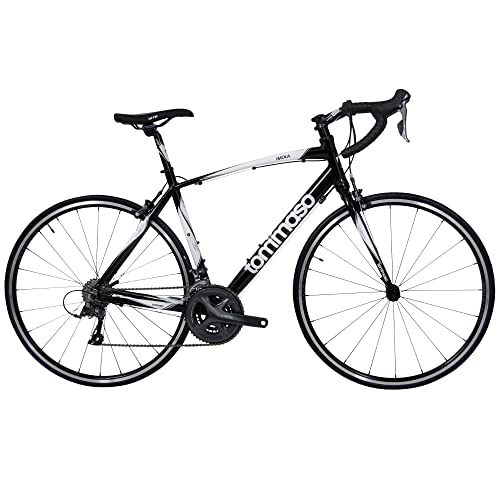
Tommaso Imola Endurance Aluminum Road Bike
A butted aluminum frame keeps cost down while a carbon fork absorbs road vibration on rough pavement. Endurance geometry positions the rider more upright than a race bike, reducing strain on long rides. Shimano Claris shifting covers the basics without added weight.
Pros
- Carbon fork reduces road vibration
- Endurance geometry suits long-distance comfort
- Shimano Claris delivers reliable shifting
Cons
- Weighs more than the full carbon options here
- Claris groupset offers a narrower gear range

Gavin Elite Carbon Road Bike
Full carbon construction sheds about two pounds versus the aluminum bikes in this lineup. Climbers notice that weight difference more than riders sticking to flat routes. Shimano Sora adds a wider gear range than base-tier groupsets, aiding steep climbs.
Pros
- Lightest frame in this comparison
- Carbon frame and fork smooth out vibration
- Sora groupset widens gear range for climbing
Cons
- Costs more than the aluminum alternatives here
- Carbon frames need more careful handling than aluminum

Vilano Shadow Aluminum Road Bike
An aluminum frame paired with a carbon fork keeps the Shadow priced below most bikes in this comparison. New road cyclists get a capable first bike without a big investment. Shimano Claris handles shifting duties reliably at this price point.
Pros
- Lower price than comparable aluminum bikes
- Carbon fork smooths ride quality at this price
- Reasonable weight for a budget build
Cons
- Component quality trails pricier builds here
- Heavier than the carbon frame options in this lineup
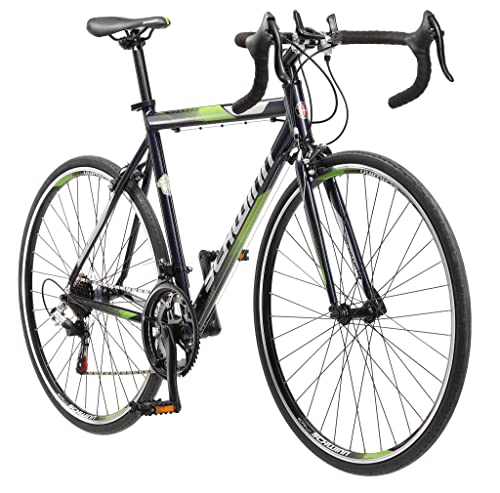
Schwinn Volare 1400 Road Bike
Relaxed geometry eases the transition to drop bars for riders new to road cycling. A lightweight aluminum frame keeps handling manageable despite the more upright fit. Wide availability across frame sizes makes fitting easier for first-time buyers.
Pros
- Relaxed geometry eases the switch to drop bars
- Available in multiple frame sizes
- Simple, low-maintenance components
Cons
- Heaviest bike in this comparison
- Not built for competitive racing
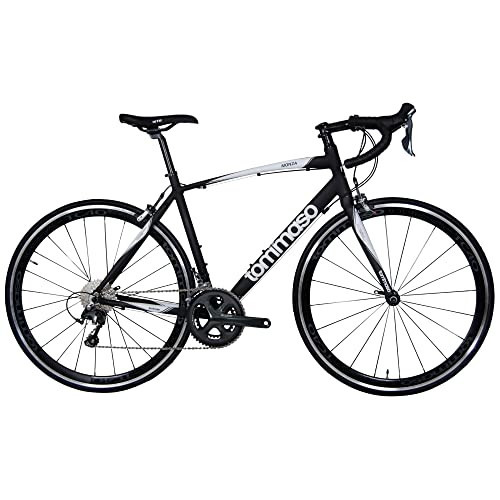
Tommaso Monza Aluminum Road Bike
Sharper, race-oriented geometry lowers the front end compared to the Imola, favoring speed over comfort. Club riders and fondo participants gain quicker handling without paying for a carbon frame. A carbon fork still smooths out road buzz on longer rides.
Pros
- Race-oriented geometry suits faster group rides
- Lighter than the Imola at a similar price
- Carbon fork improves ride quality
Cons
- Lower front end suits casual riders less
- Claris groupset limits shifting range

Retrospec Amok Aluminum Road Bike
Wider tire clearance lets the Amok handle light gravel and rough pavement that pure race bikes avoid. An aluminum frame keeps weight reasonable for mixed-terrain commuting. Riders splitting time between pavement and gravel gain versatility that dedicated road bikes lack.
Pros
- Wider tire clearance handles rough roads
- Versatile for commuting and light gravel
- Carbon fork smooths vibration
Cons
- Slightly heavier than dedicated race bikes here
- Wider tires add rolling resistance on smooth pavement

Diamondback Airen 1 Women’s Road Bike
Frame geometry and saddle shape are built specifically around a women’s fit, not adapted from a unisex frame. Aluminum construction keeps total weight competitive with the other bikes here. Riders training regularly get a comfortable, purpose-built fit for long sessions.
Pros
- Frame geometry built for women’s fit, not a saddle swap
- Comfortable for long training rides
- Competitive weight for the price
Cons
- Fewer size options than unisex frame lines
- Claris groupset limits gear range
Compared at a glance
| # | Model | Frame | Best for | Score | Price |
|---|---|---|---|---|---|
| 1 | Tommaso Imola Endurance Aluminum Road Bike | Butted aluminum with carbon fork | Best overall | 9.2 | Check price |
| 2 | Gavin Elite Carbon Road Bike | Full carbon frame and fork | Best carbon frame | 9.0 | Check price |
| 3 | Vilano Shadow Aluminum Road Bike | Aluminum with carbon fork | Best budget | 8.4 | Check price |
| 4 | Schwinn Volare 1400 Road Bike | Lightweight aluminum | Best for beginners | 8.5 | Check price |
| 5 | Tommaso Monza Aluminum Road Bike | Aluminum with carbon fork | Best for club rides | 8.8 | Check price |
| 6 | Retrospec Amok Aluminum Road Bike | Aluminum with carbon fork | Best for all-road versatility | 8.6 | Check price |
| 7 | Diamondback Airen 1 Women’s Road Bike | Aluminum with carbon fork, women’s geometry | Best women’s fit | 8.7 | Check price |
Questions worth asking
What is considered a lightweight road bike?
Most lightweight road bikes weigh between 18 and 22 pounds, with carbon frame builds landing at the lower end of that range.
Is carbon or aluminum better for a road bike?
Carbon is lighter and absorbs vibration better, while aluminum costs less and holds up to everyday commuting.
How much does frame material affect climbing speed?
A lighter frame helps on steep, sustained climbs, but rider fitness and power output matter more than one or two pounds of frame weight.
Which groupset is best for a beginner road bike?
Shimano Claris or Sora offer reliable shifting for new riders without the cost of racing-focused groupsets.
Can a lightweight road bike handle gravel roads?
Only models with wider tire clearance, like the Retrospec Amok, handle light gravel comfortably; narrow-tire race bikes work best kept to pavement.
Do women’s-specific road bikes make a real difference?
Yes, frame geometry, saddle width, and handlebar reach differ from unisex frames, improving comfort and fit for many riders.
What size road bike frame should I buy?
Frame size depends on height and inseam length, and most brands publish a sizing chart in centimeters.
Road bike vs hybrid bike, which is faster?
A road bike with narrow tires and drop bars rides faster on pavement, while a hybrid trades speed for a more upright, comfortable position.
How often should I replace a road bike chain?
Most riders replace a chain every 2,000 to 3,000 miles, depending on riding conditions and maintenance habits.
Is a carbon fork worth it on an aluminum frame bike?
Yes, a carbon fork cuts vibration from road buzz even when paired with an aluminum frame, as seen on the Imola, Shadow, and Monza here.
Our take
The Tommaso Imola remains the strongest all-around pick for riders wanting comfort plus carbon-fork damping on an aluminum budget. Cyclists chasing the lowest possible weight should look at the Gavin Elite Carbon instead. Anyone testing out road cycling for the first time gets the most value from the Vilano Shadow.
You might also need
Do Exercise Bikes Actually Pay Off for Home Workouts?
Waterproof Lightweight Camping Tables That Pack Small

Lightweight Trekking Poles That Pack Small for Travel
