Which Ski Goggles Actually Feel Light on the Face?
Smith’s 4D MAG leads this group for overall build, pairing magnetic lenses with a wider view near the boots. Oakley’s Flight Deck M offers the broadest field of view in a frameless-style design. Anon’s M4 Toric fits best over prescription glasses through its removable foam layer.
Smith’s 4D MAG stands out among lightweight ski goggles, pairing magnetic ChromaPop lenses with a wider view near the boots for skiers who swap tints often. Its frame is not built to fit over prescription glasses, though, which is where Anon’s M4 Toric takes over instead.
We compared published lens specs, frame materials, and owner feedback on fogging and fit across seven current Amazon listings from Smith, Oakley, Anon, Julbo, Giro, OutdoorMaster, and Zionor. Weight-relevant details like foam layers, strap hardware, and lens-swap mechanisms mattered as much as the tint options each brand includes.
Our top picks

Smith Optics 4D MAG
Magnets snap the ChromaPop lens in and out in seconds, so swapping tints never means touching the frame edge. BirdsEye Vision curves the bottom lens for a wider view of boots and skis underfoot. Extra hardware stays minimal, keeping bulk close to Smith’s non-magnetic Squad line.
Pros
- Magnetic lens swap works with gloves on
- BirdsEye Vision improves peripheral view near the snow
- Fits most Smith helmets for a gapless seal
Cons
- Extra lenses sold separately for the magnetic system
- Not designed to fit over prescription glasses

Oakley Flight Deck M
Flight Deck M drops the goggle’s lower frame rail for a nearly unobstructed view toward the boots. Prizm Snow lens tech boosts contrast on groomed runs and in mixed light. Triple-layer face foam and a compact size fit medium to smaller faces better than the full-size Flight Deck.
Pros
- Frameless-style build maximizes peripheral vision
- Prizm Snow lens sharpens terrain contrast
- Vented lens design resists fogging on lift lines
Cons
- Compact frame runs small for larger face shapes
- Not sized to fit over glasses
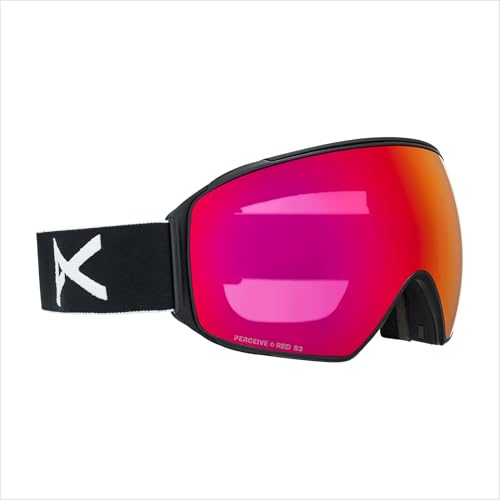
Anon M4 Toric
A removable inner foam layer lets wearers pull it out and fit the M4 over most prescription glasses. Anon’s Perceive toric lens curves both horizontally and vertically for less edge distortion than a flat lens. Two lenses ship in the box, swapped through the magnetic Facemask Integration system.
Pros
- Removable foam layer fits most prescription glasses
- Toric lens shape reduces edge distortion
- Two Perceive lenses included for changing light
Cons
- Toric lens shape adds frame bulk versus cylindrical designs
- Magnetic Facemask Integration only works with matching Anon gear
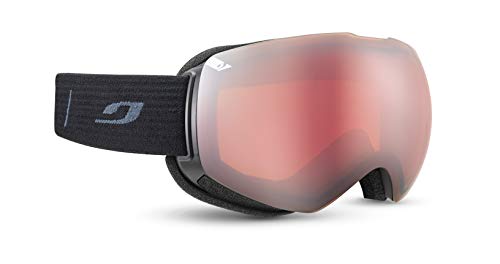
Julbo Airflux
Mesh venting across the frame top and a photochromic Reactiv lens replace the battery fan found on pricier models. The lens darkens and lightens automatically as clouds move in and out, cutting down on mid-run lens swaps. Nylon construction keeps overall weight low despite the added venting.
Pros
- Photochromic lens adjusts to light without swapping
- Mesh venting cuts fogging on climbs and lift rides
- No battery or fan to charge or maintain
Cons
- Photochromic tint range is narrower than dedicated low-light lenses
- Strap runs narrower than most North American brands

Giro Axis
A Vivid lens tuned by Zeiss boosts contrast on flat, overcast days when paired with the Axis frame. Cylindrical lens shape keeps the price below Giro’s spherical models. EVA triple-layer foam manages moisture, and the frame accepts Giro’s full lens lineup, including a bundled low-light lens on select packs.
Pros
- Vivid lens improves definition in flat light
- Bundled low-light lens on many listings
- Triple-layer foam wicks moisture on long days
Cons
- Cylindrical lens shows more edge distortion than spherical designs
- Not sized to fit over glasses

OutdoorMaster PRO Ski Goggles
Two magnetic lenses ship in one package here, a grey tint for sun and a clear one for overcast days. A TPU frame holds dual-layer foam with extra room for glasses. Anti-fog coating is bonded into the lens rather than sprayed on, based on the listing’s stated build.
Pros
- Two magnetic lenses included in one package
- Extra frame depth fits most prescription glasses
- Anti-fog coating is bonded, not a spray-on layer
Cons
- Lens optics show more distortion than premium spherical lenses
- Strap buckle feels less durable than pricier brands, per owner reports

Zionor X4 Ski Goggles
A frameless spherical lens design, usually reserved for pricier goggles, shows up here at a budget price. REVO mirror coating cuts glare on bright days. Single-layer foam keeps the frame thin but offers less cushioning than dual-layer designs on costlier models.
Pros
- Spherical lens design is unusual at this price point
- REVO coating reduces glare on sunny days
- Lightweight TPE frame suits younger or smaller riders
Cons
- Single-layer foam offers less cushioning on long days
- No second lens included for changing light
What to look for
What makes a ski goggle lightweight Frame weight comes mostly from lens count, foam layers, and strap hardware, not the shell material alone. TPU and nylon frames flex in cold without cracking, unlike stiffer polycarbonate blends. Spherical lenses curve in two directions and cut glare compared to flat cylindrical lenses, though they usually cost more. Foam thickness affects comfort and fog control together, so a single thin layer trims weight at the expense of cushioning.
How do you match lens VLT to mountain light? VLT, or visible light transmission, measures how much light passes through a lens as a percentage. Lenses under 20% VLT suit bright bluebird days and high-altitude glare. A range near 40 to 60% VLT works better for overcast mornings or dusk runs. Photochromic lenses like Julbo’s Reactiv line shift VLT automatically, cutting the need to carry a second lens.
Fitting ski goggles over prescription glasses Not every frame leaves room for glasses arms and lenses. Anon’s M4 and OutdoorMaster’s PRO both build in extra foam depth or removable spacers for this reason. Riders who wear glasses should check listed OTG compatibility before buying, rather than assuming a large lens means a roomy frame. Contact lenses remain the simplest fix where prescription strength allows it.
Anti-fog coatings and venting habits that make lenses last Anti-fog coatings wear down faster when wiped with a dry cloth or paper towel. Owners report the coating lasts longer when goggles air-dry face-up instead of getting stuffed into a damp jacket pocket. Vented frames, like Julbo’s Airflux, move air across the lens interior without a battery fan. Storing goggles in a microfiber bag between runs keeps grit from scratching the anti-fog layer.
How they stack up
| # | Model | Lens type | Best for | Score | Price |
|---|---|---|---|---|---|
| 1 | Smith Optics 4D MAG | ChromaPop mirror lens, magnetic quick-swap | Best overall | 9.4 | Check price |
| 2 | Oakley Flight Deck M | Prizm spherical lens, frameless-style rim | Best for wide field of view | 9.1 | Check price |
| 3 | Anon M4 Toric | Perceive toric lens, magnetic swap (2 lenses included) | Best for glasses wearers (OTG) | 8.9 | Check price |
| 4 | Julbo Airflux | Reactiv photochromic spherical lens | Best anti-fog and venting | 8.6 | Check price |
| 5 | Giro Axis | Vivid lens by Zeiss, cylindrical shape | Best for low-light and flat light | 8.4 | Check price |
| 6 | OutdoorMaster PRO Ski Goggles | Cylindrical lens, magnetic swap (2 lenses included) | Best value | 8.2 | Check price |
| 7 | Zionor X4 Ski Goggles | Spherical dual-lens, frameless design | Best budget | 8.0 | Check price |
Questions worth asking
What VLT is best for cloudy or flat-light ski days?
Lenses between 40% and 60% VLT let in more light for overcast mornings and flat afternoons. Giro’s Vivid and Julbo’s Reactiv lenses both target this range, either as a bundled second lens or through automatic tint shifting.
Can you wear ski goggles over glasses?
Some frames leave extra room for glasses arms and lenses, while others don’t. Anon’s M4 and OutdoorMaster’s PRO both build in removable foam or added depth for this, so check listed OTG compatibility before buying rather than guessing from lens size alone.
How do you stop ski goggles from fogging up?
Keep the anti-fog coating dry between runs and avoid wiping the inside lens with a cloth, since that strips the coating faster. Vented frames like Julbo’s Airflux move air across the lens without a fan, which helps on climbs and lift lines.
Which ski goggle lens works in both sun and shade?
Photochromic lenses, like Julbo’s Reactiv lens in the Airflux, darken in bright light and lighten as clouds roll in. That removes the need to carry a second lens for one variable-weather day on the mountain.
Is a spherical or cylindrical lens better for skiing?
Spherical lenses curve in two directions, matching the eye’s natural curve and reducing glare and distortion at the edges. Cylindrical lenses curve only side to side and usually cost less, which is why a budget frame like Zionor’s X4 leans on a spherical shape to compete on features instead.
Do magnetic lens goggles work as well as clip-in lenses?
Magnetic systems, used on Smith’s 4D MAG and Anon’s M4, let riders swap lenses with gloves on and without flexing the frame. Clip-in and rim-based systems can be more secure in a hard fall but usually take more time and dexterity to change.
What makes a ski goggle lightweight?
Frame material matters less than the number of foam layers, lens count, and strap hardware attached to it. Nylon and TPU frames, like those on Julbo’s Airflux and Smith’s 4D MAG, stay light while still holding shape in cold temperatures.
How often should you replace ski goggle lenses?
Replace a lens once the anti-fog coating peels, scratches obscure the field of view, or the foam gasket compresses and stops sealing against the face. Most riders on magnetic or clip-in systems replace lenses years before the frame itself wears out.
Our pick
Skiers who swap lenses several times a day should start with Smith’s 4D MAG for its magnetic system and wider boot-level view. Anyone who wears glasses under a helmet is better off with Anon’s M4 Toric, since removable foam and a toric lens solve a fit problem the others don’t address. Riders buying a first pair, especially for a beginner or a kid, get the most goggle for the price from Zionor’s X4.


