Lightweight Soccer Balls That Keep Touches Sharp and Fast
Most players get the best all-around balance from the Adidas Starlancer Club Ball, a size 5 training ball with a scuff-resistant TPU cover. Budget shoppers do better with the Select Numero 10, sized 3 through 5. Kids working on close control benefit most from the compact Wilson NCAA Retro Mini.
Players splitting time between practice and casual games get the most out of the Adidas Starlancer Club Ball. Its TPU cover resists scuffing and the butyl bladder holds air for weeks, though it skips the FIFA certification competitive leagues require.
Weight climbs from around 300 grams in a size 3 youth ball to roughly 450 grams in a size 5 match ball. We compared cover material, bladder type, and listed weight ranges against owner feedback on durability and first touch to sort these seven picks.
What matters most
How Ball Size and Weight Change the Way It Plays Sizes run from 3 for young children up to 5 for adult and competitive play, and weight climbs from around 300 grams to near 450 grams across that range. A lighter ball leaves the foot faster but drifts more in wind outdoors. Indoor and futsal balls trade some of that lightness for a denser core that keeps bounce low on hard courts. Matching size to a player’s age and playing surface matters more than chasing the lowest weight on the shelf.
Cover Material and Bladder Type, Explained PVC covers cost less and hold up fine for backyard use, while TPU and thermally bonded microfiber resist scuffing longer under regular kicking. Bladder choice changes the feel at contact: butyl holds air for weeks, and latex loses pressure faster but returns a softer touch. Machine stitching shows up on most training balls, while thermally bonded seams appear mainly on higher-priced match balls. Neither bladder wins outright, since a softer latex touch can matter more to a player refining first touch than air retention does.
Choosing a Size for Youth or Recreational Leagues Kids under age 8 typically use a size 3 ball, both for its lighter weight and easier control with smaller feet. Recreational and school leagues often move to size 4 for ages 8 to 12, then size 5 once players reach their teens. Youth-built balls like the Franklin Sports Competition 100 trade cover durability for lower weight, which eases leg fatigue during practice. Checking league rules before buying avoids a size mismatch at game check-in.
Training, Futsal, and Match-Day Balls Aren’t Interchangeable Durability and air retention matter more than exact flight for training balls, since cleats and turf wear them down fast. Futsal balls such as the Vizari Santos rely on a foam-backed layer to cut bounce on wood or concrete, a feature outdoor balls skip entirely. Match balls add thermally bonded covers and tighter roundness tolerances to hold flight steady under referee inspection. Mini balls near 9 inches serve a narrower job still, built for juggling and footwork rather than any full-sided play.
Our top picks

Adidas Starlancer Club Ball
A butyl bladder pairs with a machine-stitched TPU cover on this regulation size 5 ball. Weight lands between 410 and 450 grams, light enough for daily training yet stable enough for casual matches on grass or turf.
Pros
- TPU cover shrugs off scuffs from turf and pavement
- Butyl bladder keeps air pressure steady for weeks
- Multiple colorways available for team or solo play
Cons
- Skips FIFA certification, so competitive leagues may reject it
- Feels firmer underfoot than latex bladder balls

Nike Pitch Team Training Ball
Grip improves in wet weather thanks to this size 5 ball’s textured synthetic casing. Club and team sessions wear it well, and a butyl bladder keeps the roughly 420 to 445 gram ball inflated between practices.
Pros
- Textured casing grips better in rain than smooth covers
- Butyl bladder needs pumping less often than latex
- Team set pricing suits clubs buying in bulk
Cons
- Texture wears down faster on artificial turf
- Bounce runs firmer than premium match balls
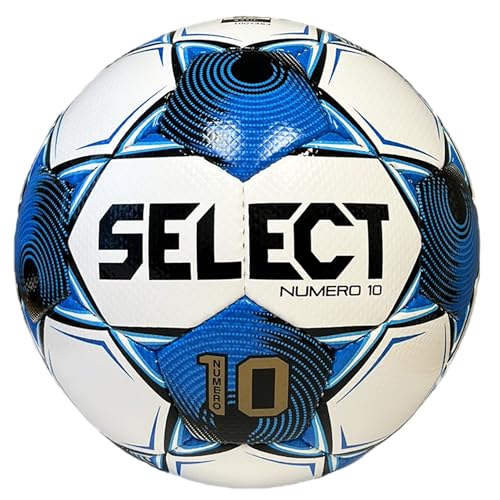
Select Numero 10 Soccer Ball
Recreational players get a softer first touch from this ball’s latex bladder, paired with a hand-stitched PVC and TPU hybrid cover. Sizes 3 through 5 cover everyday practice at a lighter weight than most match balls.
Pros
- Latex bladder softens first touch compared to butyl
- Hand-stitched seams survive daily kicking sessions
- Sizing spans younger and older players in one line
Cons
- Latex bladder needs more frequent air top-offs
- Color choices trail bigger brand competitors
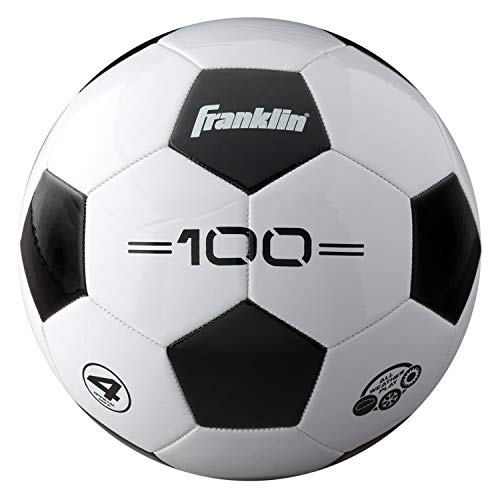
Franklin Sports Competition 100 Soccer Ball
Players under age 8 get a scaled-down size 3 ball here, built with a machine-stitched PVC cover near 300 grams. Recreational leagues and driveway practice suit it better than adult match play.
Pros
- Reduced weight eases strain on young legs
- Low cost makes a spare ball easy to justify
- Bright colorways help kids track the ball in play
Cons
- Sizing outgrows players over roughly age 8
- PVC cover scuffs sooner than TPU alternatives
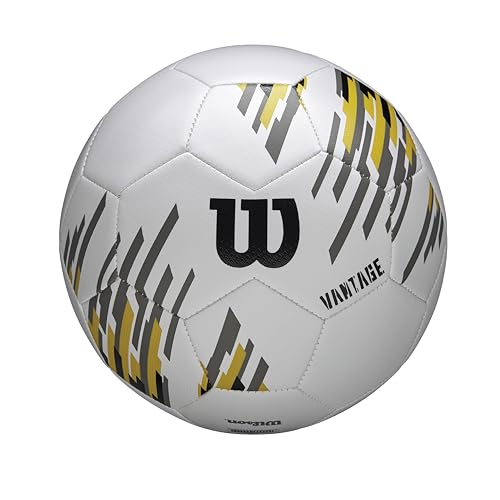
Wilson NCAA Retro Mini Soccer Ball
Juggling drills and footwork practice fit this roughly 9-inch mini ball better than full-field play. Rubber construction keeps weight under 300 grams, and its compact size travels easily.
Pros
- Compact size fits a backpack or car seat pocket
- Encourages tighter close-control touches
- Light build cuts fatigue during repetitive drills
Cons
- Not built for regulation match play
- Small surface makes long passes harder to judge

Baden Perfection Elite Match Ball
High school and club competition call for this size 5 ball’s thermally bonded microfiber cover and butyl bladder. Weight sits near the top of regulation, about 420 to 445 grams, for truer flight than budget training balls.
Pros
- Thermally bonded seams cut down water absorption
- Consistent roundness supports a truer flight path
- Meets many high school league specifications
Cons
- Costs more than training-grade balls
- Firmer cover takes longer to break in

Vizari Santos Futsal Ball
Hard indoor courts get a lower bounce from this size 4 futsal ball’s foam-backed layer under the PU cover. Weight runs close to 400 to 440 grams, heavier per size than outdoor balls but easier to control on concrete or wood.
Pros
- Foam backing tames bounce on hard indoor courts
- PU cover wipes clean after indoor sessions
- Stitched panels hold shape through low-bounce drills
Cons
- Poor match for outdoor grass or turf
- Low bounce feels unfamiliar to players used to standard balls
How they stack up
| # | Model | Size | Best for | Score | Price |
|---|---|---|---|---|---|
| 1 | Adidas Starlancer Club Ball | 5 | Best overall | 9.4 | Check price |
| 2 | Nike Pitch Team Training Ball | 5 | Best for team training | 9.2 | Check price |
| 3 | Select Numero 10 Soccer Ball | 3, 4, or 5 | Best value | 8.9 | Check price |
| 4 | Franklin Sports Competition 100 Soccer Ball | 3 | Best for youth players | 8.7 | Check price |
| 5 | Wilson NCAA Retro Mini Soccer Ball | Mini (approx 9 in) | Best for skills training | 8.4 | Check price |
| 6 | Baden Perfection Elite Match Ball | 5 | Best for match play | 8.2 | Check price |
| 7 | Vizari Santos Futsal Ball | 4 (Futsal) | Best for indoor and futsal | 8.0 | Check price |
Questions worth asking
What size soccer ball is best for a 10-year-old?
Most youth leagues place a 10-year-old in the size 4 category, up from the size 3 ball used under age 8. Size 4 weighs less than a full size 5, which keeps passing and shooting easier to control at that age.
How much does a lightweight soccer ball weigh?
Weight varies by size. A size 3 youth ball sits near 300 grams, a size 4 falls in between, and a size 5 training or match ball usually runs 410 to 450 grams. Mini balls built for juggling weigh under 300 grams.
Is a lighter soccer ball better for training?
A lighter ball eases leg fatigue during repetitive drills and suits younger players, though it can drift more in wind outdoors. Coaches often keep a regulation weight ball on hand for shooting practice so players adjust to match conditions.
Can you use a futsal ball outdoors on grass?
Futsal balls like the Vizari Santos use a foam-backed layer that lowers bounce, working against a player on grass since the ball needs more contact to roll and bounce naturally outdoors. Outdoor balls with a standard butyl bladder perform better on turf or grass.
What is the difference between a training ball and a match ball?
Training balls, such as the Nike Pitch Team ball, favor a durable textured cover built to survive daily practice. Match balls, like the Baden Perfection Elite, use thermally bonded seams and tighter roundness tolerances for truer flight during games.
Which soccer ball works best for backyard or driveway practice?
A hand-stitched PVC or hybrid cover, like the one on the Select Numero 10, holds up to concrete and pavement better than a premium thermally bonded match ball. Picking a size that matches the player’s age keeps control easier during casual play.
Does a butyl or latex bladder feel different when you kick it?
Latex bladders return a softer first touch but lose air pressure within days, so the ball needs pumping before most sessions. Butyl bladders hold pressure for weeks at the cost of a slightly firmer feel off the foot.
Are mini soccer balls good for juggling practice?
A mini ball around 9 inches across, like the Wilson NCAA Retro Mini, weighs under 300 grams and fits easily in a bag for travel. Its smaller surface forces closer control, building the touch needed for full-size juggling drills.
How do soccer ball sizes compare across age groups?
Size 3 balls fit players under 8, size 4 covers ages 8 to 12, and size 5 becomes standard for teenagers and adults. Weight climbs alongside size, from around 300 grams up to roughly 450 grams.
The verdict
The Adidas Starlancer Club Ball covers the most ground for players splitting time between practice and casual matches, pairing a scuff-resistant TPU cover with a butyl bladder that holds air for weeks. Parents outfitting a player under 8 should look at the Franklin Sports Competition 100 in size 3 instead, since its lighter build suits smaller feet. Anyone training indoors on wood or concrete gets steadier bounce from the Vizari Santos futsal ball.