Gas, Electric or Kinetic: Which Splitter Beats Hardwood?
Champion Power Equipment’s 100251 leads with 27 tons of force and a 16-second cycle, built for hardwood rounds up to 25 inches long. Swisher’s LS22HGE takes wider logs up to 24 inches across. Splitting near the house without gas? Sun Joe’s LJ10M delivers 10 tons on standard household current.
Champion Power Equipment’s 100251 tops this comparison, driving 27 tons through hardwood rounds in about 16 seconds. Anyone processing multiple cords a season and towing between yard and woodpile gets the most from its two-stage pump. At roughly 410 pounds, moving it solo without a hitch is the main tradeoff.
Rated tonnage rarely tells the full story, since seasoned pine splits under 10 tons while gnarled oak often demands 20 or more. We weighed splitting force against cycle time, log length and diameter capacity, then checked those numbers against how owners describe knotty or oversized rounds in daily use.
The best picks, ranked
Champion Power Equipment 100251 27-Ton Gas Log Splitter
A 224cc engine feeds a two-stage hydraulic pump rated for 27 tons, enough to push through oak and elm knots up to 12 inches across. Horizontal and vertical modes let one person split without hoisting logs onto a beam. An auto-return ram cuts dead time between strokes during long sessions.
Pros
- Handles hardwood knots that stall lower-tonnage splitters
- Vertical mode skips lifting oversized rounds onto the beam
- Auto-return ram shortens the wait between cycles
Cons
- At 410 pounds, moving it needs a hitch or two people
- Gas engine adds fuel, oil changes and winter storage prep

Swisher LS22HGE 22-Ton Gas Log Splitter
Swisher rates this splitter for logs up to 24 inches in diameter, wider than most residential units accept without pre-cutting. Both horizontal and vertical positions work, covering fresh rounds and stacked cordwood alike. Pneumatic tires and a tow bar let one person reposition it around the property.
Pros
- 24 inch diameter capacity skips pre-splitting on wide rounds
- Horizontal and vertical modes cover more log shapes
- Pneumatic tires make towing over rough ground easier
Cons
- A 20 second cycle trails faster two-stage pumps in this lineup
- Close to 500 pounds, so loading it solo into a truck is tough
Dirty Hand Tools 100381 22-Ton Gas Log Splitter
This splitter pairs a 212cc engine with a two-stage pump built around log length rather than extreme diameter, reaching 25 inches. A 14 second cycle keeps output steady through multi-cord sessions. Its lighter overall frame tows more easily behind an ATV or small tractor than comparable 22-ton units.
Pros
- 25 inch length handles uncut firewood rounds
- 14 second cycle keeps throughput high on high-volume days
- Lighter frame tows behind smaller vehicles than rival 22-ton splitters
Cons
- A 12 inch diameter limit means pre-splitting oversized rounds
- No vertical mode, so heavy logs must be lifted onto the beam

YARDMAX YS1575 15-Ton Gas Log Splitter
A 4.5 horsepower LCT engine drives YARDMAX’s 15-ton pump, sized for seasonal firewood instead of commercial-scale cutting. Its 12 second cycle moves through a moderate pile fast without the bulk of larger gas units. A folding log cradle and roughly 200 pound weight make it easy to store between uses.
Pros
- 12 second cycle ranks among the fastest gas models compared here
- Folding cradle simplifies loading uneven rounds
- Light enough for one person to reposition without help
Cons
- 15 tons struggles against large, knotted hardwood
- 12 inch diameter cap rules out oversized rounds
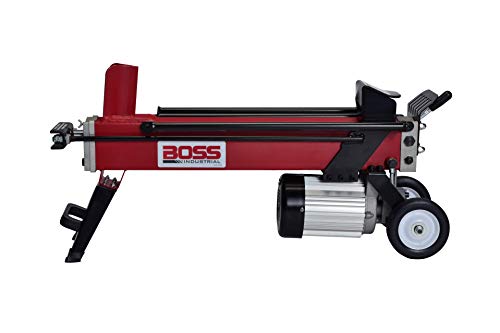
Boss Industrial ES7T20 7-Ton Electric Log Splitter
Standard household current powers this splitter, useful for working near a garage without gas fumes or engine noise. Seven tons handles seasoned softwood and mid-size hardwood, though large oak rounds push past its limit. A wheeled frame and compact footprint suit smaller yards and sheds.
Pros
- Plugs into a standard 15 amp outlet, no gas required
- Quiet enough for suburban yards and early morning use
- Compact frame fits in a shed or garage corner
Cons
- 7 tons underpowers large, knotted hardwood
- 20 inch log length limits use on longer rounds
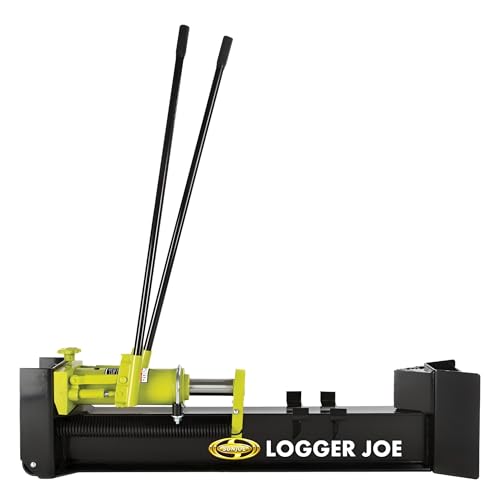
Sun Joe LJ10M 10-Ton Electric Log Splitter
Ten tons of electric splitting force comes packaged in a frame light enough for one person to carry to the woodpile. It handles most seasoned hardwood under 10 inches across without gas, oil or exhaust. Push-button and pull-lever two-hand controls keep hands clear of the ram.
Pros
- 64 pound frame moves without a trailer
- No gas, oil or emissions to manage
- Two-hand controls keep operation simple and safe
Cons
- 10 tons struggles with large diameter oak or elm
- 20.5 inch length limits use on longer rounds

WEN 56207 6-Ton Kinetic Log Splitter
A flywheel and rack replace the hydraulic pump here, delivering a splitting stroke in under a second instead of the 12 to 20 seconds hydraulic units need. That speed favors high volume seasoned wood over stubborn green hardwood. Its 6-ton rating understates the kinetic energy behind each stroke, though gnarly rounds can still need more than one hit.
Pros
- Sub-second stroke time beats every hydraulic model in this comparison
- 130 pounds moves easily without a trailer
- Electric motor skips gas and oil changes entirely
Cons
- Twisted or knotted rounds often need multiple strokes
- 10 inch diameter cap rules out oversized rounds
Side by side
| # | Model | Splitting force | Best for | Score | Price |
|---|---|---|---|---|---|
| 1 | Champion Power Equipment 100251 27-Ton Gas Log Splitter | 27 tons | Best overall | 9.4 | Check price |
| 2 | Swisher LS22HGE 22-Ton Gas Log Splitter | 22 tons | Best for large diameter hardwood | 9.1 | Check price |
| 3 | Dirty Hand Tools 100381 22-Ton Gas Log Splitter | 22 tons | Best for long logs | 8.9 | Check price |
| 4 | YARDMAX YS1575 15-Ton Gas Log Splitter | 15 tons | Best for mid-size properties | 8.6 | Check price |
| 5 | Boss Industrial ES7T20 7-Ton Electric Log Splitter | 7 tons | Best for small yards | 8.3 | Check price |
| 6 | Sun Joe LJ10M 10-Ton Electric Log Splitter | 10 tons | Best value | 8.1 | Check price |
| 7 | WEN 56207 6-Ton Kinetic Log Splitter | 6 ton rated, kinetic flywheel action | Best for fast repeat splitting | 8.0 | Check price |
What to look for
Gas, Electric or Kinetic Power Gas engines, like Champion’s 224cc unit and Swisher’s power plant, deliver the highest sustained tonnage for all-day sessions away from an outlet. Electric models such as the Sun Joe LJ10M and Boss Industrial ES7T20 skip fuel and exhaust but top out around 7 to 10 tons. Kinetic splitters, represented here by WEN’s 56207, trade raw tonnage for flywheel speed, finishing a stroke in under a second rather than waiting on hydraulic fluid to build pressure.
How Much Splitting Force Hardwood Actually Needs Seasoned pine and other softwoods split cleanly under 10 tons, well within reach of the electric models in this lineup. Oak, elm and other tight-grained hardwoods often need 20 tons or more, which is why Champion’s 100251 and Swisher’s LS22HGE rate at 22 to 27 tons. Diameter counts just as much as species; Swisher’s unit accepts rounds up to 24 inches across, double what most electric splitters handle.
Cycle Time and Splitting Volume How many rounds move through a machine per hour depends on cycle time, not just how hard each stroke lands. YARDMAX’s YS1575 finishes a cycle in about 12 seconds, faster than the heavier, 20 second Swisher despite lower tonnage. WEN’s kinetic design cuts stroke time under a second, a real advantage once volume climbs past a weekend’s worth of wood.
Towing, Storage and Working Solo Splitters over 300 pounds, including the Champion and Swisher units, generally need a trailer hitch or a second person for transport. Lighter machines, like the 200 pound YARDMAX or the 64 pound Sun Joe LJ10M, fit in a truck bed and store in a shed corner. Anyone splitting alone in a small yard gets more practical use from a lighter electric or kinetic model than from a towed gas splitter built for acreage.
Common questions
How many tons does it take to split oak or elm?
Owners generally report that 20 tons or more handles tight-grained hardwood like oak and elm without repeated strokes. Splitters rated 6 to 10 tons still work but often need multiple passes on the same round.
What is the difference between a two-stage and single-stage log splitter?
Two-stage pumps shift from fast, low-pressure ram speed to slower high-pressure force once wood resists, cutting cycle time on easy logs. Single-stage pumps hold one constant speed and pressure through the whole stroke, which feels slower on softwood but stays mechanically simpler.
Can an electric log splitter handle 20 inch diameter logs?
Most electric models here, including the Sun Joe LJ10M and Boss Industrial ES7T20, cap diameter around 10 inches. Wider rounds need pre-splitting with an axe or a higher-tonnage gas unit like the Swisher LS22HGE.
Is a kinetic log splitter better than a hydraulic one?
WEN’s 56207 finishes a stroke in under a second, far faster than any hydraulic unit, which makes it efficient for high volume seasoned wood. Hydraulic splitters still handle knotted or oversized rounds better, since sustained pressure works through resistance a flywheel stroke cannot match.
Which log splitter works best for a small backyard?
Boss Industrial’s ES7T20 or Sun Joe’s LJ10M suit small yards, since both run on standard household current and skip the bulk of a towed gas frame. Either stores against a shed wall between uses.
Gas vs electric log splitter: which costs less to run?
Electric splitters skip gasoline, oil changes and engine maintenance, which lowers ongoing cost for occasional use. Gas models cost more to maintain but deliver higher tonnage for anyone processing multiple cords each season.
How long does a hydraulic log splitter cycle take?
Cycle times among the gas models compared here range from about 12 seconds on the YARDMAX YS1575 to roughly 20 seconds on the Swisher LS22HGE. Faster cycles matter most once volume climbs past a cord or two.
Do I need a towable log splitter, or can I skid it by hand?
Units over 300 pounds, like the Champion 100251 and Swisher LS22HGE, work best with a trailer hitch or ATV tow rather than manual dragging. Lighter frames under 200 pounds, including the YARDMAX and Sun Joe models, can be walked or wheeled short distances by hand.
What is the best log splitter for long, uncut firewood rounds?
Dirty Hand Tools’ 100381 and Champion’s 100251 both accept logs up to 25 inches long, longer than the 20 to 20.5 inch capacity on most electric models here. That extra length matters most for anyone splitting rounds straight off a chainsaw without trimming first.
Our take
Champion Power Equipment’s 100251 takes the top spot for anyone processing several cords of hardwood a season, pairing 27 tons of force with a 16 second cycle and vertical operation for oversized rounds. Buyers without a truck or trailer for towing should look at Sun Joe’s LJ10M instead, since its 64 pound frame and electric motor handle seasoned softwood without gas or a hitch. Homeowners splitting mostly pine or fir in high volume get more throughput per hour from WEN’s kinetic 56207 than from any hydraulic model in this comparison.