Top Math Toys to Boost Early Numeracy Skills
The Learning Resources MathLink Cubes set stands out as the top pick for most families, offering versatile hands-on learning for ages 5 and up. Its main advantage is the sheer number of activities possible, from basic counting to complex patterns, while its main limitation is the small size of the cubes, which can be a choking hazard for younger siblings.
Math toys do more than keep kids busy. They build a foundation for logical thinking and problem solving. The right toy turns abstract numbers into something a child can see, touch, and understand.
Parents often look for toys that grow with their child. Some focus on counting, others on shapes, and a few introduce coding logic. We rounded up seven options that cover these areas, each with its own strengths and quirks.
What matters most
The shortlist, ranked
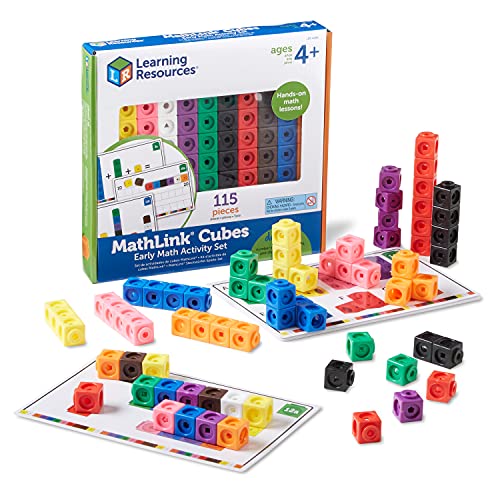
Learning Resources MathLink Cubes Early Math Activity Set
This set includes 115 colorful cubes that snap together, along with 15 double-sided activity cards. It covers everything from counting and sorting to addition, subtraction, and pattern making. Kids enjoy the tactile feel, and parents appreciate the included storage bin.
Pros
- Encourages creative building alongside math practice
- Activity cards offer structured learning
- Cubes are durable and easy to clean
Cons
- Small parts pose a choking risk for toddlers
- Storage bin is not very sturdy

Melissa & Doug Abacus
A traditional wooden abacus with 10 rows of 10 beads each. It helps young children visualize numbers and perform basic calculations. The bright colors and smooth wood make it an inviting first math tool.
Pros
- High-quality wood construction
- Encourages fine motor skills
- Can be used for open-ended play
Cons
- Beads may slide too easily for some activities
- Limited to visual learning, no digital feedback

ThinkFun Math Dice Jr.
A set of dice that challenges kids to build math equations. The junior version uses simpler numbers and includes a scoring track. It is compact enough for car rides or waiting rooms, and it turns math into a competitive game.
Pros
- Portable and quick to set up
- Adaptable difficulty for different skill levels
- Encourages social interaction
Cons
- Requires reading and number recognition
- May become repetitive for advanced kids

LEGO DUPLO Number Train
A push-train with numbered bricks that attach to the cars. Toddlers can load and unload the bricks while they learn to count and recognize numerals. It is sturdy enough for rough play and easy for small hands to manipulate.
Pros
- Durable LEGO quality
- Combines building with number play
- Includes fun train figure for storytelling
Cons
- Limited to numbers 0 to 9
- May be too simple for older kids

Osmo Genius Starter Kit for iPad
This kit includes Osmo’s base and reflector that work with an iPad. It comes with five games, including Numbers, where kids use physical tiles to solve puzzles on the screen. The immediate feedback and playful animations keep children engaged.
Pros
- Blends physical and digital play
- Adaptive difficulty levels
- Parents can track progress
Cons
- Requires an iPad (not included)
- Cost is higher than non-electronic toys

Educational Insights Math Whiz
A handheld electronic game that quizzes kids on addition, subtraction, multiplication, and division. It offers different modes, including drill and challenge, and provides instant feedback with sound and light.
Pros
- Portable and battery operated
- Adjustable difficulty levels
- Encourages quick recall of math facts
Cons
- Not suitable for young children who cannot read
- Can feel repetitive without variety

Learning Resources Sum Swamp Game
A board game where players move through a swamp by rolling dice and solving addition and subtraction problems. Shortcuts and obstacles add excitement. It is designed for 2 to 4 players and makes math practice feel like a game.
Pros
- Engaging theme that kids love
- Simple rules, easy to learn
- Encourages turn-taking and social skills
Cons
- Limited to basic operations
- Game length may be too short for some
Side by side
| # | Model | Age range | Best for | Score | Price |
|---|---|---|---|---|---|
| 1 | Learning Resources MathLink Cubes Early Math Activity Set | 5 to 10 years | Comprehensive hands-on learning | 9.4 | Check price |
| 2 | Melissa & Doug Abacus | 3 years and up | Classic counting and pattern recognition | 8.9 | Check price |
| 3 | ThinkFun Math Dice Jr. | 6 years and up | On-the-go mental math practice | 8.7 | Check price |
| 4 | LEGO DUPLO Number Train | 2 to 5 years | Toddlers learning numbers and counting | 8.8 | Check price |
| 5 | Osmo Genius Starter Kit for iPad | 6 to 10 years | Interactive screen-based learning | 9.2 | Check price |
| 6 | Educational Insights Math Whiz | 6 years and up | Building arithmetic fluency | 8.5 | Check price |
| 7 | Learning Resources Sum Swamp Game | 5 to 7 years | Group play and family game night | 8.6 | Check price |
Questions worth asking
At what age should I introduce math toys?
You can start as early as 18 months with simple counting toys and shape sorters. Most math toys are designed for ages 3 and up, but always check the manufacturer’s recommendation to ensure safety and educational fit.
Are electronic math toys better than traditional ones?
Electronic toys like the Math Whiz provide instant feedback and can track progress, which some children find motivating. Traditional toys like the abacus encourage tactile learning and spatial reasoning. Both have value; the best choice depends on your child’s learning preferences and your family’s screen time limits.
Can math toys replace formal math instruction?
No, math toys are supplements, not replacements. They reinforce concepts taught in school and at home, but they lack the structured progression of a curriculum. Use them to build enthusiasm and reinforce skills between lessons.
How do I know if a math toy is too advanced for my child?
Look for signs of frustration or disinterest. A good toy should offer a slight challenge but not be overwhelming. Many toys have adjustable difficulty levels, which allow you to tailor the experience as your child grows.
Are there math toys that work without batteries or screens?
Yes, many excellent math toys are screen-free and battery-free, such as the Melissa & Doug Abacus, LEGO DUPLO Number Train, and ThinkFun Math Dice Jr. These options encourage imaginative play and fine motor skills while teaching math concepts.
What is the best math toy for a child who dislikes math?
Choose a toy that hides the math within an engaging activity. The Osmo Genius Starter Kit turns math into a game with visual rewards, while the Sum Swamp board game makes arithmetic part of a fun adventure. Sometimes a change of format can shift a child’s attitude.
How can I extend the use of a math toy?
Look for toys that offer multiple ways to play. MathLink Cubes can be used for building and patterning, not just arithmetic. Dice games can be modified with different rules or objectives. Use the toy as a base to create your own challenges.
Are these math toys durable enough for classroom use?
Many are designed for home use but can withstand classroom conditions if handled with care. The Learning Resources MathLink Cubes and LEGO DUPLO are particularly sturdy. For classroom settings, consider buying sets that include storage and activity guides.
Do math toys come with instructions for parents?
Most quality math toys include a guide with activity ideas and explanations of educational benefits. For example, the MathLink Cubes set comes with activity cards, and the Osmo Genius Kit includes guided gameplay. Online resources from manufacturers can also provide additional tips.
What is the most versatile math toy?
The Learning Resources MathLink Cubes is highly versatile because it can be used for a wide range of concepts, from counting to geometry. Its open-ended nature allows children to create their own games and structures, making it suitable for many ages and skill levels.
Our pick
For most families, the Learning Resources MathLink Cubes set offers the best balance of educational value, durability, and adaptability across many years. If you need a toddler-friendly option, choose the LEGO DUPLO Number Train. For tech-savvy kids who enjoy screens, the Osmo Genius Starter Kit is a strong investment.


