Glass vs Plastic Meal Prep Containers Compared
Heat tolerance and stain resistance put Prep Naturals Glass Meal Prep Containers ahead of the group. Rubbermaid Brilliance offers the best value with lids that actually stay leakproof, and Bentgo Prep suits portioned meals on a tight budget.
Weekly cooking calls for Prep Naturals Glass Meal Prep Containers, since glass handles reheating without warping or staining. Rubbermaid Brilliance brings the best leakproof plastic seals in the group. Bentgo Prep covers portion control for anyone watching cost.
Meal prep containers fail in annoyingly consistent ways. Lids warp after a few dishwasher cycles and stop sealing, plastic stains permanently from tomato sauce, and sets that stack neatly in a shop turn into a cupboard avalanche at home. We compared published material specifications, temperature ratings, seal designs and stacking arrangements, then weighed the leaking and staining complaints that show up most often in owner reviews.
The shortlist, ranked

Prep Naturals Glass Meal Prep Containers
Borosilicate glass bases move from fridge to microwave to dishwasher without warping, staining or holding smells, which is where every plastic set eventually gives up. Locking lids with silicone gaskets seal reliably for sauces and soups. Weight is the honest trade, since glass breaks if dropped on a hard floor.
Pros
- No staining or odour retention over time
- Bases handle oven reheating, not just microwave
- Locking lids seal well for liquids
Cons
- Heavy to carry a full day of meals
- Glass breaks if dropped on tile

Rubbermaid Brilliance Food Storage Containers
A latching lid design with a built in vent seals well enough to carry soup in a bag without a plastic liner first. Crystal clear plastic resists the clouding that makes older containers look grubby over time. Sauces will still stain the plastic eventually, even with this design.
Pros
- Latching lids genuinely hold liquids
- Built in vent means no lid removal to microwave
- Stays clear rather than clouding
Cons
- Tomato based sauces still stain over time
- Latches can snap if forced when cold
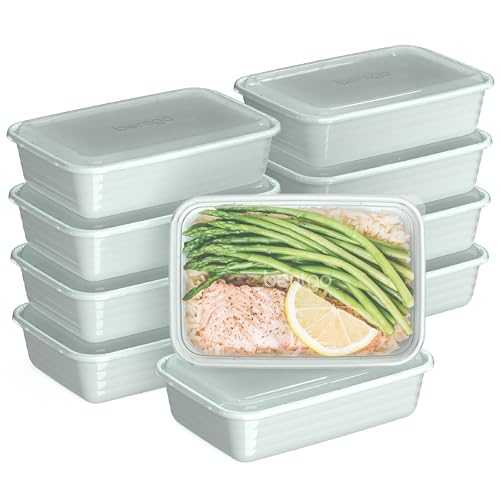
Bentgo Prep 1-Compartment Meal Prep Containers
Large multipacks with consistent portion sizes suit anyone batch cooking the same meal for a full week. A uniform shape stacks efficiently in a fridge, which matters more than it sounds when ten meals need storing at once. Press on lids mean these are not built for soup.
Pros
- Enough containers for a full week of batch cooking
- Uniform sizing stacks efficiently
- Low cost per container
Cons
- Press on lids are not leakproof for liquids
- Thinner plastic than premium sets

Freshware Meal Prep Containers
Divided compartments keep protein, carbohydrate and vegetables separate, so nothing turns soggy before Wednesday. Bulk pack quantities make these practical for serious batch cooking or sending food home with guests. Durability takes a back seat to function here, and the plastic feels it.
Pros
- Compartments stop food going soggy
- Bulk quantity for large batches
- Cheap enough to give away with leftovers
Cons
- Lighter plastic than reusable focused sets
- Lids loosen after repeated dishwasher cycles

Pyrex Simply Store Glass Storage Set
Glass bases here go into the oven, so cooking, cooling and storing can all happen in the same dish. Plastic lids are storage only and must come off before heating. Stacking is less efficient than purpose built prep containers, since shapes vary across the set.
Pros
- Cook and store in the same dish
- Glass never stains or holds odours
- Long term durability with careful handling
Cons
- Lids are storage only and not heat safe
- Mixed shapes stack inefficiently
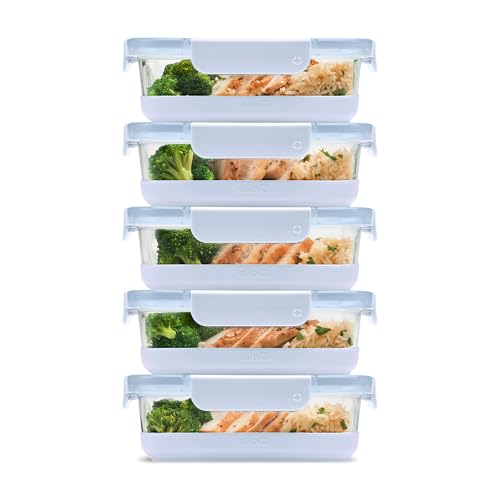
Ello Duraglass Meal Prep Containers
A silicone sleeve wraps each glass container, absorbing the knocks that break bare glass in a bag. It also keeps the container comfortable to hold straight out of the microwave. Cleaning underneath the sleeve occasionally is the maintenance trade for that protection.
Pros
- Sleeve protects glass in a bag or backpack
- Comfortable to hold when hot
- Good seal for commuting
Cons
- Sleeves trap residue and need separate cleaning
- Bulkier than bare glass containers
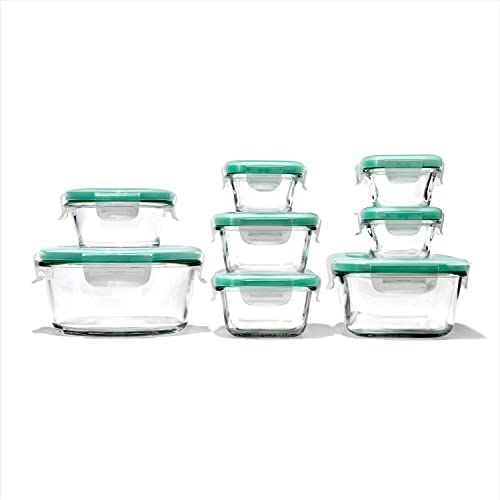
OXO Good Grips Smart Seal Container Set
OXO lets the lid seal come apart for cleaning, addressing the grime that builds up invisibly in gasket channels on most other sets. A push button seal is easy to operate with wet hands. This is the priciest plastic option here, and set sizes run smaller.
Pros
- Gaskets remove so seals actually get clean
- Easy to open and close with wet hands
- Reliable seal for liquids
Cons
- Fewer containers per set for the price
- Gaskets can be lost if not refitted immediately
Compared at a glance
| # | Model | Base material | Best for | Score | Price |
|---|---|---|---|---|---|
| 1 | Prep Naturals Glass Meal Prep Containers | Borosilicate glass | Best overall | 9.4 | Check price |
| 2 | Rubbermaid Brilliance Food Storage Containers | BPA free Tritan style plastic | Best value | 9.2 | Check price |
| 3 | Bentgo Prep 1-Compartment Meal Prep Containers | Large multipack | Best budget | 9.0 | Check price |
| 4 | Freshware Meal Prep Containers | Two and three compartment options | Best for portioned meals | 8.8 | Check price |
| 5 | Pyrex Simply Store Glass Storage Set | Tempered glass | Best for oven to fridge | 8.6 | Check price |
| 6 | Ello Duraglass Meal Prep Containers | Glass with silicone sleeve | Best for carrying to work | 8.3 | Check price |
| 7 | OXO Good Grips Smart Seal Container Set | BPA free plastic | Best lid design | 8.0 | Check price |
How to pick the right one
Glass or plastic, which should you buy first? Glass resists staining, does not absorb odours and does not warp under repeated reheating, so it lasts far longer than plastic. Plastic weighs less, costs less and survives being dropped, which matters if containers travel to work daily. Many households settle on glass for home storage and plastic for commuting.
Match the seal to what you actually store Press on lids handle cooked rice and roasted vegetables fine and fail on soup or dressed salad. Latching lids with silicone gaskets are the ones that hold liquids inside a bag. Pay for the better seal if anything saucy gets prepped, since one leak in a rucksack costs more than the container set.
Why stacking efficiency decides fridge chaos Uniform footprints stack cleanly, while mixed shape sets waste space and tip over. Look for lids that nest and bases that stack empty, since storing the empties is half the problem. Consistent sizes also make portioning easier, which is the point of prepping food in the first place.
Lids fail before bases, so treat them differently High dishwasher heat warps lids faster than bases, so the top rack is the minimum precaution. Hand washing extends lid life considerably. Storing lids flat rather than stacked under weight also keeps gaskets seated properly for longer.
Questions worth asking
How long does prepped food last in the fridge?
General food safety guidance puts most cooked meals at three to four days refrigerated. Anything intended for later in the week is safer frozen and thawed, which is why freezer safe containers matter.
Are glass containers worth the extra weight?
For home storage, yes, because they resist staining and reheating damage indefinitely. For carrying several meals at once, plastic is far more practical and the weight difference is significant.
Can meal prep containers go in the freezer?
Most are freezer rated, but leave headspace since food expands as it freezes. With glass, avoid moving a container straight from freezer to hot oven, since thermal shock is what cracks it.
Why do plastic containers stain from tomato sauce?
Tomato and turmeric pigments bind to plastic surfaces, especially once heated. Coating the container lightly with oil before adding sauce reduces it, though the effect is largely permanent once it sets in.
Can you microwave a meal prep container with the lid on?
Only if the lid has a vent or a corner is left open. Sealing a container completely lets steam build up, which can force the lid off and warp it. Rubbermaid Brilliance includes a built in vent for this reason.
How many meal prep containers do you actually need?
For one person prepping lunches, five to seven covers a week with a couple spare. For full day prepping, plan on around fourteen to twenty so washing mid week is not required.
Glass vs plastic meal prep containers, which lasts longer?
Glass outlasts plastic by a wide margin since it never stains, warps or holds odours. Plastic wins on weight and survives drops better, so many households use both for different jobs.
Are these containers dishwasher safe?
Bases almost always are. Lids often fare better on the top rack or hand washed, because high heat in the lower rack is the main cause of warping and lost seals.
Do divided compartments actually help?
They stop wet components soaking into dry ones, which noticeably improves how food tastes several days later. For single dish meals such as curries or stews, single compartment containers are simpler and stack better.
The bottom line
Prep Naturals Glass Meal Prep Containers are worth the investment when the containers live mostly at home, since glass avoids the staining and warping that eventually retire every plastic set. Rubbermaid Brilliance is the better answer for commuting with anything saucy, and Bentgo Prep covers high volume batch cooking cheaply. Gentle lid washing extends any of these sets well past the average.