Best MIG Welders for Beginners: Easy Starts, Strong Welds
The best MIG welder for most beginners is the Hobart Handler 140. It offers a stable arc, simple setup, and enough power for auto body and light fabrication. Its main limitation is that it is 120V only, so thicker metal needs multiple passes.
Starting to weld can be daunting, but a good MIG welder makes the learning curve much gentler. MIG welding is forgiving, and with the right machine, you can lay clean beads in no time.
We looked at dozens of models and narrowed it down to seven that are ideal for novices. These machines have straightforward controls, reliable wire feed, and safety features that help you avoid common mistakes.
Before you buy
The shortlist, ranked

Hobart Handler 140
The Hobart Handler 140 is a trusted 120V welder that handles up to 1/4 inch steel with multiple passes. It comes with a free spool gun ready for aluminum, making it versatile. Owners praise its smooth arc and simple dials.
Pros
- Very easy to set up and use
- Smooth, stable arc
- Spool gun ready
Cons
- Limited to 120V, not for thick metal
- No gas regulator included

Weldpro 200 Amp MIG Welder
This Weldpro model runs on both 120V and 240V, giving you the flexibility to weld thin sheet metal or up to 3/8 inch plate. It includes a spool gun and supports MIG, flux core, stick, and lift TIG. It’s a great value for beginners who want to grow.
Pros
- Works on 120V and 240V
- Many processes in one machine
- Includes spool gun
Cons
- Higher learning curve with many settings
- Some owners report inconsistent wire feed
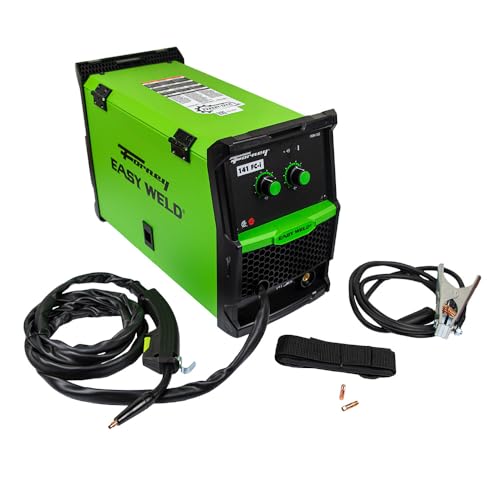
FORNEY Easy Weld 261
The FORNEY Easy Weld 261 is an affordable 120V MIG welder that is perfect for light projects. It is compact and portable, with simple heat and wire speed settings. It handles up to 1/8 inch steel and is ideal for fences, repairs, and crafts.
Pros
- Very affordable
- Lightweight and portable
- Simple controls
Cons
- Not for heavy welding
- Short duty cycle
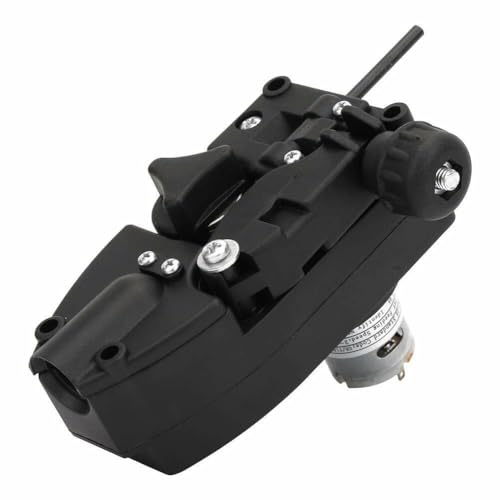
Lincoln Electric K2185-1 Handy Core
This Lincoln Electric model is a flux core only welder, meaning you don’t need a gas tank. It runs on 120V and is great for outdoor use where wind can blow away shielding gas. It’s simple and reliable for beginners who want to weld without extra equipment.
Pros
- No gas required
- Ideal for windy conditions
- Compact and easy to store
Cons
- Flux core spatter more
- Limited to thinner metals
Tacklife MIG130
The Tacklife MIG130 is a small, lightweight MIG welder that is perfect for occasional use. It runs on 120V and offers both MIG and flux core capability. It’s easy to carry and store, making it a good choice for DIYers with limited space.
Pros
- Very lightweight
- Dual process
- Budget friendly
Cons
- Low power
- Short duty cycle

YesWelder 205DS
The YesWelder 205DS is a multi-process welder that includes MIG, stick, and lift TIG. It runs on 120V and 240V, offering plenty of power for a beginner who wants to try different welding styles. It features a digital display and synergic control.
Pros
- Multiple processes in one
- Digital display
- Dual voltage
Cons
- Setup can be complex
- Customer support can be slow
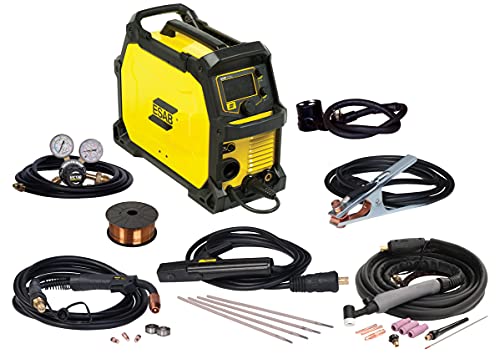
ESAB Rebel EMP 215ic
The ESAB Rebel EMP 215ic is a top-tier multi-process welder that offers MIG, flux core, stick, and lift TIG. It runs on both 120V and 240V, and its intelligent software assists with settings. It’s a bit pricey but delivers professional results.
Pros
- Excellent arc quality
- Auto-setting technology
- Rugged build
Cons
- Expensive
- Heavier than others
The lineup, side by side
| # | Model | Input Power | Best for | Score | Price |
|---|---|---|---|---|---|
| 1 | Hobart Handler 140 | 120V, 20A | best overall for beginners | 9.4 | Check price |
| 2 | Weldpro 200 Amp MIG Welder | 120V/240V | dual voltage versatility | 9.2 | Check price |
| 3 | FORNEY Easy Weld 261 | 120V | budget-friendly 120V | 8.8 | Check price |
| 4 | Lincoln Electric K2185-1 Handy Core | 120V | no gas needed | 8.7 | Check price |
| 5 | Tacklife MIG130 | 120V | portability on a budget | 8.5 | Check price |
| 6 | YesWelder 205DS | 120V/240V | learning multiple processes | 8.9 | Check price |
| 7 | ESAB Rebel EMP 215ic | 120V/240V | premium quality and versatility | 9.1 | Check price |
Common questions
What is the best MIG welder for a complete beginner?
The Hobart Handler 140 is often recommended because it is simple to set up and produces a smooth arc. It runs on 120V and is perfect for light to medium projects.
Do beginners need a gas MIG welder or flux core?
Flux core is easier because it doesn’t require gas, but MIG with gas gives cleaner results. Many beginners start with flux core to learn, then switch to gas later.
Can a 120V MIG welder weld 1/4 inch steel?
Yes, but it may require multiple passes and proper joint preparation. A 120V machine can handle up to 1/4 inch steel with flux core, but for MIG, it’s better to stick to 1/8 inch or less.
What safety gear do I need for MIG welding?
You need an auto-darkening helmet, welding gloves, a long-sleeved jacket or apron, and safety glasses. Also ensure good ventilation to avoid fumes.
How much does a good beginner MIG welder cost?
Prices vary, but you can find decent 120V models around current price to current price. Dual voltage machines with more features can cost current price to current price or more.
What is the difference between MIG and flux core wire?
MIG wire is solid and requires shielding gas. Flux core wire is hollow and filled with flux, producing its own gas shield when burned. Flux core is more suitable for outdoor use.
Can I use a MIG welder for aluminum?
Yes, but you need a spool gun and a machine that supports it. Some models like the Hobart Handler 140 are spool gun ready, but you’ll need to buy the gun separately.
How do I set the wire speed and voltage on a MIG welder?
Most machines have a chart inside the door that suggests settings based on material thickness and wire size. Start with those recommendations and adjust based on the sound and appearance of the weld.
Is it better to buy a multi-process welder as a beginner?
It can be, if you want to try different welding types. But they may have a steeper learning curve. Starting with a dedicated MIG welder is often simpler.
What is the duty cycle on a MIG welder?
Duty cycle is the percentage of time in a 10-minute period you can weld at a given amperage without overheating. For example, 20% at 140A means 2 minutes of welding, then 8 minutes of rest.
The verdict
For most beginners, the Hobart Handler 140 is the best choice because it is reliable, easy to use, and has enough power for typical hobby projects. If you need more versatility and plan to weld thicker materials, consider the Weldpro 200 Amp or the ESAB Rebel EMP 215ic. Budget-minded beginners will find the FORNEY Easy Weld 261 a solid, affordable option.