Top Air Purifiers for Mold Spores and Musty Smells
The Blueair Blue Pure 211+ Auto is our top pick for most homes because it combines a true HEPA filter with activated carbon to capture mold spores and odors, and it covers large rooms up to 540 square feet. Its main limitation is that it lacks a UV-C light, which some users want for extra mold killing, but the HEPA filtration alone is highly effective for removing airborne mold particles.
Mold spores are a common indoor allergen that can trigger respiratory issues and musty smells. Air purifiers with HEPA filters can capture these tiny particles, but not all purifiers are equally effective against mold.
We analyzed specifications and owner feedback to bring you the best options for reducing mold spores in your home, from compact units for single rooms to whole-house powerhouses.
Our top picks
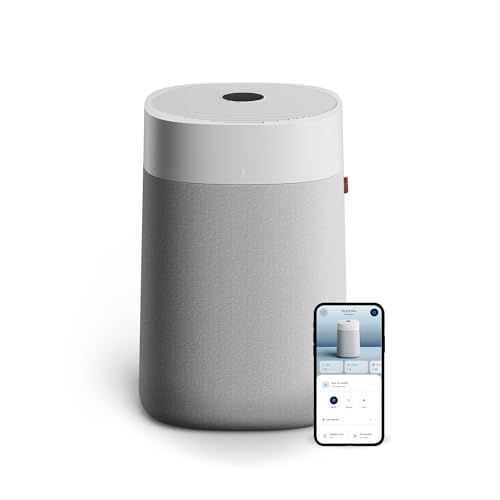
Blueair Blue Pure 211+ Auto
This purifier uses a combination of mechanical and electrostatic filtration to capture 99% of airborne particles, including mold spores. It has an auto mode that adjusts fan speed based on air quality, and it’s Energy Star certified for efficiency.
Pros
- Quiet on low setting
- Auto mode responds to air quality
- Energy efficient
Cons
- No UV-C light
- Filter replacements are pricey

Levoit Core 400S
The Levoit Core 400S features a three-stage filtration system with a pre-filter, true HEPA, and activated carbon. It works with Alexa and Google Assistant, and its app provides real-time air quality readings.
Pros
- Companion app with AQI display
- Voice control compatible
- Sleep mode is very quiet
Cons
- Filter door is a bit flimsy
- No handle for portability

GermGuardian AC4825E
This purifier includes a true HEPA filter, a charcoal pre-filter for odors, and a UV-C light that helps kill mold spores. It’s designed for medium rooms and is one of the most affordable models with UV-C technology.
Pros
- UV-C light adds extra mold killing
- Very affordable upfront cost
- Simple controls
Cons
- Smaller coverage area
- Replacement filters can be frequent

Winix HR900
The Winix HR900 uses a five-stage system including a washable pre-filter, true HEPA, activated carbon, and a PlasmaWave technology that breaks down odors without producing harmful ozone. It’s designed for large rooms and has a smart sensor.
Pros
- Five-stage filtration
- Washable pre-filter saves money
- Quiet operation
Cons
- PlasmaWave may be a concern for some
- No app connectivity
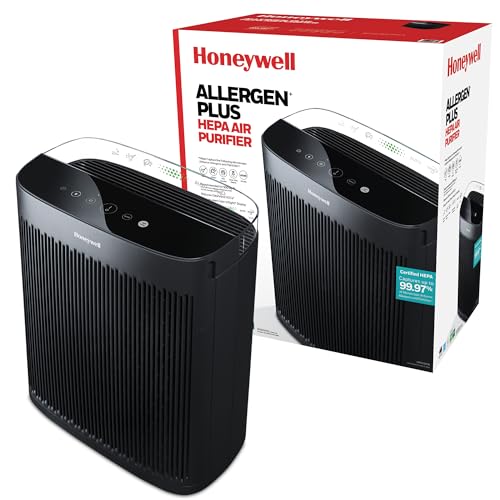
Honeywell HPA300
This Honeywell model is known for its powerful 300 CADR rating, meaning it can filter a large room quickly. It uses a true HEPA filter and has activated carbon pre-filters to trap odors. It’s a simple, no-frills machine that gets the job done.
Pros
- Very high CADR for quick purification
- Carbon pre-filters help with odors
- Durable build
Cons
- No auto mode or smart features
- Bulky design

Molekule Air Mini+
The Molekule Air Mini+ uses PECO technology to destroy pollutants at a molecular level, including mold spores. Its sleek design fits small rooms, and it connects to an app for monitoring. Note that PECO filters are costly to replace.
Pros
- Unique PECO technology
- Compact and stylish
- App shows real-time air quality
Cons
- Filter replacements are expensive
- CADR not disclosed for comparison

IQAir HealthPro Plus
IQAir’s HealthPro Plus is a top-tier purifier with HyperHEPA filtration that claims to capture particles down to 0.003 microns, far smaller than mold spores. It also includes a V5-Cell for chemical and odor removal. This Swiss-made unit is built to last.
Pros
- Exceptional filtration down to 0.003 microns
- Large coverage area
- Swiss engineering quality
Cons
- Very high price tag
- Large footprint
How they compare
| # | Model | Coverage | Best for | Score | Price |
|---|---|---|---|---|---|
| 1 | Blueair Blue Pure 211+ Auto | 540 sq ft | Large rooms and smart control | 9.4 | Check price |
| 2 | Levoit Core 400S | 403 sq ft | Smart home integration | 9.1 | Check price |
| 3 | GermGuardian AC4825E | 167 sq ft | Budget-friendly UV-C option | 8.7 | Check price |
| 4 | Winix HR900 | 360 sq ft | Ultimate five-stage filtration | 9.0 | Check price |
| 5 | Honeywell HPA300 | 465 sq ft | High air turnover in large spaces | 8.8 | Check price |
| 6 | Molekule Air Mini+ | 250 sq ft | Compact spaces and design | 8.0 | Check price |
| 7 | IQAir HealthPro Plus | 1125 sq ft | Medical-grade performance | 9.2 | Check price |
How to choose
Common questions
Can an air purifier eliminate mold?
No, air purifiers cannot eliminate mold that is already growing on surfaces. They can only capture airborne spores to reduce exposure. You must clean visible mold and fix moisture problems to fully address mold.
What type of filter is best for mold spores?
A true HEPA filter is best because it can trap particles as small as 0.3 microns, and mold spores are typically 1 to 30 microns. Some purifiers also use UV-C light to kill spores, but HEPA is the primary defense.
Do air purifiers with UV-C light kill mold?
UV-C light can kill mold spores that pass through the purifier, but it is not effective for mold on surfaces. It is a supplemental feature that can reduce the viability of spores trapped on the filter.
How often should I replace the filter?
Most manufacturers recommend replacing HEPA filters every 6 to 12 months, but it depends on usage and air quality. Check the indicator light or follow the manual’s schedule.
What size air purifier do I need for mold?
Choose a purifier with a CADR rating that matches your room size. For mold, you want at least a 4 to 6 air changes per hour. Measure your room’s square footage and select a model that covers at least that area.
Are expensive air purifiers better for mold?
Not necessarily. More expensive models may have higher CADR or additional features like smart controls or UV-C, but a mid-priced purifier with a true HEPA filter can be just as effective for capturing mold spores. Consider long-term filter costs.
Can I use an air purifier in a damp basement?
Yes, an air purifier can help in a basement, but you must address the dampness. Use a dehumidifier to reduce humidity below 50% to prevent mold growth, and the air purifier will help clean the air.
Do air purifiers remove musty odors?
Yes, models with activated carbon filters can absorb odors, including musty smells from mold. However, if the mold source is not removed, the odor may return.
Is it safe to run an air purifier 24/7?
Most air purifiers are safe to run continuously, and it is often recommended for allergy sufferers. Check the energy consumption and noise levels. Many models have a night mode for quiet operation.
The bottom line
For most homes, the Blueair Blue Pure 211+ Auto is the best choice because it offers high CADR, efficient HEPA filtration, and smart features at a reasonable price. If you need UV-C light on a budget, the GermGuardian AC4825E is a solid pick. For those with severe allergies or larger spaces, the IQAir HealthPro Plus provides top-tier filtration but at a premium cost. Whatever you choose, remember to address moisture issues to fully solve mold problems.