Monoculars Compared for Trail, Field, and Night Sky Use
Vortex’s Solo R/T 8×36 leads for its ranging reticle and sealed, waterproof housing built for hunters and hikers. Gosky’s 12×55 High Power Monocular follows with a BAK4 prism and phone adapter at strong value. Budget shoppers get a pocket-sized option from the Occer 12×25 Compact Monocular.
Vortex’s Solo R/T 8×36 suits hikers and hunters who want a rugged, waterproof monocular with a built-in ranging reticle. Its 36mm objective lens gathers less light than larger models once the sun drops, though, so dusk hunters may want more glass.
Magnification, objective size, and prism quality vary enough between monoculars that direct comparisons get tricky without a shared reference point. We compared listed specifications, included accessories, and owner feedback across seven current Amazon listings to rank these seven picks.
Our top picks

Vortex Optics Solo R/T 8×36
Vortex pairs 8x magnification with a 36mm objective lens for a compact, rugged package. A built-in R/T ranging reticle helps hunters and hikers estimate distance to a target. Fully sealed housing keeps the optics waterproof and fogproof on wet trails.
Pros
- Ranging reticle aids distance estimates while hunting
- Sealed housing resists fog and water intrusion
- 8.8-ounce body fits easily in a jacket pocket
Cons
- 36mm objective limits brightness at dusk versus 50mm models
- Reticle markings take practice to read accurately

Gosky 12×55 High Power Monocular
Gosky pairs 12x magnification with a large 55mm objective lens for brighter images in low light. A BAK4 prism with fully multi-coated optics improves contrast over cheaper BK7 units. A smartphone adapter and tripod ship in the kit for hands-free viewing.
Pros
- 55mm objective gathers more light than compact monoculars
- Smartphone adapter and tripod included at no extra cost
- BAK4 prism with FMC coating sharpens contrast
Cons
- 13.1-ounce body outweighs pocket-sized alternatives
- High magnification shows shake without the included tripod
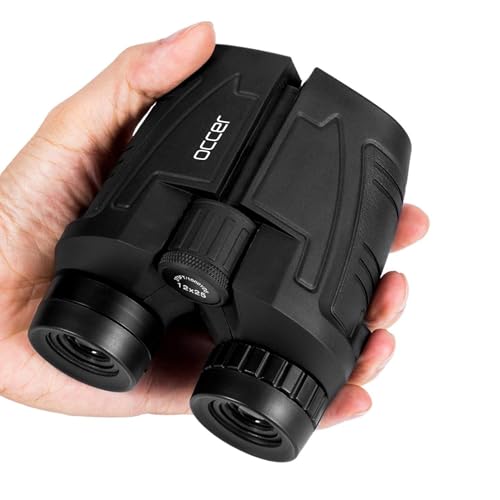
Occer 12×25 Compact Monocular
Occer trades objective size for portability, weighing just 6.4 ounces. A BAK4 prism keeps image quality reasonable despite the smaller 25mm lens. IPX7 water resistance handles light rain on the trail.
Pros
- 6.4-ounce build travels easily in a pocket
- IPX7 rating withstands rain and splashes
- Included phone clip supports quick digiscoping shots
Cons
- 25mm objective struggles in low light versus 50mm-plus models
- Field of view runs narrower than larger monoculars

Celestron Outland X 10×50 Monocular
Celestron combines 10x magnification with a 50mm multi-coated objective for use from dusk to dawn. Rubber armor and O-ring seals keep it waterproof and fogproof. The larger lens suits stargazing and wildlife viewing in dim light.
Pros
- 50mm objective brightens images at dusk and dawn
- Rubber armor absorbs impact during outdoor use
- Waterproof, fogproof sealing handles humid conditions
Cons
- 14.6-ounce weight tires one-handed use over time
- Housing runs bulkier than compact travel monoculars

Nocs Provisions Zoom Tube 8×32 Monocular
A single-barrel aluminum design wrapped in rubber armor keeps the Zoom Tube at just 6.5 ounces. It stays waterproof to 5 feet, a practical spec for kayaking or beach hikes. Its 8×32 configuration balances magnification with a wide field of view for tracking wildlife.
Pros
- Waterproof to 5 feet suits water-adjacent activities
- 6.5-ounce aluminum body keeps pack weight down
- Wide field of view helps track birds in flight
Cons
- 32mm objective gathers less light than 50mm monoculars
- No tripod mount ships for stabilized viewing

Bushnell H2O 10×42 Monocular
Bushnell pairs a BaK-4 roof prism with 10×42 optics for a balance of magnification and brightness. A 100% waterproof and fogproof rating covers use on boats or in rain. Rubber armor grips well with wet hands.
Pros
- 100% waterproof, fogproof rating suits marine use
- BaK-4 roof prism delivers a sharper image than BK7
- Textured rubber armor improves grip when wet
Cons
- 10.4-ounce weight grows noticeable on long handheld sessions
- No ranging reticle, unlike hunting-focused models
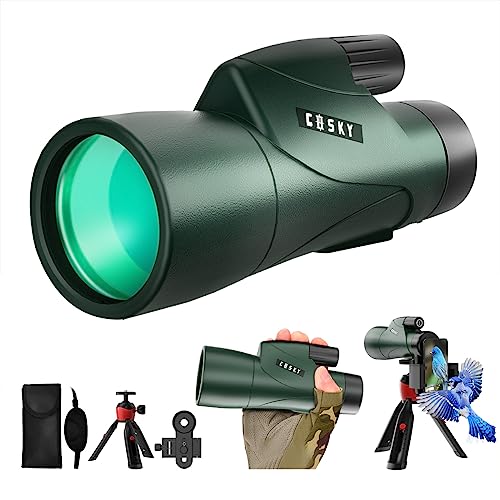
Aurosports 12×55 Monocular
Aurosports offers 12x magnification with a 55mm objective at an accessible price point. A BAK4 prism and included tripod help first-time users get steady, bright images. A phone holder in the kit simplifies basic digiscoping.
Pros
- Included tripod helps beginners stabilize high magnification
- 55mm objective brightens low-light viewing
- Phone holder simplifies capturing photos through the lens
Cons
- 15.0-ounce weight is the heaviest in this lineup
- Build quality feels less refined than pricier brands
How to choose
What to look for in a monocular Magnification and objective lens size set the baseline for image quality. Higher zoom reveals more detail but amplifies hand shake. Objective lenses across these seven picks range from 25mm to 55mm, and larger glass gathers more light in dim conditions. BAK4 prisms produce sharper edges than the cheaper BK7 glass found in entry-level units. Waterproofing spans splash resistance up to full submersion ratings like the Nocs Zoom Tube’s 5-foot depth, so match that spec to where you’ll actually use it.
Monoculars for hiking, birdwatching, and travel Compact models under 8 ounces slip into a jacket pocket without weighing down a pack. Occer’s 12×25 and the Nocs Zoom Tube 8×32 both fit that category. Birdwatchers often favor 8x magnification for a wider field of view that helps track moving birds. Wider objective lenses trade portability for brightness, a tradeoff worth weighing before a long trail day. Travelers who shoot through the lens should confirm a phone adapter ships in the box, since not every compact model includes one.
Monoculars for hunting, marine use, and low-light viewing Hunters benefit from a ranging reticle, like the one built into the Vortex Solo R/T, to estimate distance to game. Boaters need a fully waterproof housing rather than basic water resistance, since spray and dunking happen routinely on open water. Bushnell’s H2O model targets that scenario with a 100% waterproof and fogproof rating. Stargazers and dusk hunters gain the most from a 50mm objective, found on the Celestron Outland X and Gosky 12×55, since larger glass pulls in more light after sunset.
Monocular vs binoculars, and what fits a tight budget A monocular weighs roughly half what a comparable binocular does, since it uses one barrel instead of two. That makes it easier to carry all day or stash in a small bag. Buyers on a tight budget can get usable optics from the Occer 12×25 or Aurosports 12×55 without paying for premium prism coatings. Anyone who needs precise depth perception for close-range tasks should stick with binoculars instead, since two eyes judge distance better than one. Hunters and long-distance hikers who prioritize weight savings over depth cues fit a monocular best.
Side by side
| # | Model | Magnification | Best for | Score | Price |
|---|---|---|---|---|---|
| 1 | Vortex Optics Solo R/T 8×36 | 8×36 | Best overall | 9.4 | Check price |
| 2 | Gosky 12×55 High Power Monocular | 12×55 | Best value | 9.1 | Check price |
| 3 | Occer 12×25 Compact Monocular | 12×25 | Best budget | 8.8 | Check price |
| 4 | Celestron Outland X 10×50 Monocular | 10×50 | Best for stargazing and low light | 8.6 | Check price |
| 5 | Nocs Provisions Zoom Tube 8×32 Monocular | 8×32 | Best for hiking and water activities | 8.4 | Check price |
| 6 | Bushnell H2O 10×42 Monocular | 10×42 | Best for marine and boating use | 8.2 | Check price |
| 7 | Aurosports 12×55 Monocular | 12×55 | Best for beginners | 8.0 | Check price |
Good to know
What is a monocular used for?
A monocular magnifies distant objects through a single barrel, useful for hiking, birdwatching, hunting, and concerts. Its smaller size compared to binoculars makes it easier to carry in a pocket or small bag.
Is a monocular better than binoculars for hiking?
For hiking, a monocular’s lighter weight and smaller size often win out, especially on multi-day trips where pack weight matters. Binoculars still offer better depth perception for spotting wildlife at a distance.
What magnification works best for a monocular?
8x to 10x magnification suits most handheld use, since higher zoom amplifies hand shake without a tripod. 12x models like the Gosky 12×55 or Aurosports 12×55 need a steady rest for a clear view.
Can you use a monocular for stargazing?
Yes, a monocular with a 50mm objective lens, such as the Celestron Outland X, gathers enough light to view the moon and bright planets. It won’t match a telescope for deep-sky objects but works for casual sky watching.
Are monoculars waterproof?
Waterproofing varies by model. The Bushnell H2O carries a 100% waterproof and fogproof rating, while the Occer 12×25 offers only IPX7 splash resistance, so check the specific rating before use near water.
How do you attach a monocular to a phone?
Most kits, including the Gosky 12×55 and Aurosports 12×55, include a clip-on smartphone adapter that aligns the phone camera with the eyepiece. Compact models without an adapter can sometimes use a universal third-party phone clip instead.
What is the difference between BAK4 and BK7 prisms?
BAK4 glass has a higher refractive index that produces a brighter, edge-to-edge sharp image. BK7 prisms cost less to produce but can show a slight grey shadow around the image edges.
Which monocular is best for hunting?
The Vortex Solo R/T 8×36 suits hunters best, since its built-in ranging reticle helps estimate distance to game. Its compact, waterproof housing also holds up well in field conditions.
Monocular vs binoculars: which should you buy first?
Buy a monocular first if weight and pocket size matter most, since it packs half the bulk of binoculars. Choose binoculars first if you need reliable depth perception for spotting wildlife at range.
Our pick
The Vortex Solo R/T 8×36 takes the top spot for its ranging reticle and rugged, waterproof build suited to hunters and hikers. Anyone who spends more time on water than in the field should pick the Bushnell H2O 10×42 instead, since its 100% waterproof rating and 42mm lens fit marine conditions better. Shoppers on a tight budget still get usable optics from the Occer 12×25 without paying for a reticle they may never use.