Mountain Bikes Compared by Suspension and Frame Type
Riders tackling mixed singletrack get the most balance from the Diamondback Line 27.5, thanks to its aluminum frame and 100mm fork. Rockier, technical terrain favors the full-suspension Mongoose Impasse. Casual trail riders on a budget find solid value in the Schwinn High Timber’s steel frame and wide gear range.
Riders splitting time between dirt, roots, and rock get the most from the Diamondback Line 27.5, built around a 6061 aluminum frame and a 100mm-travel front fork. Its main limitation is a coil-sprung fork that weighs more than an air-sprung equivalent.
Component quality varies more between listings than frame specs alone suggest, so this comparison weighs drivetrain and brake type alongside frame material rather than trusting marketing copy.
The shortlist, ranked

Diamondback Line 27.5 Mountain Bike
A 6061 aluminum frame pairs with a coil-sprung front fork delivering 100mm of travel for mixed dirt and rock. An 8-speed Shimano drivetrain covers enough range for both climbing and descending. Mechanical disc brakes hold consistent stopping power once trails turn wet.
Pros
- Aluminum frame stays light without giving up stiffness
- Disc brakes outperform rim brakes once mud gets involved
- Gear range handles steep climbs and fast descents alike
Cons
- Coil fork adds weight compared with an air-sprung version
- Stock tires wear down fast on abrasive, rocky trails

Mongoose Impasse Dual Full Suspension Mountain Bike
Front and rear suspension soaks up impact on root-covered or rocky trails better than a hardtail can. An aluminum frame keeps overall weight reasonable despite the added rear shock hardware. Its 21-speed drivetrain covers a wide range, though shifting under load feels less crisp than the Diamondback’s Shimano setup.
Pros
- Rear shock smooths out rough, technical sections
- 29-inch wheels roll over obstacles with less effort
- Wide gearing suits routes with big elevation swings
Cons
- Weighs more than the hardtails in this lineup
- Shifting precision trails higher-end drivetrains

Framed Minnesota 2.0 Fat Bike
Four-inch tires float this bike over sand and snow where standard mountain bike tires would sink. An aluminum frame skips suspension entirely, leaning on tire volume to absorb small bumps instead. Coastal sand trails or snowy winter routes suit it better than rocky mountain terrain.
Pros
- Wide tires cross sand and snow that standard bikes struggle with
- Rigid frame keeps weight down versus full-suspension builds
- Tire volume cushions small bumps without a suspension fork
Cons
- Rocky trails feel harsher without any suspension
- Wide tires add rolling resistance on hard-packed dirt

Schwinn High Timber Mountain Bike
Steel construction adds weight versus aluminum but shrugs off minor trail impacts without denting. A front fork with 50mm of travel handles light bumps on groomed trails. Casual riders get more out of it than anyone chasing aggressive singletrack.
Pros
- Steel frame resists denting better than thin aluminum
- Costs less than aluminum full-suspension competitors
- Wide gear range covers varied trail grades
Cons
- Extra frame weight shows up on long climbs
- Limited suspension travel struggles on rougher terrain
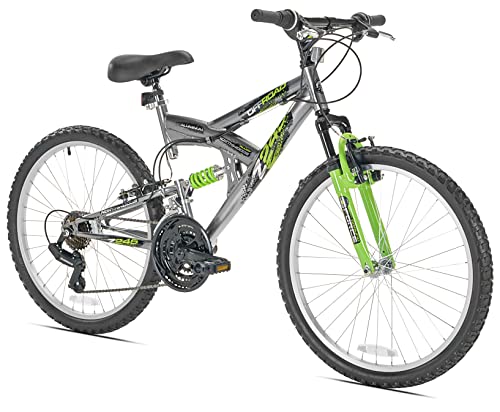
Kent Northpoint Mountain Bike
Kent skips rear suspension on this aluminum-frame bike, aiming it at fire roads and light singletrack instead. A basic front fork smooths out minor bumps without adding much weight. Shimano shifters cover a 21-speed range suited to moderate hills rather than steep climbs.
Pros
- Light aluminum frame eases climbing effort
- 29-inch wheels hold momentum over small obstacles
- Costs less than full-suspension competitors
Cons
- No rear suspension limits comfort on rough trails
- Component quality trails the Diamondback at a similar price

Huffy Stone Mountain Mountain Bike
A steel frame and a front fork rated for light trail use keep costs down on this entry-level bike. New riders testing interest in the sport before investing more get the most value from it. Linear-pull rim brakes replace the disc brakes found on pricier models.
Pros
- Lowest price point among the bikes compared here
- Steel frame shrugs off minor impacts without damage
- Simple build stays easy to maintain for new riders
Cons
- Rim brakes lose stopping power in wet or muddy conditions
- Steel frame weighs more, slowing climbs versus aluminum bikes

Diamondback Line 29 Mountain Bike
This variant swaps to 29-inch wheels, rolling over trail obstacles more easily and giving taller riders extra standover clearance. Frame material and front suspension otherwise match its 27.5-inch sibling. Larger wheels add a bit of weight compared with the smaller version.
Pros
- Bigger wheels smooth out roots and rocks more effectively
- Same reliable disc brakes as the 27.5-inch version
- Extra standover clearance suits taller riders
Cons
- Wheelset weighs slightly more than the 27.5-inch model
- Handling feels less nimble on tight, twisty singletrack
How to pick the right one
What to look for in a trail-ready mountain bike Frame material sets both weight and how forgiving a bike feels over impacts, since aluminum stays light while steel shrugs off dents. Suspension travel determines how much rough terrain gets absorbed before the rider feels it. Brake type matters just as much, because disc brakes keep stopping power in wet or muddy conditions where rim brakes fade.
Hardtail or full suspension, which fits your trails A hardtail like the Diamondback Line costs less and climbs more efficiently, since no rear shock eats pedaling energy. Full suspension bikes such as the Mongoose Impasse smooth out rocky descents at the cost of added weight and price. Riders who spend most of their time climbing gain more from a hardtail than from extra rear travel.
Wheel size and terrain type 27.5-inch wheels balance agility and rollover ability across mixed trails. 29-inch wheels, found on the Kent Northpoint and both Diamondback Line variants, roll over obstacles more easily but feel less nimble in tight turns. Fat bikes like the Framed Minnesota 2.0 trade both qualities for flotation over sand and snow.
Matching a bike to rider experience New riders testing interest in the sport can start with a budget steel-frame bike like the Huffy Stone Mountain. Riders committed to regular trail use get more from the Diamondback Line’s aluminum frame and disc brakes, which hold up better under repeated hard use. Taller riders who want more standover room should look at the 29-inch Diamondback Line variant instead of sizing down.
How they compare
| # | Model | Frame material | Best for | Score | Price |
|---|---|---|---|---|---|
| 1 | Diamondback Line 27.5 Mountain Bike | 6061 aluminum | Best overall | 9.2 | Check price |
| 2 | Mongoose Impasse Dual Full Suspension Mountain Bike | Aluminum | Best for rough terrain | 8.9 | Check price |
| 3 | Framed Minnesota 2.0 Fat Bike | Aluminum | Best for soft terrain | 8.6 | Check price |
| 4 | Schwinn High Timber Mountain Bike | Steel | Best value | 8.3 | Check price |
| 5 | Kent Northpoint Mountain Bike | Aluminum | Best for casual trails | 8.1 | Check price |
| 6 | Huffy Stone Mountain Mountain Bike | Steel | Best budget | 8.0 | Check price |
| 7 | Diamondback Line 29 Mountain Bike | 6061 aluminum | Best for taller riders | 8.0 | Check price |
Good to know
What is the difference between a hardtail and a full suspension mountain bike?
A hardtail uses front suspension only, while full suspension adds a rear shock that improves comfort on rough trails at the cost of extra weight and pedaling efficiency.
Are 27.5 or 29-inch wheels better for mountain biking?
27.5-inch wheels handle tight, technical trails more nimbly, while 29-inch wheels roll over obstacles more smoothly and suit taller riders.
Can a fat bike handle regular mountain trails?
Yes, but the wide tires add rolling resistance on hard-packed dirt, so fat bikes fit sand or snow better than typical rocky singletrack.
Is an aluminum or steel frame better for a mountain bike?
Aluminum climbs more easily thanks to lower weight, while steel resists denting better and often costs less, as seen in the Huffy Stone Mountain and Schwinn High Timber.
Do mountain bikes need disc brakes?
Disc brakes hold stopping power more consistently in wet or muddy conditions than rim brakes, which matters most on technical trails.
What suspension travel works for beginner trail riding?
Around 80 to 100mm of front travel, like the Diamondback Line offers, handles moderate bumps without adding unnecessary weight.
Hardtail vs full suspension, which climbs better?
Hardtails climb more efficiently since pedaling energy is not absorbed by a rear shock, making them the better pick for climb-heavy routes.
How much gearing range is needed for hilly trails?
A wide-range drivetrain, like the 21-speed setups on several bikes here, helps manage both steep climbs and fast flat sections.
Are mountain bikes with 21 speeds better than fewer gears?
More speeds give finer control over cadence on steep or varied terrain, though a well-spaced 8-speed setup like the Diamondback Line’s still covers most trail riding needs.
The bottom line
The Diamondback Line 27.5 remains the strongest all-around pick for regular trail riders, balancing weight, suspension, and braking performance. Riders facing rougher, rockier terrain should step up to the Mongoose Impasse for its full suspension, while casual or new riders can start with the Schwinn High Timber without overspending.
You might also need
Lightweight Mountain Bikes Ranked by Weight and Gear Range
Mountain Bikes That Handle Real Singletrack, Not Bike Paths

Compact Commercial Exercise Bikes for Small Home Gyms
