Choosing a Multicooker That Earns Its Counter Space
The Instant Pot Duo remains our top pick for reliable pressure cooking and the widest recipe support. The Ninja Foodi 14-in-1 SmartLid adds crisping without a second lid to store, and the Breville Fast Slow Pro is the choice for anyone who wants precise pressure control.
For most kitchens, the Instant Pot Duo is still the multicooker to buy because it pressure cooks dependably and every recipe online assumes it. The Ninja Foodi 14-in-1 SmartLid is the better pick if you want crisping too, and the Breville Fast Slow Pro suits cooks who want real control over pressure and temperature.
Multicookers are difficult to compare because function counts are close to meaningless. A machine advertising fourteen functions often has three heating behaviours and eleven presets built on top of them. What actually differs is capacity, how precisely the machine holds pressure and temperature, and whether the design forces you to store a second lid. We compared capacities, control systems, published function sets and inner pot materials, then weighed those against what owners report about daily use.
Before you buy
Ignore the function count A machine advertising fourteen functions rarely does fourteen different things. Underneath, most multicookers have a handful of heating behaviours, pressure, slow heat, direct heat for browning, steam and sometimes a fan for crisping, with the remaining functions being presets layered on top. Compare the underlying capabilities rather than the marketing number, and ask whether the machine can pressure cook, whether it browns properly and whether it crisps. Those three answers tell you nearly everything.
Capacity, and why bigger is not automatically better A six quart machine handles meals for a family of four with leftovers and is the size most recipes assume. Eight quart models suit batch cooking and large joints, but they take longer to come to pressure and are considerably heavier to lift and wash. Three quart models suit one or two people and side dishes. Remember that pressure cookers cannot be filled beyond about two thirds, and half that for foods that foam, so usable capacity is well below the stated figure.
Stainless versus nonstick inner pots Stainless steel pots last indefinitely, tolerate metal utensils, go in the dishwasher without worry and brown food better because they take higher heat. They also stick more, particularly with dairy and starchy foods. Nonstick pots release cleanly and make washing up trivial, but the coating wears over years and cannot be renewed. If you brown a lot of meat and expect to keep the machine a long time, stainless is the more durable choice.
Storage, lids and whether it stays on the counter Multicookers are bulky and heavy, and a machine kept in a cupboard gets used far less than one left out. Check the height with the lid open, since many will not fit under a wall cabinet. Machines that crisp traditionally need a second lid, which is an awkward object to store, so single lid designs solve a real problem. Also check that the inner pot, sealing ring and any accessories fit inside the machine for storage.
Our top picks

Instant Pot Duo 7-in-1 Multicooker
The Duo is the machine most multicooker recipes are written for, which matters more day to day than any specification. Pressure cooking is consistent, the stainless inner pot has nothing to scratch off, and the controls are simple enough that another household member will actually use it. It does not crisp, so browning happens on the saute function first.
Pros
- Almost every recipe assumes this machine
- Stainless pot with no coating to wear
- Simple controls anyone can use
Cons
- No air frying or crisping
- Lid needs somewhere to sit when open

Ninja Foodi 14-in-1 SmartLid Multi-Cooker
The SmartLid slides between pressure, air crisp and steam settings without swapping lids, which removes the main annoyance of earlier crisping multicookers. That means you can pressure cook a joint and then crisp the outside in the same pot. The machine is bulky and heavy, so it needs a permanent home rather than a cupboard.
Pros
- No second lid to store
- Pressure cook then crisp in one pot
- Genuinely wide function range
Cons
- Large footprint and heavy
- Nonstick pot needs careful handling

Breville Fast Slow Pro
Breville lets you set pressure level and choose how steam is released, which no simple preset machine allows. Automatic steam release protects delicate foods from being blasted, and the display shows what stage the cycle is at rather than leaving you guessing. It is aimed at cooks who want to control the process rather than press one button.
Pros
- Adjustable pressure levels
- Automatic controlled steam release
- Clear stage by stage display
Cons
- Costs considerably more than rivals
- No crisping function

Crock-Pot Express Crock XL Multi-Cooker
Crock-Pot came at multicookers from the slow cooking side, and it shows in how well the low and slow settings behave compared with pressure first machines. Pressure cooking is capable rather than refined. If most of what you make is stews and shredded meats with the occasional fast weeknight pressure cook, this covers it at a lower outlay.
Pros
- Strong slow cooking performance
- Large capacity for batch cooking
- Straightforward preset controls
Cons
- Pressure cooking less refined than rivals
- Fewer recipes written for it

Ninja Foodi PossibleCooker Pro
This one drops pressure cooking entirely in favour of a large oval pot that goes from searing on the base unit through slow cooking to the oven and the table. The integrated spoon and the shape suit braises and one pot meals better than a tall round pressure pot. Choose it if you never actually use pressure cooking.
Pros
- Oval pot suits joints and braises
- Pot goes into the oven
- Presentable enough for the table
Cons
- No pressure cooking at all
- Large storage footprint

Cuisinart Cook Central MSC-600 3-in-1 Multicooker
The MSC-600 brings a properly hot browning function, which is where many multicookers disappoint because their saute mode never gets hot enough for a real crust. Slow cooking and steaming follow, all in a nonstick pot that comes out for washing. There is no pressure cooking, so weeknight speed is not its strength.
Pros
- Genuinely hot browning function
- Removable pot is easy to wash
- Simple, reliable controls
Cons
- No pressure cooking
- Only three core functions
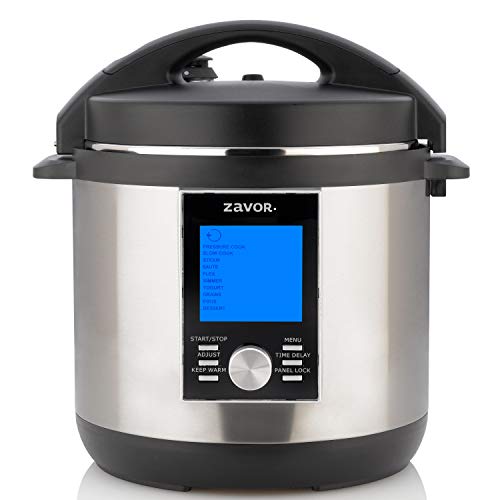
Zavor LUX LCD Multi-Cooker
Zavor focuses on the interface, with an LCD that reports what the machine is doing at each stage rather than a single indicator light. Pressure cooking, slow cooking, rice and yogurt are all present, and the stainless pot avoids coating wear. It is less well known than the big names, so accessories and recipe support are thinner.
Pros
- Informative stage by stage display
- Stainless pot with no coating
- Two pressure levels
Cons
- Smaller accessory and recipe ecosystem
- Less widely stocked
How they compare
| # | Model | Functions | Best for | Score | Price |
|---|---|---|---|---|---|
| 1 | Instant Pot Duo 7-in-1 Multicooker | Pressure, slow cook, saute, rice, steam, yogurt, warm | Best overall | 9.4 | Check price |
| 2 | Ninja Foodi 14-in-1 SmartLid Multi-Cooker | Pressure, air crisp, steam, slow cook, bake, sear | Best all in one | 9.2 | Check price |
| 3 | Breville Fast Slow Pro | Pressure, slow cook, saute, steam, reduce | Best control | 9.0 | Check price |
| 4 | Crock-Pot Express Crock XL Multi-Cooker | Pressure, slow cook, steam, saute, brown | Best value | 8.8 | Check price |
| 5 | Ninja Foodi PossibleCooker Pro | Slow cook, sear, braise, steam, bake, keep warm | Best for slow cooking | 8.6 | Check price |
| 6 | Cuisinart Cook Central MSC-600 3-in-1 Multicooker | Brown or saute, slow cook, steam | Best browning | 8.3 | Check price |
| 7 | Zavor LUX LCD Multi-Cooker | Pressure, slow cook, rice, yogurt, steam, brown | Best display | 8.0 | Check price |
Good to know
Is a multicooker the same as a pressure cooker?
Not quite. A pressure cooker does one job, while a multicooker adds slow cooking, steaming, sauteing and often rice or yogurt modes. Most multicookers pressure cook, but some, including dedicated slow cooking models, do not, so check the function list carefully.
What size multicooker should I buy?
Six quart suits most families of three or four and matches the size assumed by the majority of recipes. Eight quart makes sense for batch cooking or large joints, and three quart works for one or two people. Remember pressure cookers should not be filled beyond about two thirds.
Do multicookers actually save time?
For dishes that would otherwise simmer for hours, yes, substantially. For quick weeknight meals the saving is smaller than it looks once you account for the time the machine takes to come up to pressure and to release it afterwards.
Should I choose a stainless or nonstick inner pot?
Stainless lasts indefinitely and browns better, at the cost of more sticking and scrubbing. Nonstick is easier to clean but the coating wears out over the years and cannot be replaced separately on most models. Heavy browning use favours stainless.
Do I need a model with air crisping?
Only if you would genuinely use it. Crisping is useful for finishing pressure cooked meat and for reheating, but if you already own an air fryer or use your oven happily, a simpler pressure focused machine will take up less space and cost less.
How often should the sealing ring be replaced?
Most manufacturers suggest every year or two depending on use. A ring that no longer holds pressure reliably, has cracks, or retains strong odours from previous meals should be replaced. Keeping two rings, one for savoury and one for sweet dishes, avoids flavour transfer.
Why is my multicooker not coming to pressure?
Usually the lid is not fully locked, the valve is set to venting rather than sealing, or there is not enough liquid in the pot. A worn or badly seated sealing ring is the next thing to check, followed by food debris on the rim preventing a seal.
Can I use slow cooker recipes in a multicooker?
Yes on the slow cook function, though many multicookers run slightly cooler or hotter than a dedicated slow cooker so the first few attempts may need a timing adjustment. Pressure cooker conversions of slow cooker recipes need much less liquid, since almost none evaporates.
The bottom line
The Instant Pot Duo remains the sensible default because it pressure cooks reliably and the entire recipe ecosystem is built around it. Choose the Ninja Foodi 14-in-1 SmartLid if crisping matters and you want to avoid storing a second lid, and the Breville Fast Slow Pro if you would rather control pressure and release than trust a preset. Match the capacity to your household before anything else.