Nursing Pads That Stay Dry Through Long Nights
Lansinoh Stay Dry disposable pads lead for overnight absorbency and staying put. Bamboobies Washable pads are the softest reusable option for daytime wear, and Medela Safe & Dry Ultra Thin pads are the least visible under fitted clothing.
Lansinoh Stay Dry disposable pads handle the heaviest overnight leaking, Bamboobies washable pads are the comfortable reusable choice for daytime, and Medela Safe & Dry Ultra Thin pads disappear best under fitted clothes.
Choosing is tricky because leaking varies hugely between people and changes week to week, so the pad that works in the early weeks may be far more than you need later. We compared current options on materials, published dimensions and what parents report about bunching, adhesive failure and skin irritation. This is general product information rather than medical guidance, so raise any skin or feeding concerns with a healthcare professional.
Before you buy
Disposable or washable Disposables win on convenience and on overnight absorbency, and they are the sensible default for the early weeks when leaking is heaviest and time is shortest. Washables win on softness, running cost and waste, and come into their own once leaking settles into a predictable pattern. Many parents run both, using disposables at night and out of the house and washables at home.
Absorbency and shape both matter A pad can hold plenty of moisture and still fail if it folds into a strip inside a bra. Contoured pads are cut to curve rather than lie flat, which is why they hold position better than a simple disc. Look at absorbency and shape together, and expect to want more of both overnight than during the day.
Fabric, skin comfort and irritation Sore or cracked skin is common in the early weeks, and a stiff or synthetic surface layer makes it worse. Bamboo viscose and organic cotton are the softer choices, while stay dry synthetic liners pull moisture away faster. If irritation appears or does not settle, change the pad more frequently and speak to a midwife, lactation consultant or doctor rather than working through it.
How many you need and how to care for them Plan on changing pads whenever they feel damp rather than on a schedule, which in the early weeks can mean six or more a day. That means a starter supply of disposables measured in hundreds, or around a dozen pairs of washables so a clean set is always dry. Wash reusables without fabric softener, since it coats fibres and reduces absorbency over time.
The best picks, ranked

Lansinoh Stay Dry Disposable Nursing Pads
Lansinoh’s disposables are the pads most parents settle on, combining a high absorbency core with a contoured shape that holds its form rather than folding into a strip. Two adhesive strips keep them anchored inside a bra through a night of moving around. Parents report they handle the heaviest early weeks better than thinner alternatives.
Pros
- High absorbency suits overnight use
- Contoured shape resists bunching
- Twin adhesive strips hold position
Cons
- Thicker outline shows under fitted tops
- Ongoing cost adds up over months

Medela Safe & Dry Ultra Thin Disposable Nursing Pads
Medela’s ultra thin design is the one to reach for when you want no visible outline under a fitted shirt. A waterproof backing keeps clothing protected despite the slim profile. Based on specifications the absorbency is lower than heavy overnight pads, so many parents use these by day and something thicker at night.
Pros
- Genuinely invisible under fitted clothes
- Waterproof backing despite thin profile
- Individually wrapped for bags
Cons
- Not enough absorbency for heavy nights
- Single adhesive strip can shift
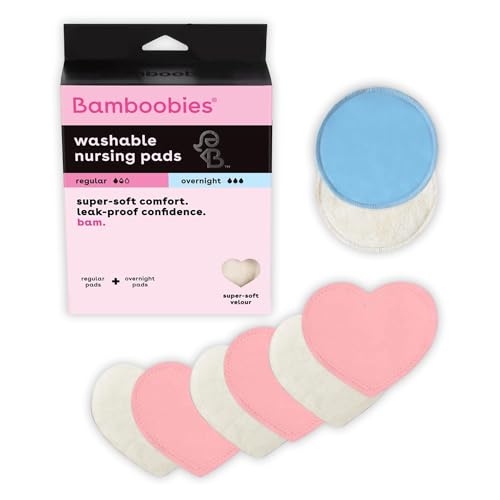
Bamboobies Washable Reusable Nursing Pads
Bamboobies built its reputation on the softness of bamboo viscose against sore skin, and that is still the main reason parents choose them. The heart shaped cut sits flatter in a bra than a circular pad. Owners report they last many months of washing, though they are best matched to daytime rather than heavy overnight use.
Pros
- Very soft against sensitive skin
- Heart shape lies flatter than round pads
- Reusable across many months
Cons
- Daytime absorbency rather than overnight
- Needs a laundry routine to keep a clean supply
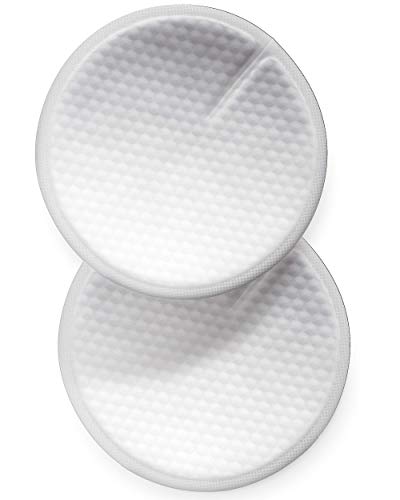
Philips Avent Disposable Breast Pads
Avent’s pads use a soft outer layer with a moisture locking core, aimed at all day wear rather than maximum overnight capacity. The dual adhesive keeps them centred through school runs and errands. Parents report the surface stays comfortable against skin longer than stiffer alternatives.
Pros
- Comfortable for all day wear
- Stays centred with dual adhesive
- Soft surface layer
Cons
- Mid range absorbency only
- Wrapping generates a lot of waste
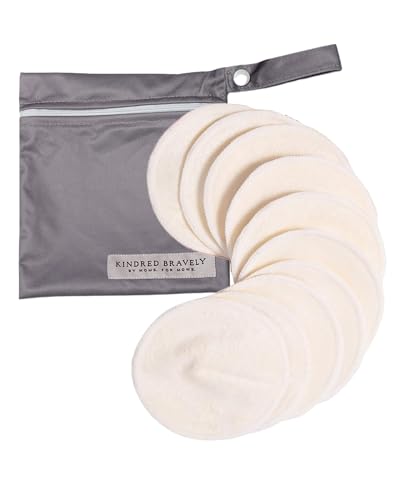
Kindred Bravely Organic Cotton Washable Nursing Pads
For anyone who prefers cotton next to skin, Kindred Bravely’s washable pads use organic cotton with an inner absorbent layer and a leak resistant backing. They wash well and keep their shape better than some looser knit reusables. Owners report cotton takes longer to dry than bamboo blends, so a larger set helps.
Pros
- Organic cotton next to skin
- Holds shape through repeated washing
- Leak resistant backing on a reusable
Cons
- Slower to dry than bamboo blends
- Slightly thicker under close fitting tops

NUK Ultra Thin Disposable Nursing Pads
NUK’s disposables cover the everyday middle ground, thin enough to stay discreet and absorbent enough for typical daytime leaking. Buying in a larger count box brings the per pad cost down for anyone getting through several a day. Parents report the adhesive is adequate rather than exceptional, so they suit a supportive bra.
Pros
- Sensible per pad cost in bulk
- Discreet under most clothing
- Widely available
Cons
- Adhesive is weaker than premium pads
- Not suited to heavy overnight leaking

Momcozy Disposable Nursing Pads
Momcozy wraps each pad individually, which is the detail that matters when you are keeping a few in a nappy bag, a car door pocket and a coat. The contoured shape sits reasonably flat and the backing keeps clothing protected. Owners report they are convenient rather than the most absorbent option available.
Pros
- Individual wrapping suits bags and pockets
- Contoured shape lies reasonably flat
- Easy to stock in several places
Cons
- Moderate absorbency
- Individual wrappers create waste
How they compare
| # | Model | Type | Best for | Score | Price |
|---|---|---|---|---|---|
| 1 | Lansinoh Stay Dry Disposable Nursing Pads | Disposable | Best overall | 9.4 | Check price |
| 2 | Medela Safe & Dry Ultra Thin Disposable Nursing Pads | Disposable, ultra thin | Best for discretion | 9.2 | Check price |
| 3 | Bamboobies Washable Reusable Nursing Pads | Washable reusable | Best reusable | 9.0 | Check price |
| 4 | Philips Avent Disposable Breast Pads | Disposable | Best for daytime wear | 8.7 | Check price |
| 5 | Kindred Bravely Organic Cotton Washable Nursing Pads | Washable reusable | Best organic cotton option | 8.5 | Check price |
| 6 | NUK Ultra Thin Disposable Nursing Pads | Disposable, thin profile | Best value | 8.2 | Check price |
| 7 | Momcozy Disposable Nursing Pads | Disposable | Best for travel and bags | 8.0 | Check price |
Frequently asked questions
How often should nursing pads be changed?
Change them whenever they feel damp rather than waiting for a set interval. Sitting in a wet pad is the main cause of skin discomfort, and in the early weeks that can mean several changes a day.
Are disposable or washable pads better?
Neither is universally better. Disposables offer higher absorbency and no laundry, which suits the early weeks and time away from home. Washables are softer, cheaper over months and produce less waste, which suits settled daytime use.
How many nursing pads do I need?
For disposables, a starting supply in the hundreds is realistic for the first weeks. For washables, around ten to fourteen pairs keeps a dry set available while others are in the wash, allowing for slower drying cotton.
Why do my nursing pads keep bunching?
Usually because the pad is flat cut rather than contoured, or because the bra is not snug enough to hold it against the body. Contoured pads with adhesive strips and a supportive bra solve most bunching complaints.
Can nursing pads be worn overnight?
Yes, and overnight is when the highest absorbency options earn their place. Thin discreet pads designed for daytime wear often will not last a full night in the early weeks.
How do I wash reusable nursing pads?
Machine wash with regular detergent and skip fabric softener, which coats the fibres and reduces absorbency. Air drying or tumble drying on low preserves the backing layer. Some parents rinse heavily soaked pads before washing.
Do nursing pads show under clothing?
Ultra thin contoured pads are close to invisible under most fabrics. Thicker overnight pads and some reusables can show an outline under fitted knits, which is why many people switch pad type depending on what they are wearing.
What if my skin becomes sore or irritated?
Change pads more frequently, choose a softer surface fabric and let skin air dry when you can. Persistent soreness, cracking or any sign of infection is worth raising with a midwife, lactation consultant or doctor rather than managing with a product change alone.
Our pick
Lansinoh Stay Dry pads are the most dependable choice for the heavy early weeks and for overnight, where absorbency matters more than profile. Switch to Medela Safe & Dry Ultra Thin for daytime and fitted clothing, and add Bamboobies washables once leaking settles and softness and running cost start to matter more than raw capacity.


