Office Chairs for Long Workdays and Aching Backs
The Herman Miller Aeron is our overall pick for its adjustable lumbar support and mesh that stays cool through a full day. The Steelcase Series 1 is the best value in the ergonomic tier, and the SIHOO Doro C300 is the budget choice with genuine adjustability.
For long working days the Herman Miller Aeron is still the chair to beat, the Steelcase Series 1 delivers most of the ergonomics for considerably less, and the SIHOO Doro C300 offers real adjustment at a budget price.
Office chairs are tricky because a chair that feels great in a showroom for two minutes can be unbearable by hour six, and because the adjustments that matter, lumbar depth and seat depth, are often the ones cheap chairs omit. We compared seven current chairs on adjustment range, materials, recline mechanism, weight rating and warranty terms.
How to pick the right one
Lumbar support is the adjustment that matters Back discomfort at a desk usually comes from the lower spine losing its natural curve as you slump forward over hours. A chair that supports that curve, and lets you set both the height and the depth of that support, prevents it. The Aeron’s PostureFit and the adjustable lumbar on the Branch and Duramont chairs do this. Fixed lumbar bumps help some people and dig into others, which is why adjustability matters more than the presence of a bulge.
Seat depth is the most commonly missing feature You want roughly two to three fingers of gap between the seat edge and the back of your knees. A seat that is too deep puts pressure behind the knee and encourages slumping forward, a seat too shallow leaves your thighs unsupported. Sliding seat depth appears on the Branch, Duramont and premium chairs but is often the first thing cut from budget models, so short and tall users should treat it as a priority.
Mesh, foam and heat Mesh backs move air and stay cooler through a long day, which is why the Aeron, SIHOO and Duramont use them. Foam and fabric feel softer initially and warmer after a few hours, and they compress over years while quality mesh does not. Neither is universally better, but if you work in a warm room or run hot, mesh is the safer choice.
Set the chair up properly once Set the seat height so your feet sit flat with knees at roughly ninety degrees, then adjust the desk or add a footrest rather than raising the chair further. Set seat depth, then lumbar height so it meets the curve of your lower back, then armrests so your shoulders drop and your elbows rest lightly. Unlock the recline and use it, because moving between positions matters more than holding one perfect posture. Spend ten minutes on this once and the chair works properly for years.
The best picks, ranked
Herman Miller Aeron
The Aeron’s suspension mesh distributes weight without pressure points and stays cool where foam traps heat, and the PostureFit adjustment supports the lower spine and pelvis independently. It comes in three sizes rather than one universal fit. Owners report chairs still working properly after a decade, backed by a long warranty.
Pros
- Mesh stays cool through a full day
- Independent lumbar and pelvic support
- Three sizes give a genuine fit
Cons
- Highest price in this ranking
- No headrest as standard

Steelcase Series 1
The Series 1 uses a flexible back that conforms as you shift position, plus four way armrests that most chairs at this level omit. It carries Steelcase’s contract grade build and warranty at a fraction of a flagship price. Based on specifications it is the sensible entry point into genuine office grade seating.
Pros
- Four way armrests at a mid price
- Back flexes as you change posture
- Long contract grade warranty
Cons
- Lumbar support is less adjustable than the Aeron
- Fabric back retains more heat than mesh

Branch Ergonomic Chair
Branch includes seven points of adjustment including seat depth and adjustable lumbar, which is unusual outside the premium tier. Assembly is quick and the styling suits a home office rather than a corporate floor. Owners report it closes much of the gap to flagship chairs for people who mostly need correct support rather than exotic materials.
Pros
- Seat depth adjustment at this price
- Straightforward assembly
- Home office styling
Cons
- Foam seat warms up over long days
- Shorter warranty than contract chairs

SIHOO Doro C300
The Doro C300 offers a self adjusting lumbar system and multi direction armrests at a price where most chairs offer neither. The mesh back keeps airflow reasonable through long sessions. Based on specifications it is the strongest set of adjustments available in the budget ergonomic bracket.
Pros
- Adjustments usually found on pricier chairs
- Mesh back with adjustable headrest
- Recline locks at several angles
Cons
- Long term durability is unproven
- Seat foam is firmer than premium chairs
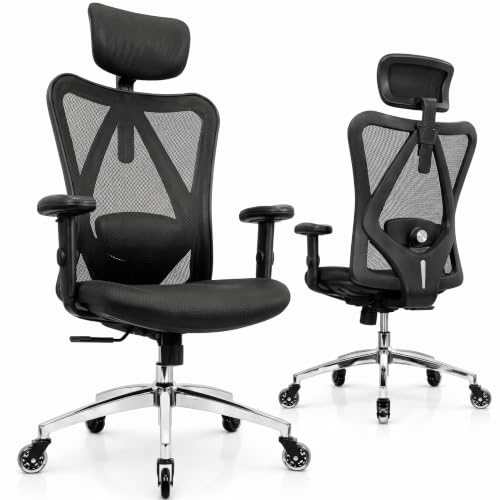
Duramont Ergonomic Office Chair
A tall back with an adjustable headrest and a seat that slides for depth, which suits taller people poorly served by standard chairs. The mesh back and lumbar support are both adjustable. Owners report it is one of the few affordable chairs where the headrest actually reaches the right height.
Pros
- Genuinely tall back and headrest
- Seat slides for longer legs
- Deep lockable recline
Cons
- Bulky in a small home office
- Armrest adjustment is limited

Hbada Ergonomic Office Chair
The armrests flip up so the chair tucks fully under a desk, which matters in a shared room or a small flat where the chair cannot live in the open. It still offers lumbar support and a reclining back. Based on specifications it is the practical pick when the chair has to disappear when not in use.
Pros
- Flip up arms allow full desk tuck
- Compact in shared living spaces
- Reasonable lumbar support for the price
Cons
- Fewer adjustment points overall
- Not intended for very long workdays

Amazon Basics High-Back Executive Chair
A padded executive style chair with basic height and tilt adjustment, suited to occasional desk use rather than an eight hour day. It arrives quickly and assembles in under half an hour. Owners report it is perfectly serviceable as a spare room or occasional use chair.
Pros
- Very low cost entry point
- Comfortable padding for short sessions
- Quick assembly
Cons
- No lumbar or seat depth adjustment
- Padding compresses over time
Compared at a glance
| # | Model | Back | Best for | Score | Price |
|---|---|---|---|---|---|
| 1 | Herman Miller Aeron | Suspension mesh, 8Z Pellicle | Best overall | 9.4 | Check price |
| 2 | Steelcase Series 1 | Flexible adaptive support | Best value ergonomic | 9.2 | Check price |
| 3 | Branch Ergonomic Chair | Seven points | Best mid range | 9.0 | Check price |
| 4 | SIHOO Doro C300 | Mesh with dynamic lumbar | Best budget ergonomic | 8.7 | Check price |
| 5 | Duramont Ergonomic Office Chair | High mesh with headrest | Best for tall users | 8.5 | Check price |
| 6 | Hbada Ergonomic Office Chair | Flip up | Best folding option | 8.3 | Check price |
| 7 | Amazon Basics High-Back Executive Chair | Padded high back executive | Best budget | 8.0 | Check price |
Questions worth asking
Is an expensive office chair worth it?
If you sit at a desk full time, the adjustment range and twelve year warranties on chairs like the Aeron and Steelcase Series 1 spread the cost over a long life. For a few hours a week, a budget chair with lumbar support such as the SIHOO Doro C300 is sufficient.
What adjustments should a good chair have?
At minimum seat height, seat depth, lumbar height and depth, armrest height, and a recline you can lock. Armrests that also move in and out and pivot are a meaningful upgrade for anyone who types all day.
Mesh or fabric back?
Mesh runs cooler and holds its shape over years. Fabric over foam feels softer at first and warmer after a few hours, and compresses gradually. Choose mesh if you run hot or work long days in a warm room.
How should I set the chair height?
Feet flat on the floor with knees around ninety degrees, and elbows level with the desk surface. If raising the chair to reach the desk lifts your feet off the floor, lower the desk or add a footrest instead.
Do I need a headrest?
Only if you recline regularly. Sitting upright and working, a headrest goes unused or pushes your head forward. If you lean back for calls and reading, chairs like the SIHOO Doro C300 and Duramont include adjustable ones.
Which chair suits a small room?
The Hbada model with flip up armrests tucks completely under a desk, which is the most space efficient option here. Avoid large executive chairs in small rooms, since they cannot be pushed fully in.
What weight capacity should I look for?
Most chairs here rate around 250 to 300 pounds. Choose one rated comfortably above your weight rather than at the limit, since gas lifts and bases last longer with margin.
How long do office chairs last?
Contract grade chairs like the Aeron and Steelcase Series 1 carry twelve year warranties and often outlast them. Budget chairs typically show compressed foam and a tired gas lift within two to four years of daily use.
The bottom line
The Herman Miller Aeron remains the chair to buy if you sit at a desk all day and intend to keep the chair for a decade, since the adjustment range and warranty justify the outlay over that period. The Steelcase Series 1 delivers most of the ergonomics for considerably less and is the better value for most home offices. On a tight budget the SIHOO Doro C300 gives you real lumbar and armrest adjustment rather than padding alone.

