On Tap Water Filters That Make Every Glass Taste Clean
The PUR Faucet Filtration System is our top pick for most households. It removes 70+ contaminants including lead and mercury, offers three selectable modes, and filters about 100 gallons per filter. However, it may reduce water flow noticeably, and you need to replace the filter every three months.
On tap water filters attach directly to your faucet, giving you filtered water on demand without taking up counter space. They are ideal for renters or anyone who wants an easy, no plumber required solution.
These filters are popular because they improve taste and reduce contaminants like chlorine, lead, and microplastics. We compared popular models to help you choose the right one for your kitchen.
Our top picks

PUR Faucet Filtration System
This filter attaches to standard faucets and reduces 70+ contaminants, including lead and mercury. It has three modes: filtered, unfiltered, and spray. Owners say it improves taste dramatically, but note that flow is slower when filtering.
Pros
- Certified to reduce lead and many other contaminants
- Easy to install with no tools
- Switch between filtered and unfiltered water
Cons
- Reduces water flow when filtering
- Replacement filters can be pricey over time

Brita Faucet Filtration System
Brita’s faucet filter is a reliable choice that reduces chlorine taste and odor, and other impurities. It is affordable and simple to install. Some users report that it fits only certain faucets, so check compatibility.
Pros
- Lower initial cost than many competitors
- Switch easily between filtered and unfiltered
- Widely available replacement filters
Cons
- Not certified for lead removal
- Some faucet shapes may not fit

Waterdrop Faucet Water Filter
Waterdrop’s filter provides a high flow rate and reduces chlorine, taste, and odor. It uses a one piece design that is easy to install. Owners appreciate the sleek look and the fact that it doesn’t slow down water much.
Pros
- High flow rate compared to similar filters
- Filter lasts up to 320 gallons
- Compact and aesthetically pleasing
Cons
- Not certified for lead reduction
- May not fit pull out faucets

APEC Water Systems Faucet Filter
APEC is known for its water treatment expertise. This faucet filter is NSF/ANSI 42 certified to reduce chlorine, taste, and odor. It is durable and comes with a long lasting filter. Some users find the installation a bit more involved.
Pros
- Long filter life of 500 gallons
- NSF/ANSI 42 certified
- Solid metal construction
Cons
- Installation may require a wrench
- Bulkier design

Culligan Faucet-Mount Water Filter
Culligan offers a straightforward faucet filter with a simple dial to switch between filtered and unfiltered water. It reduces chlorine and other contaminants for better tasting water. It is a good option for those who want a basic filter.
Pros
- Simple dial switch for filtered and unfiltered
- Compact and lightweight
- Affordable replacement filters
Cons
- Shorter filter life
- Not certified for lead

DuPont WFPF103 Faucet Water Filter
DuPont’s faucet filter not only reduces contaminants but also adds beneficial minerals like calcium and magnesium back into the water. This can improve taste and provide a slight health benefit. Users like the mineral addition but note the filter is a bit pricey.
Pros
- Adds beneficial minerals to water
- Reduces common contaminants
- Easy to install
Cons
- Higher cost per filter
- Minerals may alter taste for some
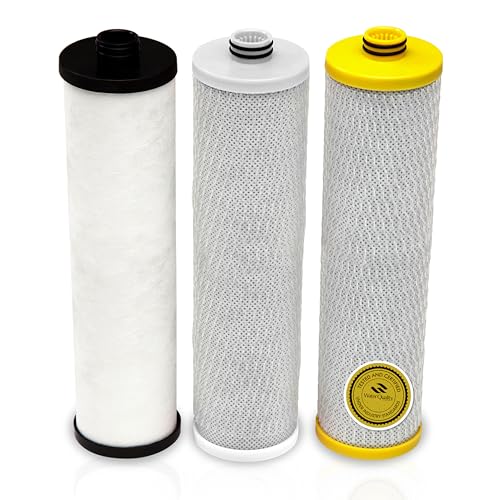
Aquasana AQ-5300 Faucet Water Filter
Aquasana’s faucet filter uses a three stage filtration system to reduce over 70 contaminants including lead, asbestos, and cysts. It is one of the most effective filters for a faucet. The filter is larger, and installation is a bit more involved.
Pros
- Three stage filtration reduces many contaminants
- Certified to NSF/ANSI 42 and 53
- High quality water taste
Cons
- Bulkier and heavier than others
- Installation may require extra adapters
Before you buy
Compared at a glance
| # | Model | Contaminant Reduction | Best for | Score | Price |
|---|---|---|---|---|---|
| 1 | PUR Faucet Filtration System | 70+ including lead, mercury, chlorine | Most households | 9.4 | Check price |
| 2 | Brita Faucet Filtration System | Chlorine, sediment, and more | Budget conscious households | 8.8 | Check price |
| 3 | Waterdrop Faucet Water Filter | Chlorine, sediment, VOCs | High flow rate needs | 9.0 | Check price |
| 4 | APEC Water Systems Faucet Filter | Chlorine, taste, odor, sediment | Heavy metal reduction | 8.6 | Check price |
| 5 | Culligan Faucet-Mount Water Filter | Chlorine, taste, odor, particulate | Simple use and switching | 8.3 | Check price |
| 6 | DuPont WFPF103 Faucet Water Filter | Chlorine, sediment, and more | Mineral enhanced water | 8.1 | Check price |
| 7 | Aquasana AQ-5300 Faucet Water Filter | 70+ including lead, cysts, VOCs | Comprehensive filtration | 9.1 | Check price |
Common questions
Do on tap filters remove lead?
Some do. Look for filters certified to NSF/ANSI 53 for lead reduction. PUR and Aquasana are examples that claim lead reduction. Always check the product specifications for certifications.
How often do I need to replace the filter?
Most manufacturers recommend every 100 gallons or every 2 to 3 months, whichever comes first. Some models like APEC last up to 500 gallons or 6 months. Replace sooner if water flow drops noticeably.
Will an on tap filter fit my faucet?
Most standard faucets with a threaded aerator will fit. Pull out sprayer faucets or non threaded faucets may not be compatible. Check the product description for compatibility and any included adapters.
Can I use both filtered and unfiltered water?
Yes, most models have a diverter valve that lets you switch between filtered and unfiltered water. This is useful for washing dishes or filling pots where filtration is not necessary.
Do on tap filters remove bacteria and viruses?
No, typical on tap filters are not designed to remove bacteria or viruses. They are meant for chemical and particulate reduction. If you need microbial removal, consider a UV purifier or reverse osmosis system.
How do I install an on tap water filter?
Installation is usually simple. Remove the current aerator from the faucet, attach the diverter or filter unit, and then screw the filter onto the diverter. Some models require an adapter. Detailed instructions are included.
Will an on tap filter affect water pressure?
Most filters will reduce water pressure to some extent due to the filtration media. However, models like Waterdrop are designed to maintain a higher flow rate. If pressure is a concern, look for filters with high flow ratings.
What is the cost of replacement filters?
Replacement filter costs vary by brand. On average, you might spend between current price and current price per replacement. Some brands offer multi packs that reduce the cost per filter. Compare long term costs when deciding.
Are on tap filters better than pitcher filters?
On tap filters provide filtered water on demand without waiting, and they are often more convenient for cooking. They may have higher flow rates and can be certified to remove more contaminants. Pitchers take up fridge space and need refilling.
Can I use an on tap filter with a pull out faucet?
Usually no, because pull out faucets have a sprayer head that is not compatible with the mounting. Some models may offer adapters, but it’s best to check compatibility. If you have a pull out faucet, consider a countertop or under sink filter.
Final word
For most people, the PUR Faucet Filtration System is the best choice due to its certified lead reduction and easy installation. If you want a higher flow rate, go with the Waterdrop. For those who want the most comprehensive filtration, the Aquasana AQ-5300 is worth the extra effort.