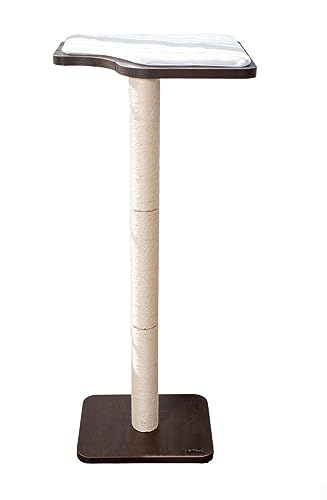
Cat Trees That Are Gentler on Stiff, Older Joints
The Feandrea Multi-Level Cat Tree leads with wide, low set platforms suited to stiff joints. Budget shoppers get similar plush comfort from the Yaheetech Cat Tree. Cats who can no longer jump do better with the full ramp on the On2Pets Modern Cat Tree.
A senior cat still wants a perch, just not one that demands a jump onto a narrow ledge. Wide, low platforms spaced close together keep climbing gentle, which is why the Feandrea Multi-Level Cat Tree takes the top spot. Ramp only designs like the On2Pets Modern Cat Tree suit cats that struggle to jump at all. Budget conscious owners get the same comfort features from the Yaheetech Cat Tree for less.
Arthritis in cats often goes unnoticed until a cat quietly stops using furniture it once climbed daily. We compared platform height, step spacing, cushion thickness and base width, since a wobbly tree discourages a cautious cat as much as a steep one does.
The best picks, ranked

Feandrea Multi-Level Cat Tree
Platforms sit closer together than on a typical vertical cat tree, cutting the distance a stiff cat covers per step. Plush faux fur cushions every landing spot. Owners of older cats report daily use of the lower perches where a taller tree once sat ignored.
Pros
- Closely spaced platforms suit limited mobility
- Wide base resists tipping under weight
- Plush padding cushions every landing
Cons
- Larger footprint needs floor space
- Assembly takes longer than compact trees
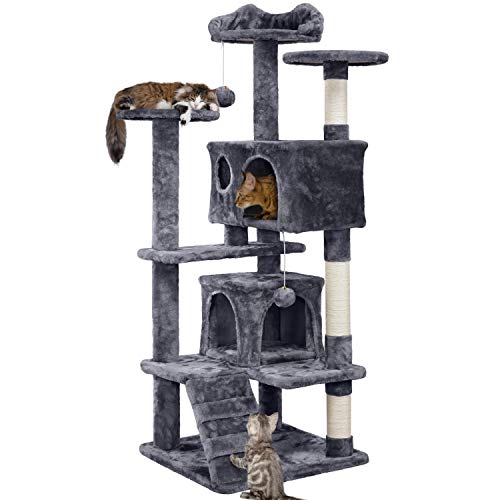
Yaheetech Cat Tree with Plush Perches
Several low platforms let a cat rest partway up instead of committing to a full climb. Sisal wrapped posts double as scratching surfaces at a comfortable stretch height. A sturdy base holds steady even when a larger cat jumps onto the top perch.
Pros
- Multiple low platforms reduce climbing distance
- Sisal posts double as scratching surfaces
- Stable base under active use
Cons
- Fabric shows wear faster than premium materials
- Fewer enclosed hideaway spots than taller trees

Armarkat Cat Tree with Condo
An enclosed ground level condo lets an older cat rest without climbing at all, while a low ramp still connects to a single upper perch. Faux fleece lining stays soft against thinning fur. Owners of cats recovering from surgery use the condo as a low stress resting spot.
Pros
- Ground level condo needs no climbing
- Soft fleece lining suits sensitive skin
- Compact footprint fits smaller rooms
Cons
- Only one elevated perch limits variety
- Condo opening is snug for larger cats

PAWZ Road Cat Tree Condo
A shorter overall height keeps every platform within easy reach for a cat that avoids tall furniture. Sisal covered posts resist fraying under daily scratching. Buyers get a stable, low set tree instead of a taller model with unused top perches.
Pros
- Lower total height suits cautious climbers
- Affordable compared to premium orthopedic trees
- Sisal posts resist fraying
Cons
- Smaller condo opening than larger models
- Fewer platforms than multi-level trees

On2Pets Modern Cat Tree
A continuous ramp replaces steps entirely, letting a cat walk up a gentle incline instead of hopping between platforms. Washable covers simplify cleanup for cats with shedding or litter box accidents. Owners of injured cats often use this as the only climbing option in the house.
Pros
- Ramp removes jumping from the climb entirely
- Washable covers simplify cleaning
- Compact modern design fits small rooms
Cons
- Only one resting platform at the top
- Slimmer base than bulkier multi-level trees

Go Pet Club Cat Tree
Several wide platforms spread across a tall frame give more than one cat a resting spot without crowding. Thick carpet covering softens every landing. In mixed age households, younger cats claim the top perches while older cats stay on the lower, wider ones.
Pros
- Multiple platforms suit several cats at once
- Wide base supports a taller frame safely
- Carpet covering cushions landings
Cons
- Taller sections still require climbing ability
- Carpet sheds fibers during heavy scratching
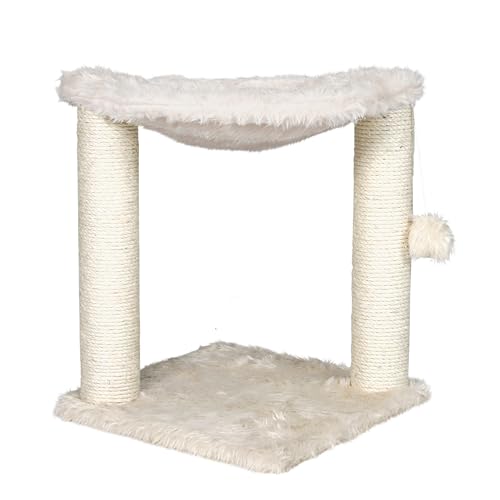
Trixie Baza Cat Tree
A short, narrow frame fits apartments short on floor space, yet still offers a padded platform and an enclosed hideaway near ground level. Natural sisal posts keep scratching low to the floor. Small or older cats need minimal climbing to reach the perch here.
Pros
- Small footprint suits limited floor space
- Minimal climbing needed to reach the perch
- Enclosed hideaway near ground level
Cons
- Limited platform variety compared to taller trees
- Narrower base than wide multi-level designs
What matters most
What makes a cat tree orthopedic or senior friendly? Four traits separate a joint friendly cat tree from a standard one: low platform height, gentle step spacing, soft cushioning and a stable wide base. Steep single jumps strain hips and shoulders in an arthritic cat, while closely spaced platforms or a full ramp let the same cat climb gradually. Cushioning matters too, since thin platforms press against bony joints during rest.
Ramps versus steps for cats with joint pain A continuous ramp, like the one on the On2Pets Modern Cat Tree, removes jumping from the equation and suits cats recovering from injury or surgery. Closely spaced wide steps, as on the Feandrea Multi-Level Cat Tree, offer a middle ground that still lets a cat set its own pace. Save tall single leap platforms for younger, more mobile cats.
Best cat trees for large or overweight cats A wider base and reinforced platforms matter more for heavier cats, since a standard tree can tip or flex under extra weight. The Go Pet Club Cat Tree and Feandrea Multi-Level Cat Tree both use extra wide bases built for bigger cats. Platform width counts too, since a narrow ledge feels unstable under a large cat even on a sturdy tree.
Helping a senior cat adjust to a new cat tree Place the tree near a favorite resting spot first, so the cat meets it during normal movement rather than as a new obstacle. A familiar blanket on the lowest platform encourages a first visit. Confidence on the lowest level usually has to come before any climbing higher, so avoid forcing upper perches. Trim nails regularly, since sharp nails can slip on smooth platform surfaces.
Side by side
| # | Model | Platform height | Best for | Score | Price |
|---|---|---|---|---|---|
| 1 | Feandrea Multi-Level Cat Tree | Low to mid, closely spaced levels | Best overall | 9.4 | Check price |
| 2 | Yaheetech Cat Tree with Plush Perches | Low to mid, multiple rest points | Best value | 9.0 | Check price |
| 3 | Armarkat Cat Tree with Condo | Ground level condo plus one low perch | Best for senior cats | 8.8 | Check price |
| 4 | PAWZ Road Cat Tree Condo | Low overall height | Best budget | 8.5 | Check price |
| 5 | On2Pets Modern Cat Tree | Single elevated perch via ramp | Best for cats who cannot jump | 8.3 | Check price |
| 6 | Go Pet Club Cat Tree | Mixed low and high platforms | Best for multi-cat households | 8.1 | Check price |
| 7 | Trixie Baza Cat Tree | Low, single tier design | Best compact low profile | 8.0 | Check price |
Questions worth asking
What is an orthopedic cat tree?
It is a cat tree built with lower platforms, gentler step spacing and softer cushioning to reduce strain on aging or arthritic joints, rather than the tall, steep designs made for young, agile cats.
Are ramps better than steps for senior cats?
Ramps remove jumping entirely, which suits cats with significant joint pain or recent surgery. Wide, closely spaced steps work well for cats with mild stiffness who still enjoy some climbing. The right choice depends on how much mobility a specific cat has left.
How tall should a cat tree be for an older cat?
Shorter overall height with multiple low platforms serves an older cat better than one tall single perch. Look for models under about three feet with several rest points rather than one dominant top platform.
Can overweight cats use cat trees safely?
Yes, as long as the base is wide and the platforms are rated for extra weight. Narrow or lightweight trees can tip under a heavier cat, so check base width and platform size before buying for a larger cat.
What cushioning is best for arthritic cats?
Thick plush or faux fur padding distributes weight better than thin carpet or bare wood platforms. Washable covers add a practical bonus, since senior cats sometimes have litter box accidents near their resting spots.
Do cat trees help with joint pain?
A well designed low profile tree encourages gentle movement and stretching, which can help maintain mobility, though it does not treat underlying arthritis. Pair any cat tree with a veterinarian’s guidance for a cat showing signs of joint pain.
How do you get a senior cat to use a new cat tree?
Start with the lowest platform and add a familiar scented blanket to encourage a first visit. Treats or catnip placed on the lower level work better than bait on the top perch. Most cats explore upward on their own once the base level feels safe.
Cat tree versus cat bed, which is better for senior cats?
A low profile cat tree offers both a resting spot and light vertical movement, which supports muscle tone better than a bed alone. A heated cat bed suits cats with more advanced mobility limits. Many households pair a low cat tree with a floor level bed for the stiffest or oldest cats.
Which cat tree works best for a multi-cat household with a senior cat?
The Go Pet Club Cat Tree spreads several wide platforms across one frame, so a senior cat can claim a low perch while younger cats use the higher ones without crowding.
Is a low profile cat tree worth it for a small apartment?
Yes, models like the Trixie Baza Cat Tree fit a narrow footprint while still giving an older or cautious cat a padded platform and a ground level hideaway.
Our pick
Joint friendly design comes down to platform spacing, cushioning and base stability more than height or price. The Feandrea Multi-Level Cat Tree balances all three for most senior cats, while the On2Pets Modern Cat Tree suits cats who can no longer jump at all. The PAWZ Road Cat Tree Condo delivers the same low profile comfort on a smaller budget.