Best Paddleboards for Lakes, Rivers, and Calm Surf
The iROCKER All-Around 11′ balances stability and easy storage for most paddlers. Budget shoppers do well with the SereneLife Inflatable Stand Up Paddle Board. Anglers and tandem riders needing extra capacity should look at the BOTE Rackham Aero, which carries heavier loads without losing side-to-side stability.
Paddlers who want one board for lakes, rivers, and mellow surf tend to land on the iROCKER All-Around 11′. Its 32-inch width and 400-pound capacity keep it steady for beginners and heavier riders alike. Tracking speed drops in wind and current compared to a rigid touring hull, the tradeoff for that stability.
Inflatable boards roll into a backpack but flex more than rigid hardboards once speed picks up. Longer, narrower shapes track straighter for touring, while shorter, wider decks feel steadier for yoga or fishing. Weight capacity matters more than most buyers expect once a cooler, dog, or second paddler joins the trip. We compared listed dimensions, materials, and owner feedback on stability and durability across seven current Amazon models to match boards to specific uses.
Our top picks
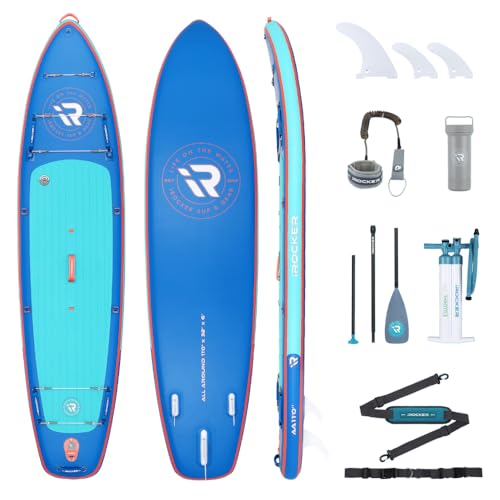
iROCKER All-Around 11′
Measuring 11 feet long and 32 inches wide, this inflatable board uses a 6-inch thick drop-stitch core. Flatwater cruising, light surf, and casual fishing all feel steady rather than twitchy on it. An included pump, paddle, and backpack cover most first-time buyer needs.
Pros
- Stable enough for beginners and heavier paddlers
- Deflates and rolls into a backpack for easy storage
- Comes with pump, paddle, and repair kit
Cons
- Tracks slower than a rigid touring board
- Takes about ten minutes to inflate fully

Atoll 11′ Inflatable Stand Up Paddle Board
A 32-inch width meets 6-inch thickness on this Atoll board, creating a forgiving platform for new paddlers. Full deck padding runs from nose to tail, giving room to reposition a stance. The kit adds an adjustable paddle, removable fin, and a backpack-style bag.
Pros
- Full-length deck pad helps first-timers find balance
- 400-pound capacity accommodates most adult riders
- Removable fin simplifies packing and transport
Cons
- Wider profile is slower than performance-oriented boards
- Bulkier roll-up size than shorter compact models
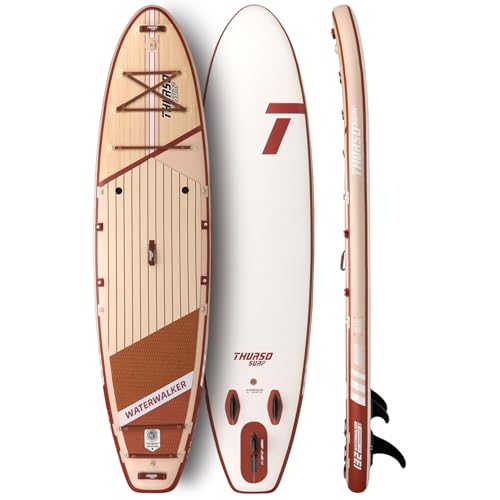
Thurso Surf Waterwalker 11’6″
At 11 feet 6 inches, the Waterwalker’s pointed nose improves glide over longer paddles. A kayak conversion kit ships in the package, adding a seat and double-bladed paddle option. Owners on multi-mile lake routes report better tracking than shorter all-around shapes.
Pros
- Pointed nose improves glide on longer routes
- Kayak conversion kit adds versatility
- Reinforced rails resist flex on extended paddles
Cons
- Longer length is harder to fit in small vehicles
- 350-pound capacity trails the highest-capacity boards here

Retrospec Weekender 4-in-1 Inflatable SUP
An included seat attachment converts the Weekender between a standing paddleboard and a seated kayak. Ten feet 6 inches long and 32 inches wide, it suits calm lakes and slow rivers. Owners report the dual-purpose design covers two activities without buying separate gear.
Pros
- Converts to a kayak with the included seat
- Lighter package weight than most 11-foot boards
- Includes paddle, pump, and coiled leash
Cons
- Lower weight capacity than dedicated touring boards
- Single-layer PVC is less puncture-resistant than multi-layer builds
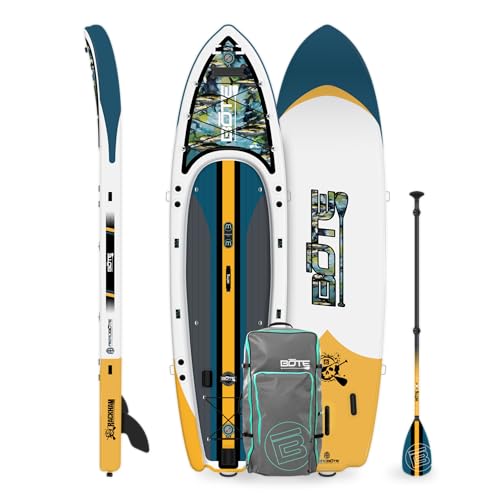
BOTE Rackham Aero Inflatable SUP
Anglers and tandem paddlers hauling extra gear are the target for this 12 foot 6 inch, 34-inch-wide board. Accessory mounts and a bungee cargo area hold coolers, crates, or a second rider. Some top-end speed gets traded away for that higher weight ceiling.
Pros
- Highest weight capacity of the boards compared here
- Cargo bungee and accessory mounts suit fishing or tandem trips
- 34-inch width adds side-to-side stability with gear loaded
Cons
- Larger footprint takes longer to inflate and deflate
- Heavier roll-up weight than an 11-foot all-around board

Tower Adventurer 2 Inflatable Paddle Board
Running 9 feet 10 inches long and 31 inches wide, the Adventurer 2 keeps a shorter deck close to the water. Full-length traction padding gives bare feet or yoga mats a secure surface for poses. Its compact roll-up size fits smaller closets or car trunks.
Pros
- Compact length simplifies storage and transport
- Full-length traction pad supports yoga and fitness routines
- Lower profile makes remounting after a fall easier
Cons
- Shorter length reduces glide compared to 11-foot boards
- Less suited to long-distance touring routes

SereneLife Inflatable Stand Up Paddle Board
Casual paddlers on ponds and slow-moving water are the fit for this 10-foot, 30-inch-wide board. A hand pump, adjustable paddle, and wheeled carry bag round out the package. Owners describe it as an entry point for testing the sport before upgrading.
Pros
- Lower cost of entry than most competitors on this list
- Narrower width suits smaller paddlers’ grip and reach
- Wheeled carry bag simplifies transport
Cons
- 275-pound capacity limits use for larger riders or gear
- Less stable in chop than wider 32-inch boards
How they compare
| # | Model | Length | Best for | Score | Price |
|---|---|---|---|---|---|
| 1 | iROCKER All-Around 11′ | 11 ft | Best overall | 9.4 | Check price |
| 2 | Atoll 11′ Inflatable Stand Up Paddle Board | 11 ft | Best for beginners | 9.1 | Check price |
| 3 | Thurso Surf Waterwalker 11’6″ | 11 ft 6 in | Best for touring and long distance | 8.9 | Check price |
| 4 | Retrospec Weekender 4-in-1 Inflatable SUP | 10 ft 6 in | Best value | 8.7 | Check price |
| 5 | BOTE Rackham Aero Inflatable SUP | 12 ft 6 in | Best weight capacity for tandem or gear-heavy use | 8.5 | Check price |
| 6 | Tower Adventurer 2 Inflatable Paddle Board | 9 ft 10 in | Best for yoga and fitness use | 8.3 | Check price |
| 7 | SereneLife Inflatable Stand Up Paddle Board | 10 ft | Best budget | 8.1 | Check price |
What to look for
What to look for in a paddleboard Length, width, and weight capacity decide how a board handles on the water. Longer boards glide farther per stroke but turn slower and take up more storage room. Wider decks, generally 30 to 34 inches, add side-to-side stability at the cost of top speed. Weight capacity should include the paddler, any gear, and a passenger or dog if that’s part of the plan. Military-grade PVC with a drop-stitch core resists punctures better than single-layer builds.
Inflatable vs rigid paddleboards Inflatable SUPs roll down to the size of a duffel bag and fit in a car trunk or closet. Setup takes roughly ten minutes with a hand pump, the main tradeoff for that portability. Rigid hardboards hold their shape better at speed and track straighter in wind, but they need a roof rack and dedicated storage space. Casual and travel-minded paddlers tend to land on inflatable boards for that reason, while dedicated racers and surfers often prefer rigid shapes.
Best paddleboard for beginners vs experienced paddlers New paddlers benefit from a wider, thicker board that resists tipping while they learn balance. An 11-foot length with a 32-inch width, like the Atoll or iROCKER models here, gives room to reposition footing without falling. Once basic balance becomes automatic, experienced paddlers can move to narrower boards for speed. Falling off a beginner board is also less discouraging, since a full deck pad and stable platform make remounting easier.
Choosing a board for yoga, fishing, or touring Yoga and fitness routines call for a shorter, low-profile board with a full-length traction pad, since poses shift weight across the whole deck. Higher weight capacity and cargo mounts matter more for anglers and tandem paddlers carrying coolers, crates, or a second rider. Long-distance touring favors a pointed nose and a length past 11 feet for better glide between strokes. Matching the board to the primary activity avoids buying a shape that fights the intended use.
Good to know
What size paddleboard do I need?
Most adults do well on a board between 10 and 11 feet long and 30 to 32 inches wide. Taller or heavier paddlers should size up in width and weight capacity. Shorter boards under 10 feet suit yoga, fitness, or paddlers who prioritize storage over glide.
Is an inflatable paddleboard as good as a rigid one?
Inflatable boards perform well for flatwater cruising, fishing, and yoga, and they store far more easily than rigid boards. Rigid hardboards track straighter and feel stiffer at higher speeds, which matters more for racing or surf. Owners report little practical difference in stability for casual and recreational paddling.
How much weight can a paddleboard hold?
Weight capacity on the boards compared here ranges from 275 pounds on compact budget models to over 500 pounds on the BOTE Rackham Aero. Listed capacity should cover the paddler, gear, and any passenger with margin left over. Loading a board near its maximum limit reduces stability and increases drag.
Which paddleboard is best for beginners?
A wide, thick board like the Atoll 11′ or iROCKER All-Around 11′ gives new paddlers a stable platform to learn balance. Both measure 32 inches wide with a 400-pound capacity, forgiving shifting weight and off-center steps. A full-length deck pad also makes it easier to remount after a fall.
Can one person carry and inflate a paddleboard alone?
Yes, most inflatable boards deflate into a backpack that one person can carry from a car to the water. Hand-pump inflation takes about ten minutes and needs no special tools. Larger boards like the BOTE Rackham Aero take longer to inflate due to their bigger volume.
How long does it take to inflate a paddleboard?
A standard 10 to 11 foot inflatable SUP takes roughly eight to twelve minutes with the included hand pump. Electric pumps cut that time down but sell separately on most listings. Larger or wider boards, such as the 34-inch Rackham Aero, take a few minutes longer to reach full pressure.
Is a wider or narrower paddleboard more stable?
Wider boards, generally 32 inches or more, resist tipping and suit beginners, yoga, or fishing. Narrower boards under 30 inches cut through water faster but demand better balance. Fitness racers and other paddlers who prioritize speed over stability often choose the narrower option once they gain experience.
What is the best paddleboard for yoga?
The Tower Adventurer 2 works well for yoga thanks to its full-length traction pad and low, stable profile. Its shorter 9 foot 10 inch length keeps the board close to the water, reducing wobble during poses. A wider deck, ideally 31 inches or more, also gives more room to shift positions.
Paddleboard vs kayak: which is better for beginners?
Paddleboards give a full-body workout and a standing view of the water, while kayaks offer a lower, more stable seated position. Convertible boards like the Retrospec Weekender switch between the two without buying separate gear. Beginners who want the easiest entry point often start seated before progressing to standing.
The bottom line
The iROCKER All-Around 11′ is the strongest pick for paddlers who want one board that handles lakes, calm rivers, and casual surf without a steep learning curve. Beginners chasing maximum stability while they find their balance should look at the Atoll 11′ instead, since its deck pad and matching capacity make falls less discouraging. Anglers or tandem paddlers hauling gear are better served by the BOTE Rackham Aero, which carries more weight than any other board compared here.