How Long a Paint Roller Extension Pole Do You Need?
Wooster Sherlock GT Convertible Pole leads overall since one insert switches between a 4-foot and an 8-foot reach. Purdy Adjustable Extension Pole offers strong value with twist-lock control. Linzer Twist-Lock Pole covers standard 8-foot ceilings on a tight budget. Ceiling height and material stiffness decide the right length.
Wooster’s Sherlock GT Convertible Pole tops this list for painters covering both walls and vaulted ceilings in one project. A slide-in insert switches between a 4-foot and an 8-foot reach without a second purchase. Its acme-threaded tip fits nearly every roller frame and edger sold today, though the fiberglass shaft flexes more than rigid aluminum at full extension.
Poles look interchangeable until length range, thread standard, and material stiffness start to matter on an actual job. We compared maximum reach, thread compatibility, material weight, and owner feedback on wobble at full extension to match each pole to a specific painting task.
Our top picks
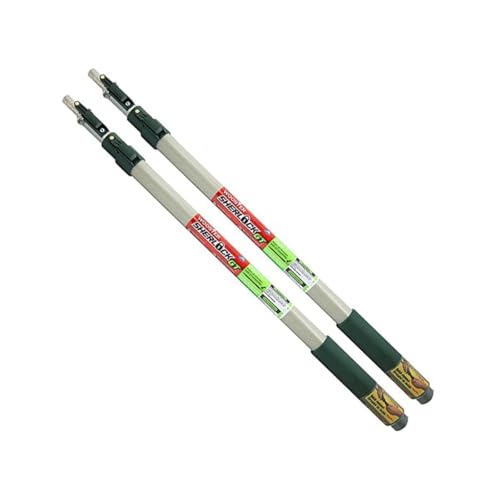
Wooster Sherlock GT Convertible Pole
A slide-in insert converts this pole between a 2-to-4-foot range and a 4-to-8-foot range, covering wall cutting-in and higher ceiling sections with one purchase. Fiberglass composite resists the corrosion that outdoor aluminum poles can develop over time. A metal acme tip threads onto standard roller frames, edging brushes, and most paint edgers.
Pros
- A single pole spans two separate length ranges
- Fiberglass composite resists outdoor corrosion
- Acme-threaded tip fits most roller frames and edgers
Cons
- Costs more than fixed-length poles
- Fiberglass flexes slightly at full 8-foot extension

Purdy Adjustable Extension Pole
Twist-lock adjustment sets this aluminum pole anywhere between 4 and 8 feet, giving fine control over reach beyond a fixed length. A rubber-cushioned grip resists slipping once hands pick up paint mid-project. Its acme-threaded tip matches the same standard found on pricier convertible poles.
Pros
- Twist-lock allows precise length adjustment on the fly
- Rubber grip stays secure even with wet hands
- Lighter overall than fiberglass poles of similar length
Cons
- Aluminum can dent if dropped on concrete
- Only one length range, unlike convertible models

Linzer Twist-Lock Extension Pole
Covering a 2-to-4-foot range, this aluminum pole handles standard 8-foot ceilings and wall cutting-in without extra bulk. A twist-lock collar sets the length in seconds, and the threaded tip accepts most hardware-store roller frames. Cushioned grip is absent here, unlike pricier options.
Pros
- Lightest pole among this set of seven
- Affordable enough for one-room projects
- Compact length stores easily in a closet
Cons
- Ceilings above roughly 9 feet stay out of reach
- No cushioned grip for wet or sweaty hands

Wooster Sherlock Jumbo Pole
Extending from 6 to 12 feet, this pole reaches vaulted ceilings and stairwell walls that shorter models cannot cover without a ladder. A reinforced metal thread insert resists the stripping that heavier fiberglass poles risk under repeated twisting. Near full extension, two-handed control becomes necessary given the added length and weight.
Pros
- Reaches vaulted ceilings without renting scaffolding
- Reinforced thread resists stripping over repeated use
- Eliminates most ladder work on stairwells
Cons
- Heaviest pole in this lineup
- Two-handed control is required near full extension

Mr. LongArm Pro-Pole Extension Pole
Twist-on sections combine multiple Pro-Pole units for reach beyond what a single telescoping pole offers, a setup professional exterior painters rely on. Every section shares the same universal acme thread, though mismatched brands rarely connect as cleanly. Fiberglass construction keeps the assembled pole lighter than an equivalent-length solid rod.
Pros
- Stacked sections extend reach past 12 feet
- Aluminum core adds rigidity without excess weight
- Professional exterior painters use this system regularly
Cons
- Multiple sections cost more than one long pole
- Connection points can loosen under heavy repeated use

Bates Choice Extension Pole
At 0.9 pounds, this adjustable aluminum pole extends from 2 to 4 feet while staying lighter than fiberglass poles of the same length. A steel-threaded tip attaches to standard roller frames without the wobble some plastic-threaded poles develop. A bare aluminum shaft skips the rubber grip layer, trading cushioning for weight savings.
Pros
- Among the lightest poles in this comparison
- Steel tip resists thread wobble during use
- Easy to maneuver during overhead work
Cons
- No cushioned grip on the bare shaft
- Maximum reach tops out at 4 feet

Shur-Line Extension Pole
A foam-cushioned grip and simple twist-lock collar make this 2-to-4-foot aluminum pole approachable for first-time painters tackling one room. Its threaded tip matches the same acme standard as every other pole here, so upgrading later skips relearning a new fitting. Many hardware retailers bundle this pole with starter roller kits.
Pros
- Foam grip is comfortable for first-time users
- Standard threading eases future pole upgrades
- Widely sold bundled with starter roller kits
Cons
- Length suits only small rooms
- Foam grip wears faster than rubber alternatives
The lineup, side by side
| # | Model | Length range | Best for | Score | Price |
|---|---|---|---|---|---|
| 1 | Wooster Sherlock GT Convertible Pole | 2 to 8 feet (convertible insert) | Best overall | 9.4 | Check price |
| 2 | Purdy Adjustable Extension Pole | 4 to 8 feet | Best value | 9.1 | Check price |
| 3 | Linzer Twist-Lock Extension Pole | 2 to 4 feet | Best budget | 8.8 | Check price |
| 4 | Wooster Sherlock Jumbo Pole | 6 to 12 feet | Best for high ceilings and stairwells | 8.6 | Check price |
| 5 | Mr. LongArm Pro-Pole Extension Pole | 6 to 12 feet per section, stackable | Best for modular multi-section reach | 8.4 | Check price |
| 6 | Bates Choice Extension Pole | 2 to 4 feet | Best lightweight aluminum pole | 8.2 | Check price |
| 7 | Shur-Line Extension Pole | 2 to 4 feet | Best for beginners and small DIY projects | 8.0 | Check price |
Before you buy
What to Look for in a Paint Roller Extension Pole Nearly every roller frame and paint edger uses a standard 3/4 inch acme thread, so confirming that spec first avoids compatibility surprises. Length range matters next: a 2-to-4-foot pole suits standard 8-foot ceilings, while taller rooms need 6 feet or more of reach. Material shapes both weight and stiffness, a tradeoff that shows up the moment a pole reaches full extension.
Aluminum vs Fiberglass: Which Material Fits Your Job Aluminum poles like the Purdy Adjustable and Bates Choice stay lighter and cheaper, a natural fit for interior walls and ceilings under 10 feet. Fiberglass options such as the Wooster Sherlock Jumbo resist corrosion outdoors and hold rigidity at longer extensions, which matters in wet exterior conditions. Thread compatibility stays the same across both materials, since nearly all use the identical acme fitting.
How Long of a Pole Do You Need for High Ceilings? Vaulted ceilings and stairwell walls often reach 12 feet or higher, ruling out standard 4-to-8-foot poles entirely. A dedicated long pole, or stacked modular sections from a system like the Mr. LongArm Pro-Pole, covers that height without scaffolding or a tall ladder. A fully loaded roller adds noticeable weight at the far end, so two-handed control becomes important at these lengths.
Extension Poles for Exterior Siding vs Interior Walls Exterior jobs favor fiberglass for its weather resistance and the extra reach needed to cover a two-story wall from ground level. Interior work rarely needs more than an 8-foot pole, so a lighter aluminum option cuts arm fatigue during long sessions. Painters handling both interior and exterior work should consider a convertible pole instead of buying two separate ones.
Questions worth asking
What size extension pole do I need for a paint roller?
Standard 8-foot ceilings usually need only a 2-to-4-foot pole, while vaulted ceilings, stairwells, or two-story exteriors call for 6 to 12 feet of reach.
Do all paint roller extension poles fit the same roller frames?
Most poles and roller frames share a standard 3/4 inch acme thread, so poles from different brands generally attach to any roller frame using that fitting.
Can you use an extension pole to paint ceilings?
Yes, a pole in the 4-to-8-foot range covers most standard ceiling heights from the floor, removing the need for a ladder on flat ceiling sections.
Is fiberglass or aluminum better for a paint pole?
Aluminum stays lighter and cheaper for interior work, while fiberglass resists corrosion and holds rigidity better outdoors or at longer extensions.
How long of an extension pole do I need for a two-story exterior?
Painters typically need 12 feet or more of combined reach for two-story siding, usually met with a long single pole or stacked modular sections.
Can extension poles be used with paint brushes, not just rollers?
Yes, many brush handles include the same acme-threaded socket found on roller frames, letting one pole switch between a brush and a roller.
Do extension poles work with paint edgers?
Most paint edgers include a threaded socket matching the standard acme fitting, so the same pole used for rolling walls typically works with an edger too.
Are longer extension poles harder to control?
Yes, poles extended past 8 feet add weight and leverage at the far end, so two-handed control becomes necessary to keep the roller tracking straight.
What is the standard thread size on a paint roller pole?
Almost all roller poles, frames, and edgers use a 3/4 inch acme thread, which is why poles from different brands still fit most roller frames.
Are convertible extension poles worth the extra cost?
Painters who work on both walls and ceilings in the same project often save money with a convertible pole instead of buying two fixed-length poles.
Our take
Wooster’s Sherlock GT Convertible Pole earns the top spot, since one slide-in insert covers standard walls and taller ceiling sections without a second purchase. Painters working exclusively on vaulted ceilings or stairwells above 10 feet should pick the Wooster Sherlock Jumbo Pole instead, since its 6-to-12-foot range exceeds the convertible model’s reach. Budget-focused DIYers tackling a single room can skip both in favor of the Linzer Twist-Lock Pole.

