Choosing a Paint Roller for Smooth Walls and Ceilings
The Purdy White Dove roller cover gives the cleanest lint-free finish on interior walls, the Wooster Pro/Doo-Z is the better value workhorse across most paints, and the Bates Paint Roller Kit is the budget way to get frame, covers and tray in one box.
For smooth interior walls and ceilings the Purdy White Dove cover produces the fewest lint specks and the most even lay-off, while the Wooster Pro/Doo-Z is the versatile everyday choice and the Bates Paint Roller Kit covers a whole first project cheaply.
Picking a roller is harder than it looks because nap length, fabric and frame quality all change the finish more than the paint does, and the wrong nap leaves stipple or misses texture. We compared manufacturer specifications on fabric, nap and recommended surfaces alongside what owners report about shedding and durability across repeat washes.
How to choose
Nap length decides your finish Nap is the pile height of the cover, and it should match the roughness of the surface. A 1/4 to 3/8 inch nap suits smooth drywall, plaster and doors, giving the flattest look. A 1/2 inch nap handles lightly textured walls, and 3/4 inch and above is meant for knockdown texture, stucco and block. Using too long a nap on smooth drywall is the most common cause of that orange peel stipple people notice after the paint dries.
Woven versus knit fabric Knit covers hold more paint and suit rougher surfaces, but they tend to shed more fibres, especially the cheap ones. Woven covers such as the White Dove release paint more evenly and shed far less, which is why they are the choice for smooth walls and any enamel or gloss finish where a single fibre shows. Microfibre sits in between and works well with modern low-odour latex paints.
The frame is a long-term buy Cheap frames flex, let the cover slide, and spin loose on an extension pole, which shows up as uneven pressure and lap marks. A five-wire cage with a proper pole lock costs a little more once and then serves for years across dozens of covers. If you are painting a ceiling, the pole connection is the single detail that decides whether the job is pleasant or frustrating.
Prep, loading and technique Wrap a new cover with tape and pull it off to lift loose fibres before the first dip, then dampen the cover slightly for latex paint so it loads evenly. Load the roller until it is full but not dripping, roll in overlapping passes, and finish each section with a light unloaded pass in one direction to lay off the texture. Keeping a wet edge and working in manageable sections matters more than any single product choice.
The shortlist, ranked
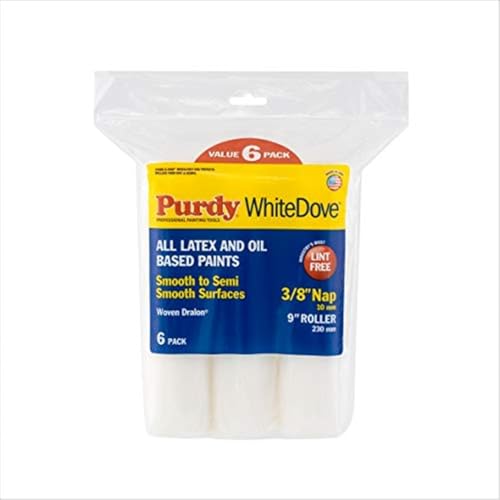
Purdy White Dove Roller Cover
The White Dove uses a woven dralon fabric that holds a lot of paint and releases it evenly, which is what produces that flat, stipple-free wall finish. Because it is woven rather than knit, it sheds very little lint even on the first pass, so you are not picking fibres out of fresh paint. Owners report washing and reusing these covers many times without the nap matting down.
Pros
- Almost no lint shedding straight out of the wrapper
- Even paint release leaves minimal stipple
- Washes out and holds shape for repeat use
Cons
- Costs more than a basic knit cover
- Woven nap is less forgiving on heavy texture

Wooster Brush Pro/Doo-Z Roller Cover
The Pro/Doo-Z is the cover most painters reach for when the job is ordinary walls and ceilings in ordinary paint. Its shed-resistant fabric handles both flat and semi-gloss without leaving fibres, and the beveled ends reduce the paint ridge you get at the edge of each stroke. It comes in enough nap lengths to cover almost any interior job.
Pros
- Wide nap range for almost any interior surface
- Beveled ends reduce edge ridges in the paint
- Core holds up to repeated washing
Cons
- Not the absolute smoothest finish on gloss enamel
- Longer naps can splatter if overloaded

Bates Paint Roller Kit
This kit bundles a frame, several covers, a tray, a small trim roller and brushes, which is the practical way to start a first room without buying six items separately. Quality is fair rather than professional, so expect a little shedding on the first cover. For a single weekend of repainting a bedroom it does the job at a fraction of the cost of assembling the same set piece by piece.
Pros
- Everything needed for a first project in one box
- Includes a mini roller for tight spots
- Very low cost per included item
Cons
- Covers shed more than premium fabrics
- Frame cage is less rigid than pro frames
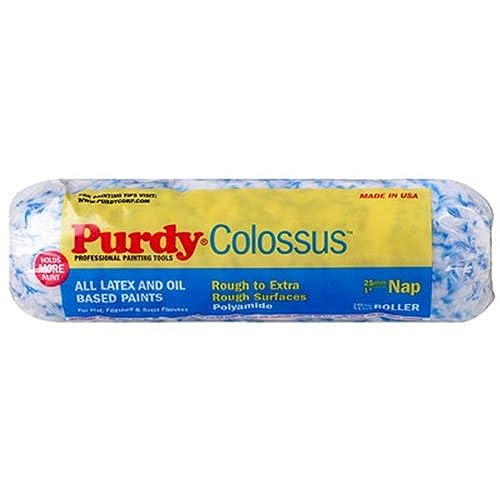
Purdy Colossus Roller Cover
The Colossus is built for surfaces that drink paint, such as knockdown texture, stucco and rough masonry, where a standard nap simply runs dry too fast. Its high capacity fabric carries noticeably more paint per dip, which means fewer trips to the tray and better coverage down into the texture. It is overkill on flat drywall and will leave a heavier stipple there.
Pros
- Carries far more paint per load than standard covers
- Pushes paint into deep texture and block
- Durable enough for exterior masonry work
Cons
- Leaves visible stipple on smooth drywall
- Heavy when fully loaded on a long pole

Wooster Brush Sherlock Roller Frame
The Sherlock frame solves the annoyance of a roller head spinning loose on an extension pole by locking rigidly to threaded poles. The five-wire cage keeps covers from sliding off mid-stroke and the handle grip resists twisting when you are rolling a ceiling overhead. Buy the frame once and pair it with whichever cover suits the surface.
Pros
- Locks solidly to a pole with no wobble
- Cage holds covers securely during long strokes
- Built to outlast dozens of cover changes
Cons
- Costs more than a throwaway frame
- Only fits standard 9 inch covers
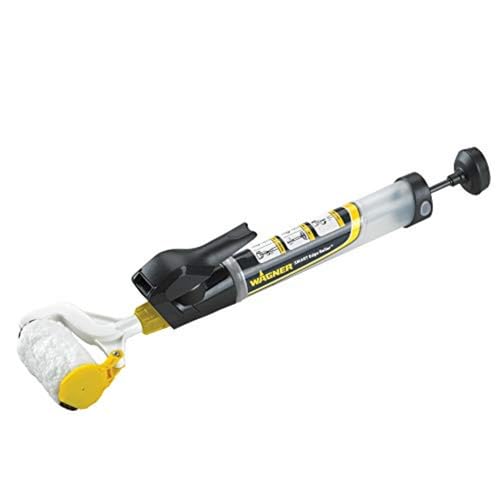
Wagner SMART Roller
The SMART Roller draws paint into a reservoir in the handle and feeds it into the cover as you roll, which removes the tray and the drips that come with it. It is genuinely useful for ceilings, stairwells and anywhere setting a tray down is awkward. The trade-off is a heavier handle and a cleaning routine that takes longer than rinsing a plain cover.
Pros
- No tray to carry, tip or step in
- Consistent paint load reduces dry streaks
- Handy on ladders and stairwells
Cons
- Heavier in the hand when full
- Cleaning the internal chamber takes time

HomeRight Quick Painter Pad Edge Painter
This pad painter holds paint in the handle and feeds a flat pad with guide wheels, letting you run a clean line along ceilings, trim and corners without taping. It is not a replacement for a roller on open wall area, but it saves real time on the fiddly perimeter work that usually eats an afternoon. Owners report the guide wheels need wiping regularly to avoid smearing.
Pros
- Cuts in clean lines without masking tape
- Reservoir means fewer trips to the can
- Light enough for overhead ceiling lines
Cons
- Guide wheels must be wiped often
- Only useful for edges, not open walls
Compared at a glance
| # | Model | Fabric | Best for | Score | Price |
|---|---|---|---|---|---|
| 1 | Purdy White Dove Roller Cover | Woven dralon | Best overall | 9.4 | Check price |
| 2 | Wooster Brush Pro/Doo-Z Roller Cover | Shed-resistant white fabric | Best value | 9.2 | Check price |
| 3 | Bates Paint Roller Kit | Frame, covers, tray, brushes | Best budget | 9.0 | Check price |
| 4 | Purdy Colossus Roller Cover | High capacity polyamide blend | Best for textured surfaces | 8.8 | Check price |
| 5 | Wooster Brush Sherlock Roller Frame | Five-wire supported cage | Best roller frame | 8.6 | Check price |
| 6 | Wagner SMART Roller | Handle reservoir feeds cover | Best for painting without a tray | 8.3 | Check price |
| 7 | HomeRight Quick Painter Pad Edge Painter | Self-feeding edge pad | Best for cutting in edges | 8.0 | Check price |
Frequently asked questions
What nap should I use for smooth interior walls?
A 3/8 inch nap is the safest all-round choice for smooth drywall, giving good coverage with minimal stipple. Drop to 1/4 inch for doors, cabinets and very smooth plaster where you want an almost sprayed look. Move up to 1/2 inch only if the wall has a light orange peel texture.
How do I stop a roller from leaving lint in the paint?
Choose a woven or shed-resistant cover, then pre-clean it by wrapping packing tape around the nap and peeling it away a few times. Some painters also rinse and spin the cover before first use. Cheap knit covers shed the most, which is why the first coat on a budget kit often needs a light sand.
Can I reuse a roller cover?
Yes, quality covers wash out and hold their nap through many jobs. Rinse latex paint out under warm water until it runs clear, spin the cover dry, and store it standing on end. For a short break between coats, wrap the loaded cover tightly in plastic and it will stay usable for hours.
Do I need a different roller for ceilings?
The same nap rules apply, but a locking frame on an extension pole makes a much bigger difference overhead. Many people also step up slightly in nap for textured ceilings and use a shield or drop cloth, since rolling upward throws more spatter than rolling a wall.
Is a 9 inch or 18 inch roller better?
Nine inch is the standard for rooms, doors and anywhere you need control. Eighteen inch covers ground much faster on large open walls and ceilings, but it is heavy when loaded and awkward around windows and fixtures. Most home projects are faster overall with a 9 inch roller and a good pole.
What roller works best for cabinets and doors?
A short 1/4 inch nap woven cover or a dedicated foam cover gives the smoothest result on enamel. Roll a thin coat and immediately lay it off lightly, then let it level. Thick coats on cabinets are the main cause of visible roller texture in the cured finish.
Are roller kits worth buying over individual pieces?
For a first project a kit is good value because it includes the tray, frame and covers you would otherwise buy separately. If you paint regularly, buy a quality frame and quality covers individually, since the frame in most kits is the first part to fail.
How much wall does one roller cover paint?
A good cover will comfortably handle several rooms across its life if washed properly. Within a single job the limiting factor is paint load, not cover life, so plan on a full tray or bucket grid setup rather than expecting a cover to wear out mid-room.
Final word
For smooth interior walls the Purdy White Dove is the cover worth paying for, because it shreds almost no lint and lays paint down evenly enough to hide roller texture. The Wooster Pro/Doo-Z is the sensible everyday alternative across a wider range of naps, and pairing either with a Wooster Sherlock frame turns ceiling work from a chore into a straightforward job.


