How to Cut Patio Wind Without Turning a Screen Into a Sail
The Windscreen4less Solid Privacy Screen leads with a balanced density that cuts wind without trapping too much heat. Sunnyglade delivers similar coverage for less. Gusty coastal patios do better with the tighter weave on the Sorara Outdoor Wind Screen Panel.
Block every gust and a wind screen also blocks airflow, catching wind like a sail once a storm hits. Middle density suits most patios, which is why the Windscreen4less Solid Privacy Screen takes the top spot. Coastal or hilltop patios facing stronger gusts need the tighter weave on the Sorara Outdoor Wind Screen Panel. Sunnyglade handles the basics at a lower price.
Grommet spacing and material weight decide whether a screen tears loose in the first real storm. We compared mesh density, HDPE material weight, grommet count and mounting style across fences, railings and posts.
How to pick the right one
What should you look for in a patio wind screen? Mesh density sets how much wind and view the screen blocks, usually stated as a percentage. Material weight determines durability under repeated wind cycling, since light mesh flaps and wears faster than a heavier knit. Grommet spacing decides how securely it ties down, and UV treatment determines whether color and fabric hold up through a full season of sun.
How does mesh density affect wind and airflow? Higher density mesh, above about 90 percent, blocks more wind and view but also traps more heat and pushes more force against the panel itself. Lower density mesh, closer to 80 percent, breathes better and puts less strain on grommets and posts during gusts. Very exposed patios often do better with a slightly lower density screen that flexes with the wind instead of fighting it.
Best wind screens for balconies vs fences vs pergolas Balcony railings need extra tie points along thin rails, which screens like the Patio Paradise Fence Privacy Screen provide. Full fence lines benefit from long roll coverage, as offered by the E&K Sunrise Privacy Fence Screen, avoiding seams between panels. Pergolas and odd shaped patios often call for a custom sized screen, since stock dimensions rarely match every post spacing.
How do you secure a wind screen in a high wind area? Use every available grommet rather than skipping some to save time, since gaps between ties concentrate stress on the remaining points during gusts. Heavier duty zip ties or bungee cords hold better than string in sustained wind. Take screens down ahead of a forecast storm in gust prone areas, since even a well installed screen can strain posts in extreme wind.
Our top picks
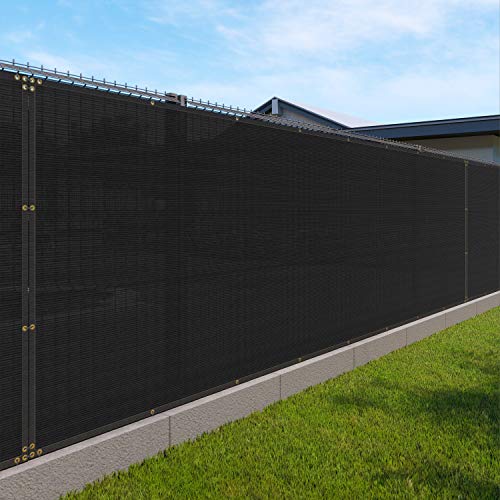
Windscreen4less Solid Privacy Screen
Knitted HDPE mesh cuts wind speed noticeably while still letting some air pass, avoiding the sail effect that solid vinyl panels create. Reinforced grommets sit every couple of feet along the edges for secure tying. Owners report it surviving multiple storm seasons without fraying.
Pros
- Cuts wind without acting like a solid sail
- Reinforced grommets resist tearing
- UV stabilized material resists fading
Cons
- Custom sizes cost more than stock options
- Very high density means less airflow than lighter mesh
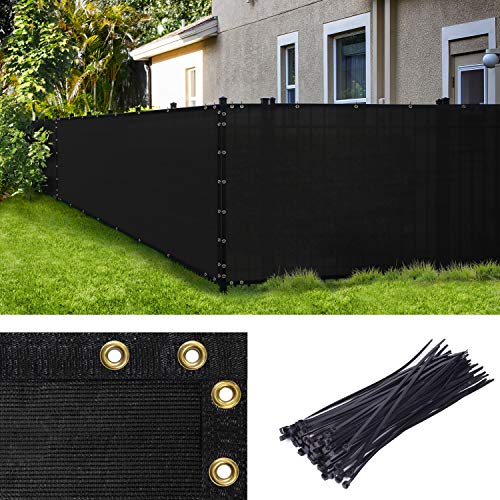
Amgo Fence Privacy Screen
Chain link and wood fence mounting drove this screen’s design, and it ships with enough grommets to tie roughly every foot along the top and bottom edges. Double stitched hems resist unraveling where most screens fail first. Color holds up well after a full summer of direct sun, according to owner reports.
Pros
- Double stitched hems resist unraveling
- Frequent grommet spacing for secure fence mounting
- Holds color well under direct sun
Cons
- Heavier fabric is harder to install solo
- Limited to fence style mounting more than railings

ColourTree Custom Size Windscreen
Ordering by exact dimensions avoids the overlap or gap problems that stock sized screens create on an odd length fence or pergola. Commercial grade mesh matches what shade sail installers use on larger properties. Irregular patio layouts are the main reason owners cite for choosing the custom fit.
Pros
- Exact custom dimensions avoid gaps or overlap
- Commercial grade mesh matches professional installs
- Multiple density options available
Cons
- Custom orders take longer to receive
- Costs more than off the shelf sizes

Sunnyglade Patio Wind Screen
Common stock sizes on this mesh panel cover most standard patio and balcony rails without a custom order. Grommets line all four edges for tying to railings or fence posts. Owners often buy multiples to wrap an entire balcony perimeter affordably.
Pros
- Affordable enough to cover a full perimeter
- Common stock sizes fit most railings
- Grommets on all sides for flexible mounting
Cons
- Lower density than premium wind rated screens
- Edges can fray faster under heavy wind cycling

Sorara Outdoor Wind Screen Panel
A tighter knit cuts more wind speed than standard mesh, useful on exposed hilltop or coastal patios where gusts run stronger. Reinforced corners and heavier fabric resist stretching over time. Windy region owners report less flapping noise compared to lighter mesh screens.
Pros
- Tighter weave suits stronger, exposed wind areas
- Reinforced corners resist stretching
- Reduces flapping noise in gusty conditions
Cons
- Heavier weight makes installation more physical
- Reduced airflow compared to lighter mesh

Patio Paradise Fence Privacy Screen
Extra ties along the top and bottom, beyond corner grommets alone, secure this screen tightly to thin balcony railings. Lighter mesh weight suits apartment balconies more than full fence lines. Renters note it comes down and stores away easily between seasons.
Pros
- Extra tie points suit thin balcony railings
- Lightweight for easy seasonal removal
- Simple to store when not in use
Cons
- Lower wind block density than heavier screens
- Less suited to full fence line coverage

E&K Sunrise Privacy Fence Screen
Long roll lengths let this screen cover extended fence runs without piecing together multiple shorter panels. Mid weight mesh balances wind reduction with manageable handling during installation. Large backyard perimeters go faster with the roll format, according to owner feedback.
Pros
- Long roll length covers large areas without seams
- Mid weight mesh balances wind block and handling
- Cost effective for covering extended fence runs
Cons
- Long rolls are harder to install without a second person
- Fewer reinforced points than premium heavy duty screens
How they stack up
| # | Model | Material | Best for | Score | Price |
|---|---|---|---|---|---|
| 1 | Windscreen4less Solid Privacy Screen | Knitted HDPE mesh | Best overall | 9.3 | Check price |
| 2 | Amgo Fence Privacy Screen | Knitted HDPE mesh | Best for fence mounting | 9.0 | Check price |
| 3 | ColourTree Custom Size Windscreen | Commercial grade knitted mesh | Best for custom sizing | 8.7 | Check price |
| 4 | Sunnyglade Patio Wind Screen | Knitted HDPE mesh | Best budget | 8.4 | Check price |
| 5 | Sorara Outdoor Wind Screen Panel | Heavyweight knitted HDPE mesh | Best for high wind areas | 8.2 | Check price |
| 6 | Patio Paradise Fence Privacy Screen | Knitted HDPE mesh | Best for balcony railings | 8.1 | Check price |
| 7 | E&K Sunrise Privacy Fence Screen | Knitted HDPE mesh | Best for large yards | 8.0 | Check price |
Good to know
What mesh density is best for wind and privacy?
Around 85 to 90 percent density balances strong wind reduction and privacy with reasonable airflow for most patios. Very exposed or coastal locations may need a tighter weave near 95 percent, while covered or partially sheltered patios can use lighter mesh closer to 80 percent.
Do patio wind screens block all wind?
No mesh screen blocks wind completely, since some airflow always passes through the weave. That partial permeability actually keeps the screen from acting like a sail and pulling loose from its mounting points during gusts.
Can wind screens be left up during storms?
Lower density mesh generally tolerates storms better than solid vinyl panels, but very high winds can still stress grommets and posts. Taking screens down ahead of a forecast severe storm protects both the screen and the structure it ties to.
How do you attach a wind screen to a chain link fence?
Zip ties threaded through the grommets and around the fence links are the most common method, spaced at every available grommet for even load distribution. Some installers add extra ties between grommets on longer fence runs for added security.
Are patio wind screens UV resistant?
Most outdoor mesh wind screens include a UV stabilizer in the material to slow fading and brittleness from sun exposure. UV resistance extends the useful life of the screen but does not make it fade proof indefinitely.
Is a wind screen the same as shade cloth?
Shade cloth is optimized primarily to block sunlight and is often less dense, while a wind screen is optimized for wind reduction and privacy with a tighter, heavier mesh. Many products serve both purposes to varying degrees depending on their density rating.
Can you cut a wind screen to a custom size?
Knitted HDPE mesh can be cut, but the raw edge frays over time without hemming or a fresh grommet. Ordering a custom sized screen with finished hems, like the ColourTree option, avoids that maintenance issue entirely.
What is the best wind screen for a windy coastal patio?
The Sorara Outdoor Wind Screen Panel uses a tighter weave and heavier fabric built for stronger, more exposed wind loads. Standard density screens flap more and wear faster in that kind of sustained coastal gusting.
How long do outdoor wind screens last?
A quality UV treated mesh screen typically lasts several years of continuous outdoor exposure before fading or fraying significantly. Taking the screen down during off season months or severe weather extends its usable life considerably.
Our take
Balanced mesh density matters more than raw wind blocking power for most patios. The Windscreen4less Solid Privacy Screen suits typical wind conditions well, while the Sorara Outdoor Wind Screen Panel earns its heavier weight on exposed coastal or hilltop sites. Sunnyglade remains the practical choice for covering a full balcony or fence line on a budget.