Pet GPS Trackers Compared: LTE vs Bluetooth Tags
Tractive GPS Dog LTE takes the overall spot for its unlimited range live tracking and light collar clip. The Whistle Go Explore 2.0 adds the strongest health and activity monitoring, and Jiobit Next is the pick for small dogs and cats that need a genuinely tiny tracker.
For a dog that actually escapes, Tractive GPS Dog LTE is the one to buy because it works over cellular anywhere with coverage rather than relying on a crowd of nearby phones, with Whistle Go Explore 2.0 the better choice if you want health tracking alongside location, and Jiobit Next the only realistic option for very small pets.
Picking a tracker is confusing because Bluetooth tags and LTE trackers sit side by side on the same shelf while doing fundamentally different jobs, and the sticker price hides a monthly subscription that determines whether the device works at all. We ranked these seven based on published specifications, coverage models and what owners report about battery life and collar retention in real use.
How to pick the right one
GPS with cellular is different from a Bluetooth tag A cellular tracker knows where it is and sends that position over a mobile network, so it works at any distance with coverage. A Bluetooth tag has no idea where it is and simply waits for a stranger’s phone to notice it and report in. In a busy city the tag approach often works well enough. On a farm or a forest walk it does not work at all, and that single distinction should drive your choice more than any feature list.
The subscription is part of the real cost Almost every cellular tracker needs a monthly or annual plan to work, because the device carries its own data connection. That is not an upsell, it is the running cost of the mobile network. Factor multiple years into your decision, and check whether the plan you want includes live tracking refresh, location history and family sharing, since these are often tiered.
Battery life claims depend on how you use it Quoted figures assume passive tracking with occasional position updates. Switch on live mode, where the device reports every few seconds during a search, and the same battery can drain in hours. Trackers that use home Wi-Fi or Bluetooth beacons to stay dormant while the pet is safe at home stretch far longer between charges than those polling GPS constantly.
Fit, weight and attachment decide whether it stays on The best tracker is useless in a hedge. Check the weight against your pet’s size, since vets generally suggest keeping collar accessories to a small fraction of body weight, and look closely at how the unit attaches. Clips can work loose over months, integrated collars cannot fall off but lock you into one collar style, and cats need a breakaway collar for safety even though that raises the odds of losing the unit.
Our top picks

Tractive GPS Dog LTE Tracker
Tractive combines GPS positioning with an LTE data connection, so live tracking works wherever there is cellular coverage rather than within a fixed radius. It clips onto almost any collar, survives a swim thanks to its waterproof rating, and offers a live mode that refreshes position every few seconds during an active search.
Pros
- True unlimited range rather than Bluetooth proximity
- Live tracking refresh during an active search
- Fits almost any existing collar with the supplied clip
Cons
- Requires an ongoing subscription to function
- Battery drains fast when live mode runs continuously

Whistle Go Explore 2.0
Whistle pairs GPS and cellular location with genuinely detailed activity and behaviour monitoring, flagging patterns like excessive licking, scratching and changes in sleep. Battery life is the standout, running considerably longer between charges than most rivals, and the housing is built to survive rough play.
Pros
- Long battery life between charges
- Behaviour alerts that go beyond simple step counting
- Built in night light for evening walks
Cons
- Bulkier than minimal clip on trackers
- Subscription required for location features
Jiobit Next
Jiobit Next is the smallest full cellular tracker in this group, which makes it the realistic pick for cats and small breed dogs that cannot carry a chunky puck. It layers GPS, cellular, Wi-Fi and Bluetooth to narrow position indoors as well as out, and the encrypted platform is a step above the norm.
Pros
- Small and light enough for cats and toy breeds
- Multiple location technologies improve indoor accuracy
- Strong security and encryption model
Cons
- Subscription needed and pricing tiers can confuse
- Attachment options are more limited than collar clips
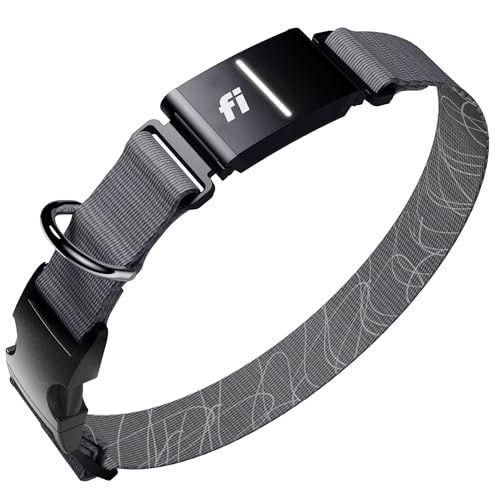
Fi Series 3 Smart Dog Collar
Fi builds the tracker into the collar itself rather than clipping it on, which removes the most common failure point when a dog squeezes through a fence. It uses home Wi-Fi and Bluetooth base points to conserve power and switches to LTE the moment the dog leaves a defined safe zone.
Pros
- Tracker built into the collar so nothing can fall off
- Very long standby battery inside the home zone
- Fast escape alerts when the safe zone is breached
Cons
- You have to use Fi’s own collar rather than your favourite
- Higher combined hardware and subscription outlay

Pawfit 3 GPS Pet Tracker
Pawfit 3 is light enough for most adult cats and adds two way voice so you can talk through the device, which owners report helps coax a nervous animal out of hiding. It covers activity tracking and a temperature alert alongside standard live location.
Pros
- Light enough for cats and small dogs
- Two way voice function helps in a search
- Temperature alert for pets left in warm spaces
Cons
- App polish trails the bigger brands
- Subscription required for live tracking
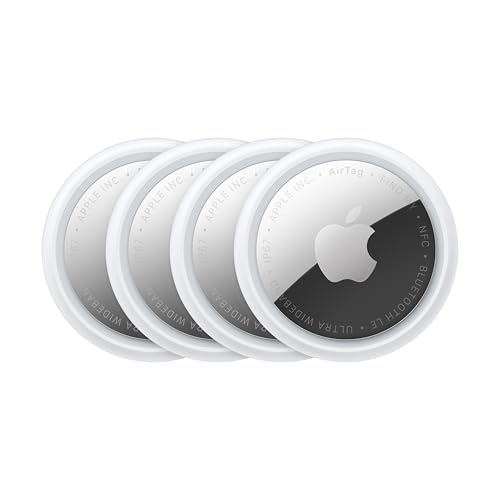
Apple AirTag
An AirTag is not a GPS tracker, it is a Bluetooth tag that reports its position when any nearby iPhone spots it. In a town or city that network is dense enough to be genuinely useful, and there is no monthly fee at all, but on a quiet hillside it will tell you nothing.
Pros
- No subscription cost at any point
- Year long replaceable battery
- Precise close range finding on recent iPhones
Cons
- Useless in rural areas with few passing iPhones
- No live tracking or geofence alerts for pets

PetFon Pet GPS Tracker
PetFon uses its own radio link between the tracker and your phone rather than a cellular network, which means no subscription at all but a hard range limit measured in thousands of feet. In open country that limit stretches, in dense housing it shrinks, so it suits rural properties more than city streets.
Pros
- No ongoing subscription of any kind
- Works in areas with no cellular signal
- Lightweight collar mounted design
Cons
- Hard range limit unlike cellular trackers
- Range drops sharply among buildings and trees
How they compare
| # | Model | Technology | Best for | Score | Price |
|---|---|---|---|---|---|
| 1 | Tractive GPS Dog LTE Tracker | GPS plus LTE cellular | Best overall | 9.4 | Check price |
| 2 | Whistle Go Explore 2.0 | GPS plus cellular | Best for health tracking | 9.2 | Check price |
| 3 | Jiobit Next | GPS, LTE, Wi-Fi and Bluetooth | Best for small pets | 9.0 | Check price |
| 4 | Fi Series 3 Smart Dog Collar | GPS, LTE, Wi-Fi and Bluetooth | Best for escape artists | 8.8 | Check price |
| 5 | Pawfit 3 GPS Pet Tracker | GPS plus cellular | Best for cats | 8.6 | Check price |
| 6 | Apple AirTag | Bluetooth with Find My network | Best budget option | 8.3 | Check price |
| 7 | PetFon Pet GPS Tracker | Proprietary radio link | Best for no monthly fee | 8.0 | Check price |
Frequently asked questions
Do pet GPS trackers need a subscription?
Cellular trackers do, because the device carries its own mobile data connection and that has a running cost. Bluetooth tags and radio link trackers avoid subscriptions but trade away unlimited range, which is usually the reason people buy a tracker in the first place.
Will a GPS tracker work if my dog runs somewhere remote?
Only if there is cellular coverage in that area. GPS positioning itself works anywhere, but the tracker still needs a network to send the position to your phone. In genuine dead zones, most trackers store the last known location until coverage returns.
Is an AirTag good enough for a pet?
It depends entirely on where you live. In a dense town, the Find My network of passing iPhones updates the location often. In a rural area with few people around, it can go long stretches with no update at all, which is exactly when you need it most.
How accurate are pet GPS trackers?
Based on specifications, most cellular trackers land within a few metres outdoors with a clear sky view. Accuracy degrades under dense tree cover, in urban canyons and indoors, which is why some units add Wi-Fi and Bluetooth positioning to narrow things down.
Can I use one of these on a cat?
Yes, but weight is the limiting factor. Choose one of the lighter units and pair it with a breakaway collar for safety. Owners report that the compact models stay on far better than larger dog oriented pucks on a cat’s smaller collar.
How long do the batteries last?
Anywhere from a few days to a few weeks depending on the model and how often it reports position. Trackers that idle while the pet is inside a home safe zone last dramatically longer than those checking in constantly.
Are pet trackers waterproof?
Most carry an IP67 rating or better, which covers rain, mud and a swim. Check the specific rating rather than assuming, and rinse the unit after saltwater since salt is harder on seals and charging contacts than fresh water.
Do geofence alerts actually work?
Yes, and they are one of the most useful features. You define a safe zone around home or a yard, and the tracker sends a notification when the pet crosses it. Alert speed depends on how often the device reports position, so check the update interval on the plan you choose.
The verdict
Tractive GPS Dog LTE is the tracker we would put on a dog that has ever got out, because unlimited cellular range is the whole point and the hardware stays light on the collar. Whistle Go Explore 2.0 is the better buy if health monitoring matters as much as location, and Jiobit Next remains the only comfortable choice for cats and very small dogs.


