Plunge Router Buying Guide: Motor Power to Dust Control
Bosch’s 1617EVSPK balances power and versatility with its dual base kit for most buyers. Woodworkers who need cleaner dust collection should choose Makita’s RP2301FC. Budget conscious builders get solid value from DeWalt’s DW618PK, which bundles two bases at a lower price point than either rival.
Cabinetmakers who need one tool for hinge mortises and raised panels do well with Bosch’s 1617EVSPK, which pairs a 2.25 HP motor with a genuine 2-3/8 in plunge stroke. Base swaps add extra weight compared to single base routers, its main tradeoff. Buyers who prioritize a sealed dust port over base flexibility should look at Makita’s RP2301FC instead.
We compared motor amperage, plunge depth, collet compatibility and table mounting features across seven currently sold plunge routers. Owner feedback and published specifications guided which models suit cabinetry shops versus occasional home projects. Dust collection and depth stop precision carried the most weight for indoor woodworking.
What to look for
What to look for in a plunge router Motor power, plunge depth and collet size decide which jobs a router tackles well. A 2.25 HP motor cuts most hardwood profiles without bogging down. Anything under 2 inches of plunge depth struggles with deep hinge mortises. Collets accepting both 1/4 in and 1/2 in shanks cover the widest bit range without adapters.
Matching motor power to your material Softwood and MDF trim work runs fine on an 11 amp, 1-3/4 HP motor like Porter-Cable’s 693PK. Hardwood face frames and thick plywood need closer to 2.25 HP to avoid stalling mid cut. Production shops cutting mortises all day benefit from Triton’s TRA001 and its 15 amp, 3-1/4 HP motor. Higher amperage also adds weight, so handheld comfort drops as power climbs.
Plunge routers built for table mounting Router tables need above table height adjustment, a feature only a few plunge bases offer. Triton’s TRA001 includes a removable knob built for that exact purpose. Horizontal collet access lets a user swap bits without pulling the router out from under the table. Bosch and DeWalt plunge bases work under a table too, but require lifting the motor out to change bits.
Dust collection for indoor cabinet shops Indoor cabinet shops generate fine dust that clogs lungs and machinery filters over time. Makita’s RP2301FC includes a sealed port built into the plunge base itself. Festool’s OF 1400 EQ pairs with dust extractors through a dedicated hose connection. Hobbyists working outdoors or in a garage can skip this feature without much downside.
The shortlist, ranked

Bosch 1617EVSPK
A 12 amp, 2.25 HP motor comes paired with both fixed and plunge bases in one kit. Variable speed spans 8,000 to 25,000 RPM, covering hardwood, MDF and laminate. Owners report smooth plunge action and simple depth stop adjustments on cabinetry work.
Pros
- Includes both fixed and plunge bases in one kit
- Variable speed dial spans a wide RPM range
- Micro fine depth ring aids repeat cuts
Cons
- Heavier than single base competitors
- Dust port for the plunge base sold separately

Makita RP2301FC
A sealed dust collection port built into the plunge base defines the RP2301FC for cabinet shops. An 11 amp motor delivers 2-1/4 HP with electronic speed control from 9,000 to 22,000 RPM. Soft start reduces kickback when plunging into hardwood face frames.
Pros
- Dedicated dust port keeps shops cleaner
- Soft start electronics cut plunge kickback
- Clear plunge lock lever speeds base changes
Cons
- No fixed base included in the standard kit
- Larger footprint than compact plunge routers

DeWalt DW618PK
Two bases, fixed and plunge, ship together in this combo kit at one price point. A 12 amp motor produces 2-1/4 HP with electronic feedback that holds speed under load. A through the column vacuum attachment fits the plunge base directly.
Pros
- Two bases cover both plunge and fixed base tasks
- Built in vacuum attachment on the plunge base
- Rack and pinion depth adjustment stays precise
Cons
- Base switching takes longer than quick release designs
- Motor housing runs warm during long sessions

Triton TRA001
Above table height adjustment through a removable knob sets the TRA001 apart for router table use. Its 15 amp motor pushes 3-1/4 HP, the strongest here. Spindle lock and a horizontal collet position simplify bit changes without pulling the router from the table.
Pros
- Above table adjustment knob works without lifting the router
- Spindle lock allows one wrench bit changes
- Deep 2-3/4 in plunge handles thick stock
Cons
- Bulkier body limits handheld maneuverability
- Higher amp draw needs a dedicated circuit for continuous use
Festool OF 1400 EQ
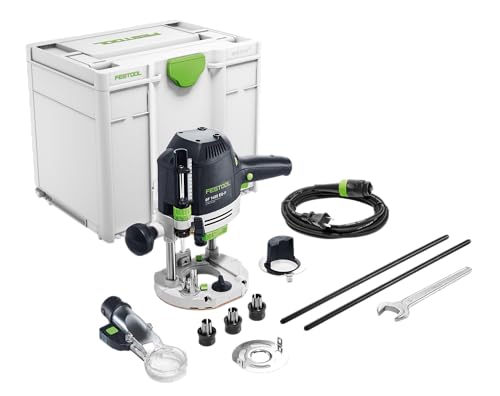
A micro adjustable turret stop delivers repeatable depth settings down to fractions of a millimeter. Electronic speed control and constant speed feedback keep RPM steady in dense hardwood. Its 2-3/16 in plunge stroke runs shorter than the group average, favoring controlled, incremental cuts.
Pros
- Turret depth stop allows six preset increments
- Lightest router in this comparison at 8.6 lbs
- Constant speed electronics hold RPM under load
Cons
- Shorter plunge stroke than 3-1/4 HP models
- Costs more than every other router in this group

Porter-Cable 693PK
An 11 amp, 1-3/4 HP motor pairs with a plunge base for entry level project work. Fixed speed keeps operation simple next to variable speed competitors. A 1/4 in collet with a 1/2 in bushing covers most router bit shanks.
Pros
- Lowest cost combo kit in this comparison
- Simple fixed speed operation for basic tasks
- Compact plunge base fits smaller hand sizes
Cons
- No variable speed control for softer materials
- Shallower 1-1/2 in plunge limits deep mortises

DeWalt DW621
Template routing, box joints and sign making jigs suit this standalone plunge router well. A 12 amp motor delivers 2 HP with electronic speed control from 8,000 to 24,000 RPM. A slim base and clear sightlines make template edges easier to track than bulkier combo kit routers.
Pros
- Slim base improves visibility when following templates
- Lightweight 9 lb design reduces fatigue on jig work
- Smooth plunge action suits fine sign making cuts
Cons
- No fixed base option included
- 2 HP motor underpowered for continuous hardwood production work
Compared at a glance
| # | Model | Motor | Best for | Score | Price |
|---|---|---|---|---|---|
| 1 | Bosch 1617EVSPK | 12 Amp, 2.25 HP | Best overall | 9.4 | Check price |
| 2 | Makita RP2301FC | 11 Amp, 2-1/4 HP | Best for dust collection | 9.1 | Check price |
| 3 | DeWalt DW618PK | 12 Amp, 2-1/4 HP | Best value | 8.9 | Check price |
| 4 | Triton TRA001 | 15 Amp, 3-1/4 HP | Best for table mounting | 8.7 | Check price |
| 5 | Festool OF 1400 EQ | 1400W, electronic speed control | Best for precision plunge depth | 8.5 | Check price |
| 6 | Porter-Cable 693PK | 11 Amp, 1-3/4 HP | Best budget | 8.2 | Check price |
| 7 | DeWalt DW621 | 12 Amp, 2 HP | Best for template and sign-making work | 8.0 | Check price |
Frequently asked questions
What is a plunge router used for?
Plunge routers cut mortises, dado joints and stopped grooves by lowering the bit straight down into the workpiece. Fixed base routers can only enter from an edge or a pre drilled hole. Door hinge recesses and shelf pin holes are common plunge only tasks.
How much plunge depth do I need for door hinge mortises?
Standard hinge mortises run about 1/8 in to 3/16 in deep, well within any router in this comparison. Deeper mortise and tenon joinery can require 1-1/2 in or more of stroke. Porter-Cable’s 693PK sets the shallowest limit here at 1-1/2 in.
Which plunge router works best in a router table?
Triton’s TRA001 was built for table use, with an above table height adjustment knob and horizontal collet access. Other plunge bases mount under a table too, but require removing the motor to change bits. That extra step slows down repeat cuts on a production run.
Can a plunge router accept both 1/4 inch and 1/2 inch bits?
Most plunge routers here, including the Bosch 1617EVSPK and Makita RP2301FC, ship with both collet sizes. Porter-Cable’s 693PK uses a 1/4 in collet with a bushing adapter for 1/2 in shanks instead. Larger 1/2 in shank bits reduce vibration and chatter on deep cuts.
Is a 2.25 HP router enough for hardwood cabinetry?
A 2.25 HP motor, like the one in the Bosch 1617EVSPK or DeWalt DW618PK, handles most hardwood edge profiles and dado cuts. Thick hardwood slabs or continuous production runs benefit more from Triton’s TRA001 and its 3-1/4 HP motor. Underpowered routers bog down and leave burn marks on dense wood.
Bosch 1617EVSPK vs Makita RP2301FC: which one collects dust better?
Makita’s RP2301FC includes a dedicated dust port built into its plunge base for direct vacuum hookup. Bosch’s 1617EVSPK plunge base needs an aftermarket dust attachment to match that setup. Cabinet shops working indoors typically prefer the Makita for this reason alone.
Do plunge routers need variable speed control?
Variable speed lets a router slow down for large diameter bits and speed up for small ones. Fixed speed models like Porter-Cable’s 693PK run one RPM regardless of bit size. Larger panel raising bits generally need speeds under 15,000 RPM to avoid burning the wood.
What is the best budget plunge router for beginners?
Porter-Cable’s 693PK offers the lowest cost combo kit in this comparison, with a fixed base and plunge base included. Its 1-3/4 HP motor suits trim work, shelving and basic joinery for a first time router owner. Buyers doing deep mortises will outgrow its 1-1/2 in plunge depth quickly.
Which plunge router suits template routing and sign making?
DeWalt’s DW621 uses a slim base and clear sightlines that make template edges easier to follow than bulkier combo kit routers. Its 9 lb weight also reduces fatigue during long jig work. The 2 HP motor still falls short of what continuous hardwood production demands.
Final word
Bosch’s 1617EVSPK earns the top recommendation for its balance of power, plunge depth and a genuine fixed base option in one kit. Cabinet shops prioritizing dust control should choose Makita’s RP2301FC instead. Anyone mounting a router permanently under a table gets more value from Triton’s TRA001 and its above table adjustment.