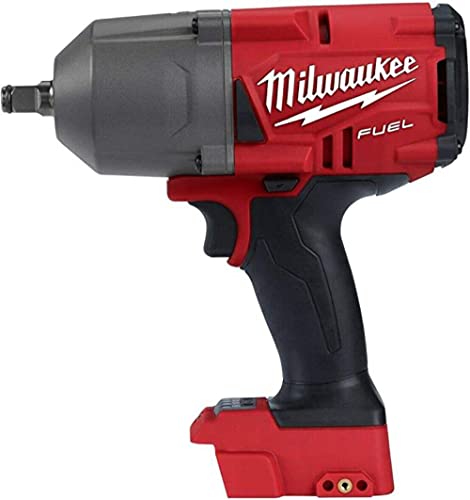
Which Air Impact Wrench Has the Torque for Your Job
AIRCAT’s 1250-K Nitrocat balances torque and noise for most automotive work, running at just 86 decibels. Ingersoll Rand’s 2235TiMAX wins on power-to-weight at 4.6 pounds, while the 1-inch Ingersoll Rand 285B suits fleet and heavy truck lug nuts past 1,800 ft-lbs.
AIRCAT’s 1250-K Nitrocat leads this lineup for technicians who want strong torque without a loud shop floor, hitting 1,300 ft-lbs of breakaway torque at 86 decibels. Its Kevlar composite housing costs more than a steel-bodied wrench, a fair tradeoff for daily use. Ingersoll Rand’s 2235TiMAX takes the power-to-weight crown at 4.6 pounds for anyone working overhead.
Drive size, air consumption, and weight all pull against raw torque, so the right wrench depends on the job more than the spec sheet alone. We compared manufacturer torque ratings, CFM requirements, and owner feedback on durability before ranking these seven.
The top picks, ranked

AIRCAT 1250-K Nitrocat Kevlar 1/2-Inch Impact Wrench
A Kevlar composite housing cuts vibration and noise well below what a steel-bodied wrench produces. Breakaway torque reaches 1,300 ft-lbs, yet the tool runs at just 86 decibels. A twin-hammer mechanism smooths the impact delivery during long sessions.
Pros
- Runs quieter than comparable torque-class wrenches
- Twin-hammer mechanism reduces recoil
- Composite housing resists drops
Cons
- Higher CFM draw needs a solid compressor
- Composite body feels different from steel-bodied guns

Ingersoll Rand 2235TiMAX 1/2-Inch Titanium Impact Wrench
Titanium replaces steel in the hammer case, dropping weight to 4.6 pounds without cutting torque output. Breakaway torque still reaches 1,350 ft-lbs, near the top of its class. Lower weight matters most during long stretches of overhead or one-handed work.
Pros
- Lightest wrench at this torque level in the lineup
- Twin-hammer clutch smooths impact delivery
- Reinforced grip resists shop chemicals
Cons
- Costs more than steel-bodied alternatives
- Titanium housing shows scratches more visibly
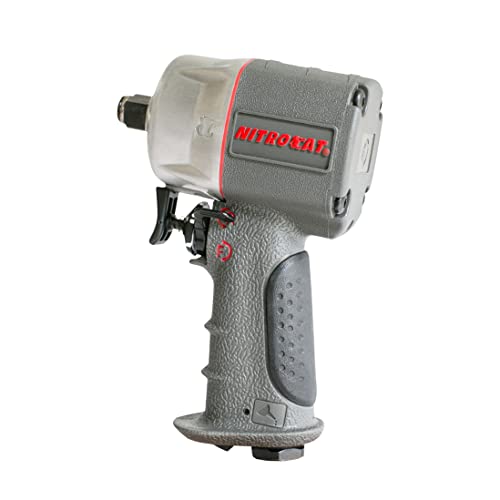
AIRCAT 1056-XL Nitrocat Compact 1/2-Inch Impact Wrench
At 2.5 pounds and 5.7 inches long, this wrench reaches into wheel wells and engine bays where a full-size gun cannot fit. Torque tops out at 800 ft-lbs, lower than the flagship models but enough for most lug nuts. Shorter length also eases repetitive suspension work.
Pros
- Fits tight engine bay and suspension gaps
- Reduces wrist fatigue on repetitive jobs
- Compact length despite full 1/2-inch drive
Cons
- Lower torque ceiling than full-size wrenches
- Not built for stubborn rusted truck lugs

Chicago Pneumatic CP7748 1/2-Inch Impact Wrench
Technicians running wrenches all shift get a twin-hammer mechanism built for repeated heavy cycles. Torque lands at 1,100 ft-lbs, enough for general automotive and light truck work. Parts stay serviceable well past the warranty period.
Pros
- Holds up well under continuous daily use
- Twin-hammer design controls kickback
- Serviceable parts widely available
Cons
- Bulkier grip than AIRCAT compact models
- Noticeable vibration over long sessions

Ingersoll Rand 231C 1/2-Inch Air Impact Wrench
This design has stayed largely unchanged for years, and dependable 600 ft-lbs torque still suits home garages and occasional automotive work. Its simple mechanism costs less than the titanium and Kevlar models above. Fewer moving parts also mean easier field service.
Pros
- Lower price than premium composite models
- Simple mechanism, easy to service
- Proven reliability over years of use
Cons
- Lower torque ceiling than newer twin-hammer designs
- Heavier per pound of torque than titanium models

Chicago Pneumatic CP734H 1/2-Inch Impact Wrench
This is the entry point into Chicago Pneumatic’s lineup, built for home garage and light commercial jobs. Torque reaches 500 ft-lbs, enough for standard lug nuts and light suspension work. Weight stays under 4.5 pounds for occasional handheld use.
Pros
- Lowest price point in the comparison
- Lightweight for occasional home use
- Compact enough for tight wheel wells
Cons
- Torque ceiling too low for stuck truck lugs
- Not rated for continuous professional duty
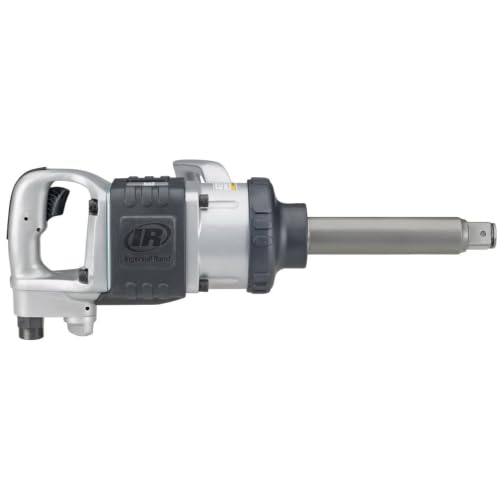
Ingersoll Rand 285B 1-Inch Air Impact Wrench
A 1-inch drive steps up torque to 1,850 ft-lbs for fleet and heavy truck work where lug nuts demand more than any 1/2-inch gun provides. Weight climbs to 13.5 pounds alongside the bigger drive. A larger compressor becomes necessary to keep up with air demand.
Pros
- Torque suited to heavy truck and fleet lug nuts
- Durable construction for shop-duty cycles
- Handles rusted fasteners 1/2-inch wrenches cannot
Cons
- Too heavy and powerful for routine car work
- Needs a larger compressor to run properly
How they stack up
| # | Model | Drive size | Best for | Score | Price |
|---|---|---|---|---|---|
| 1 | AIRCAT 1250-K Nitrocat Kevlar 1/2-Inch Impact Wrench | 1/2 inch | Best overall | 9.4 | Check price |
| 2 | Ingersoll Rand 2235TiMAX 1/2-Inch Titanium Impact Wrench | 1/2 inch | Best power-to-weight | 9.1 | Check price |
| 3 | AIRCAT 1056-XL Nitrocat Compact 1/2-Inch Impact Wrench | 1/2 inch | Best for tight spaces | 8.7 | Check price |
| 4 | Chicago Pneumatic CP7748 1/2-Inch Impact Wrench | 1/2 inch | Best for daily shop use | 8.5 | Check price |
| 5 | Ingersoll Rand 231C 1/2-Inch Air Impact Wrench | 1/2 inch | Best value | 8.3 | Check price |
| 6 | Chicago Pneumatic CP734H 1/2-Inch Impact Wrench | 1/2 inch | Best budget | 8.0 | Check price |
| 7 | Ingersoll Rand 285B 1-Inch Air Impact Wrench | 1 inch | Best for heavy trucks | 8.9 | Check price |
Before you buy
Matching torque to the job Passenger car lug nuts typically need 80 to 100 ft-lbs of installation torque, well within any wrench in this lineup. Removing rusted or over-torqued fasteners benefits from higher breakaway torque, which is why the titanium and Kevlar models rate above 1,300 ft-lbs. Heavy truck work calls for a 1-inch drive wrench instead of stretching a 1/2-inch tool past its limit.
How much CFM does an impact wrench need Most 1/2-inch wrenches need around 4 CFM at 90 PSI to run at rated torque, so check a compressor’s continuous CFM output rather than just its tank size. The 1-inch Ingersoll Rand 285B can demand 10 CFM, which rules out small pancake compressors. Undersized air supply drops torque well below the spec sheet.
Best for tight engine bays and wheel wells Compact wrenches like the AIRCAT 1056-XL trade torque ceiling for a shorter body that reaches into suspension components a full-size gun cannot. Brake and strut work benefits more from this than simple lug nut removal. Weight also drops significantly, which reduces fatigue during overhead exhaust work.
Noise and vibration over a full shift Kevlar and titanium housings, like the ones on the AIRCAT 1250-K and Ingersoll Rand 2235TiMAX, measurably cut decibel output and hand vibration compared to steel-bodied wrenches. Technicians running wrenches for hours benefit most from this difference. Occasional home users may not notice enough gain to justify the price gap.
Questions worth asking
What is a good torque rating for a pneumatic impact wrench?
Passenger vehicles usually need 700 to 1,000 ft-lbs of breakaway torque to handle stuck or over-torqued lug nuts. Truck and fleet work often calls for 1,500 ft-lbs or more, usually in a 1-inch drive.
Can a 1/2-inch impact wrench remove truck lug nuts?
Many 1/2-inch wrenches rated above 1,000 ft-lbs handle light truck lug nuts without issue. Heavy commercial trucks with high torque specs generally need a 1-inch drive wrench like the Ingersoll Rand 285B.
How much air compressor CFM do I need for an impact wrench?
Most 1/2-inch pneumatic wrenches need about 4 CFM at 90 PSI to hit their rated torque continuously. Check a compressor’s continuous duty CFM rating, since peak CFM numbers overstate real output.
Are Kevlar or titanium impact wrenches better than steel?
Composite and titanium housings cut weight and vibration without sacrificing torque, based on manufacturer specs for the AIRCAT and Ingersoll Rand lines. Steel-bodied wrenches stay more resistant to shop chemicals and heavy drops.
What size impact wrench is best for home garage use?
A 1/2-inch drive wrench rated between 500 and 1,000 ft-lbs covers nearly all home automotive tasks, including tire rotations and brake jobs. A 1-inch wrench is overkill unless heavy trucks or equipment enter the picture.
Pneumatic versus cordless impact wrench, which fits a shop better?
Pneumatic wrenches generally deliver more sustained torque per dollar and never need battery charging, provided a compressor is on hand. Cordless wrenches offer more mobility away from an air line but usually cost more per ft-lb of torque.
How heavy is a typical 1/2-inch pneumatic impact wrench?
Weight ranges from about 2.5 pounds for compact models like the AIRCAT 1056-XL up to roughly 5.3 pounds for higher-torque units like the AIRCAT 1250-K. Titanium housings help keep high-torque models lighter.
Do I need a 1-inch impact wrench for regular car maintenance?
No, 1-inch wrenches are built for heavy truck and fleet lug nuts, structural bolts, and equipment work. A 1/2-inch drive wrench covers standard car and light truck maintenance.
Is a higher CFM impact wrench always more powerful?
Not always. CFM affects how fast a wrench reaches its rated torque and sustains it under load, but drive mechanism and hammer design also shape real-world output. Two wrenches with similar CFM needs can still differ in torque by several hundred ft-lbs.
Our take
AIRCAT’s 1250-K Nitrocat earns the overall pick for balancing torque, noise, and weight across most automotive jobs. Anyone chasing pure power-to-weight should choose the Ingersoll Rand 2235TiMAX instead, while fleet and heavy truck shops need the 1-inch Ingersoll Rand 285B rather than any 1/2-inch wrench here.