Point and Shoot Cameras That Beat Your Phone
The Sony ZV-1 is our top pick for most people. It pairs a large 1-inch sensor with a fast lens and excellent autofocus. Its main limitation is a short zoom range. If you want more reach, consider the Canon PowerShot G7 X Mark III. That model is favored by vloggers for its flip screen and clean HDMI output. For a rugged option, the Olympus Tough TG-6 is waterproof and shockproof. It suits outdoor adventures.
Smartphones have improved dramatically. Yet a dedicated point and shoot camera still offers real advantages. Optical zoom, larger sensors, and better ergonomics matter. Whether you travel, vlog, or want a pocketable camera, there is a model for you.
This roundup covers seven current models. They range from rugged to premium. We base our comparisons on specifications and owner feedback. Our goal is to help you choose a camera that fits your needs and budget.
How to pick the right one
Our top picks
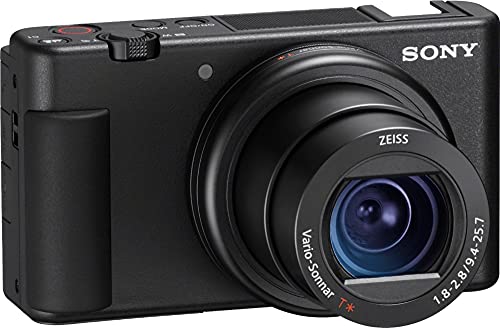
Sony ZV-1
The Sony ZV-1 is a compact camera designed for content creators. It has a 1-inch sensor and a 24-70mm equivalent lens. The autofocus is fast and reliable. It features a side flip screen and a built in ND filter. Video quality is excellent with 4K recording.
Pros
- Excellent autofocus
- Compact and light
- Great video features
Cons
- Short zoom range
- No viewfinder

Canon PowerShot G7 X Mark III
The Canon G7 X Mark III is a favorite among vloggers and travelers. It has a 1-inch sensor and a 24-100mm zoom lens. The flip screen is perfect for selfies. It records 4K video without a crop. Its compact size makes it easy to carry.
Pros
- Versatile zoom range
- Touchscreen with flip
- Good low light performance
Cons
- No viewfinder
- Battery life could be better

Panasonic Lumix LX100 II
The Panasonic LX100 II packs a Four Thirds sensor into a compact body. It has a fast Leica lens with a 24-75mm equivalent range. The camera offers manual controls and 4K video. It produces excellent image quality with nice depth of field.
Pros
- Large sensor for a compact
- Manual controls
- High quality lens
Cons
- No touchscreen
- Viewfinder is electronic only

Fujifilm X100V
The Fujifilm X100V is a premium fixed lens camera with a 35mm equivalent lens. It has a 26MP APS-C sensor and hybrid viewfinder. The camera delivers stunning out of camera JPEGs. Its design is classic and it is built to last.
Pros
- Beautiful image quality
- Hybrid viewfinder
- Compact and stylish
Cons
- Fixed lens limits flexibility
- Expensive

Ricoh GR III
The Ricoh GR III is a pocket sized camera with an APS-C sensor and 28mm f/2.8 lens. It slips into a pocket easily. The camera offers excellent image quality and fast operation. It is a favorite among street photographers.
Pros
- Pocketable design
- Sharp lens
- Great for discreet shooting
Cons
- No viewfinder
- Video limited to 1080p

Olympus Tough TG-6
The Olympus Tough TG-6 is built for extreme conditions. It is waterproof to 15 meters, shockproof to 2.1 meters, and freezeproof to minus 10 degrees. It has a 12MP sensor and a 25-100mm zoom lens. Macro modes are excellent for close ups.
Pros
- Rugged and durable
- Underwater modes
- Good macro capability
Cons
- Small sensor limits image quality
- Expected in dim light

Leica D-Lux 7
The Leica D-Lux 7 is a luxurious compact camera with a Four Thirds sensor and a fast Leica lens. It offers 4K video and a high resolution electronic viewfinder. The camera has a classic design and comes with a leather case. Image quality is outstanding.
Pros
- Superb build quality
- Excellent lens
- Includes leather case
Cons
- Very expensive
- Same internals as Panasonic
Compared at a glance
| # | Model | Sensor | Best for | Score | Price |
|---|---|---|---|---|---|
| 1 | Sony ZV-1 | 1 inch 20.1MP Exmor RS CMOS | Vlogging and hybrid photo video | 9.4 | Check price |
| 2 | Canon PowerShot G7 X Mark III | 1 inch 20.1MP CMOS | Travel and everyday use | 9.2 | Check price |
| 3 | Panasonic Lumix LX100 II | Four Thirds 17MP MOS | Enthusiasts who want a larger sensor | 9.0 | Check price |
| 4 | Fujifilm X100V | APS-C 26.1MP X-Trans CMOS 4 | Style and image quality | 9.1 | Check price |
| 5 | Ricoh GR III | APS-C 24.2MP CMOS | Street photography and snapshots | 8.8 | Check price |
| 6 | Olympus Tough TG-6 | 1/2.3 inch 12MP CMOS | Adventure and underwater shooting | 8.5 | Check price |
| 7 | Leica D-Lux 7 | Four Thirds 17MP Live MOS | Premium build and image quality | 8.9 | Check price |
Questions worth asking
Are point and shoot cameras better than smartphones?
For many casual users, a smartphone is enough. But point and shoot cameras offer optical zoom, larger sensors, and better ergonomics. They also have physical buttons and dials. If you want more creative control and better image quality, a dedicated camera is a good investment.
What is the best point and shoot camera for low light?
Cameras with large sensors and wide apertures perform better in low light. The Sony ZV-1, Canon G7 X Mark III, and Panasonic LX100 II are strong choices. The Fujifilm X100V also excels thanks to its APS-C sensor. A fast lens like f/1.8 helps capture more light.
Can point and shoot cameras shoot 4K video?
Many modern point and shoot cameras support 4K video. The Sony ZV-1, Canon G7 X Mark III, and Panasonic LX100 II all record 4K. Some models like the Ricoh GR III only offer 1080p. If 4K is important, check the specifications.
Do point and shoot cameras have interchangeable lenses?
No, point and shoot cameras have fixed lenses. They are designed to be compact and simple. Some premium compacts like the Fujifilm X100V have a fixed prime lens. Others like the Sony ZV-1 have a zoom lens. Interchangeable lens cameras are a different category.
What is the best point and shoot camera for travel?
The Canon PowerShot G7 X Mark III is popular for travel. It has a versatile zoom range and is compact. The Sony ZV-1 is also good if you video. For a rugged option, the Olympus TG-6 is perfect for outdoor adventures. Consider your priorities.
Are expensive point and shoot cameras worth it?
Expensive models like the Leica D-Lux 7 offer premium build and image quality. But you often pay for the brand. Mid range cameras like the Sony ZV-1 provide excellent performance for less. Set a budget and compare features. You can get great results without spending top dollar.
How many megapixels do I need?
Most point and shoot cameras have 12 to 26 megapixels. That is plenty for printing and sharing online. Higher megapixels allow more cropping. But sensor size matters more than megapixels. A 12MP camera with a large sensor can outperform a 20MP camera with a small sensor.
Can I use a point and shoot camera for professional work?
Yes, many professionals use premium compacts as a second camera. Models like the Fujifilm X100V and Leica D-Lux 7 deliver exceptional image quality. They are also discreet. For certain work, they are ideal. But for sports or wildlife, you need a camera with fast autofocus and long zoom.
What accessories should I buy with a point and shoot camera?
Consider an extra battery and a memory card. A protective case or bag is useful. A mini tripod helps for steady shots. A lens cleaning cloth is essential. If you vlog, an external microphone and a grip may be helpful.
What is the lifespan of a point and shoot camera?
With proper care, a point and shoot camera can last many years. The shutter mechanism is rated for tens of thousands of actuations. Electronics may become outdated. But if the camera meets your needs, it can serve you well for a long time.
The bottom line
For most people, the Sony ZV-1 is the best choice. It offers superb autofocus, great video, and a compact body. The Canon G7 X Mark III is a close second with more zoom. If you want a rugged camera for adventure, get the Olympus TG-6. If budget is less of a concern and image quality is paramount, the Fujifilm X100V is a gem. Choose based on your primary use.


