Which Pool Vacuum Type Actually Fits Your Pool?
Dolphin Nautilus CC Plus delivers the strongest scrubbing and easiest setup for most pools. Aiper Seagull Pro suits above-ground owners who want a cordless design. Poolvergnuegen 4-Wheel PoolCleaner gives budget shoppers solid results without a booster pump.
Dolphin Nautilus CC Plus, Aiper Seagull Pro, and Poolvergnuegen 4-Wheel PoolCleaner lead this comparison for different reasons. Robotic models clean floors and walls without a booster pump, while pressure-side and suction-side types lean on equipment you already own.
Runtime, suction power, and wall-climbing claims rarely match across spec sheets. Listed specifications, owner feedback, and use-case fit across above-ground and in-ground pools were compared to narrow seven models down to these picks.
The shortlist, ranked

Dolphin Nautilus CC Plus
Floors, walls, and the waterline all get scrubbed in above-ground and in-ground pools up to 33 feet. A top-load fine filter basket catches sand and debris without a separate cartridge purchase. One 60-minute cycle covers most residential pools in a single pass.
Pros
- Climbs walls and cleans the waterline
- Filter basket removes without opening the unit
- Covers pool floors up to 33 feet long
Cons
- Power cord limits placement near the outlet
- Heavier than cordless robotic models

Aiper Seagull Pro
A rechargeable battery means setup is just dropping it in and starting the app or remote. Floors, walls, and stairs get covered in above-ground and in-ground pools up to 60 feet. Dual motors drive continuous wall climbing on tile and vinyl surfaces.
Pros
- No cord or booster pump required
- App and remote control included
- Climbs walls on tile and vinyl
Cons
- Runtime drops in colder water
- Charging dock takes up deck space

Polaris Vac-Sweep 280
This pressure-side cleaner connects to a dedicated booster pump for extra suction. A large zippered bag holds leaves and twigs that would clog a suction-side unit. A double-jet backup valve keeps it moving instead of stalling in corners.
Pros
- Handles leaves without clogging the pool filter
- Backup valve prevents corner stalling
- Built for years of seasonal use
Cons
- Requires a separate booster pump installation
- Does not scrub walls or the waterline

Poolvergnuegen 4-Wheel PoolCleaner
Instead of its own pump, this cleaner attaches to the existing skimmer or suction line. Four wheels and two independent turbines track evenly across flat and sloped floors. It works on vinyl, gunite, and fiberglass in-ground pools.
Pros
- No booster pump or battery to maintain
- Simple hose installation on suction line
- Lower ongoing cost than robotic models
Cons
- Does not climb walls or clean the waterline
- Adds fine debris load to the pool filter

WYBOT S1 Pro
Above-ground and small in-ground pools up to 40 feet get floor and wall cleaning on one battery charge. Dual-motor navigation maps the pool instead of bumping randomly along the sides. A 3-liter filter basket handles daily debris between full cleanings.
Pros
- Smart navigation maps the pool layout
- Compact size suits smaller pools
- Basket handles daily light debris
Cons
- Coverage is limited on larger in-ground pools
- Not compatible with booster pump setups
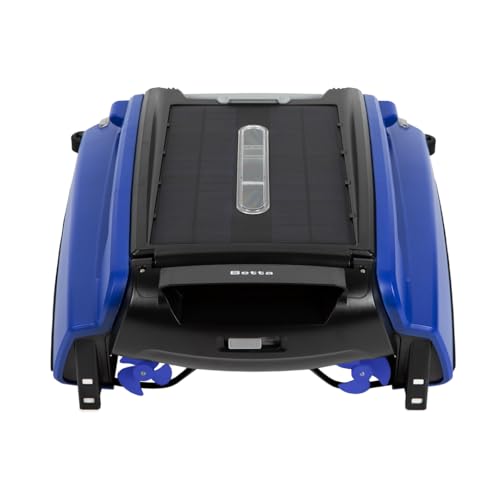
Betta SE Cordless Robotic Pool Cleaner
A compact cordless robot targets above-ground and small in-ground pools. Single-motor design keeps the price down while still covering the floor and lower walls. Its washable filter basket lifts out for a quick rinse after each cycle.
Pros
- Lower cost entry into robotic cleaning
- Lightweight for easy lifting and storage
- Washable filter needs no replacement cartridges
Cons
- Shorter runtime than higher-tier robotic models
- Limited wall climbing above the waterline

Aquabot Turbo T2
Larger in-ground pools up to 50 feet suit this corded robotic cleaner. Dual scrubbing brushes work floors, walls, and the waterline in one cycle. A swivel cord attachment cuts down on tangling during longer sessions.
Pros
- Covers larger in-ground pools in one cycle
- Swivel cord reduces tangling
- Dual brushes scrub floors and walls
Cons
- Cord length limits placement options
- Cartridges need rinsing after heavy-debris cycles
What matters most
What is the difference between robotic, suction-side, and pressure-side vacuums? Robotic pool vacuums like the Dolphin Nautilus CC Plus and Aiper Seagull Pro run independently with their own motor and filter. Suction-side cleaners such as the Poolvergnuegen 4-Wheel connect to the pool’s existing pump and skimmer line. Pressure-side units like the Polaris Vac-Sweep 280 need a dedicated booster pump for extra water pressure. Each type trades upfront cost against cleaning power and setup complexity.
Which vacuum suits above-ground versus in-ground pools? Above-ground pools generally need lighter, cordless models that will not strain vinyl liners, which favors the Betta SE or WYBOT S1 Pro. In-ground pools with gunite or fiberglass surfaces can handle stronger scrubbing from corded robots like the Aquabot Turbo T2. Pool shape matters too, since long rectangular pools need longer cords or higher battery runtime than round above-ground pools. Surface material affects brush choice, since gunite wears brushes faster than vinyl.
Battery runtime versus corded and pump-powered cleaning Cordless robots run on battery charges between 70 and 110 minutes, suiting small to mid-size pools without a recharge mid-cycle. Corded robotic models like the Dolphin Nautilus CC Plus avoid battery limits but restrict placement to the cord’s reach. Suction-side and pressure-side cleaners draw power from the pool’s pump system, so runtime tracks how long that pump stays on. Larger pools often do better with corded or pump-driven options that will not interrupt mid-cycle.
How do wall climbing, debris type, and filter upkeep compare? Wall-climbing ability varies by model, with dual-motor robots like the Aiper Seagull Pro handling tile lines that single-motor units struggle to reach. Leaves and twigs call for a pressure-side cleaner with a zippered catch bag, since that same bag can clog quickly with fine sediment instead. Fine sediment and sand suit a top-load filter basket better, like the one on the Nautilus CC Plus. Rinsing filter baskets after each cycle keeps suction strong and stops debris cycling back into the pool.
How they stack up
| # | Model | Pool type | Best for | Score | Price |
|---|---|---|---|---|---|
| 1 | Dolphin Nautilus CC Plus | Above-ground and in-ground | Best overall | 9.4 | Check price |
| 2 | Aiper Seagull Pro | Above-ground and in-ground, up to 60 feet | Best for cordless convenience | 9.1 | Check price |
| 3 | Polaris Vac-Sweep 280 | In-ground, gunite, vinyl, and fiberglass | Best for leaves and large debris | 8.8 | Check price |
| 4 | Poolvergnuegen 4-Wheel PoolCleaner | In-ground, vinyl, gunite, and fiberglass | Best value | 8.5 | Check price |
| 5 | WYBOT S1 Pro | Above-ground and in-ground, up to 40 feet | Best for small to mid-size pools | 8.3 | Check price |
| 6 | Betta SE Cordless Robotic Pool Cleaner | Above-ground and small in-ground | Best budget | 8.1 | Check price |
| 7 | Aquabot Turbo T2 | In-ground pools up to 50 feet | Best for large in-ground pools | 8.0 | Check price |
Questions worth asking
What is the difference between a robotic and suction-side pool vacuum?
Robotic vacuums run on their own motor and filter, cleaning independently of the pool pump. Suction-side vacuums attach to the skimmer or suction line and rely on the pool’s existing pump for power.
Are cordless robotic pool vacuums worth it?
Cordless models like the Aiper Seagull Pro skip the tangled cord and outlet requirement of corded robots. That convenience trades against a limited runtime per charge, usually 70 to 110 minutes.
Can a pool vacuum climb walls and stairs?
Dual-motor robotic vacuums, including the Dolphin Nautilus CC Plus and Aiper Seagull Pro, climb walls and reach the waterline. Suction-side and pressure-side cleaners generally stay on the pool floor.
Which pool vacuum handles leaves best?
Pressure-side cleaners with a large zippered bag, such as the Polaris Vac-Sweep 280, handle leaves and twigs without clogging. Suction-side and robotic models with fine filter baskets suit sand and sediment better.
Do suction-side pool vacuums need a separate pump?
No. Suction-side cleaners like the Poolvergnuegen 4-Wheel PoolCleaner connect directly to the existing skimmer or suction line. Pressure-side cleaners are the type that need a dedicated booster pump.
How long does a robotic pool vacuum battery last?
Battery runtime on cordless robots ranges from about 70 minutes on budget models to 110 minutes on higher-tier units. Cold water and heavy debris loads can shorten runtime below the listed figure.
Is a pressure-side vacuum better than a robotic one for large pools?
Pressure-side units like the Polaris Vac-Sweep 280 excel at seasonal leaf cleanup in large in-ground pools. Robotic vacuums with a longer cord or higher battery capacity often scrub floors and walls more thoroughly instead.
How often should I clean the filter on a robotic pool vacuum?
Most listings recommend rinsing the filter basket after every cleaning cycle to maintain suction. Pools with heavy leaf or algae buildup may need a mid-cycle rinse as well.
What is the best pool vacuum for a small above-ground pool?
Compact cordless models like the WYBOT S1 Pro or Betta SE fit above-ground pools well, since neither needs a booster pump or permanent installation.
Robotic vs suction-side: which costs less to run?
Suction-side cleaners like the Poolvergnuegen 4-Wheel cost less to run since they use the pool’s existing pump instead of a separate motor or battery.
Final word
Owners who want the strongest all-around scrubbing without pump upgrades should start with the Dolphin Nautilus CC Plus. Cordless models such as the Aiper Seagull Pro and WYBOT S1 Pro fit above-ground pools and smaller budgets better. For seasonal leaf cleanup in large in-ground pools, a pressure-side unit like the Polaris Vac-Sweep 280 still earns its place alongside a robotic cleaner.